The PSLE is over, and your child has earned a proper rest. What surprises many P6 families is how long the break actually is. From the last written paper to the first day of Secondary 1 is close to three months. That is a generous stretch for recovery and celebration, and also long enough for English skills to quietly go rusty if they are left completely untouched.
This guide is about something gentler than cramming: keeping your child active in language across the gap, in ways they actually enjoy, so the jump to secondary English in January feels like a step rather than a cliff.
The written papers wrap up in early October, the oral is done even earlier, and results arrive in late November. Secondary school then begins in early January. Add it up and your child has roughly thirteen weeks away from any real academic demand, with the effective break starting the moment that last paper is handed in.
Three unused months matter more for English than for most subjects. Writing fluency and vocabulary both fade when they sit idle for that long, and reading stamina slips with them. Teachers often spend the first weeks of Secondary 1 rebuilding habits that were perfectly intact in October. A little light use across the break keeps those habits alive.
The leap from primary to secondary English is real, and it catches even strong students by surprise. Knowing what is coming helps you keep the right things warm.
Comprehension passages roughly double in length, climbing to around a thousand words, and the familiar multiple-choice and cloze questions disappear. Every answer is now written in full sentences, and the questions ask your child to weigh a writer’s purpose and explain how particular word choices create their effect.
A brand-new task, summary writing, also appears. Your child reads a factual passage and condenses the key points into about eighty words in their own words. It leans on comprehension and controlled writing at the same time, which is why it unsettles so many students fresh from primary school.
Composition changes shape too. The picture prompts are gone, the length climbs to several hundred words, and your child chooses from a range of genres rather than defaulting to a narrative. Spoken interaction grows more demanding as well, built around a video clip and a real-world discussion rather than a single photograph. Our guide on acing the Secondary 1 English papers is a helpful look at what lies ahead, and our secondary comprehension tips cover the comprehension jump in more detail.
Plenty of children who scored AL1 or AL2 in PSLE English find their first secondary common test coming back with a B or a C. The cause is structural rather than a matter of ability. Primary English largely tests language skill inside a predictable format, while secondary English tests thinking through language. The narrative techniques and question patterns that worked so well in P6 do not transfer neatly to evaluating tone or building an argument, so a strong primary result is no guarantee of a smooth start. The skills that carry across are the ones built through habit, not the ones crammed in week one of Term 1.
A handful of skills give the best return for very little effort over the break.
Reading stamina sits first. Secondary passages are long, so a child who keeps reading for pleasure holds onto the ability to stay with a thousand-word text without tiring. Mixing genres helps especially, since secondary comprehension draws on factual and literary writing alike. Our note on reading more effectively has easy ways to keep it going.
Vocabulary comes next, and it grows best through reading and conversation rather than memorised lists. A quick habit of noting new words in context keeps the bank growing without it feeling like work.
Writing fluency is a muscle that stiffens fast. Fifteen or twenty minutes of free writing a couple of times a week, on anything your child cares about, keeps paragraphs and sentences flowing so the longer secondary essays do not feel like a standing start.
Close reading and inference, the art of reading between the lines, develops beautifully through talk. Asking why a character felt a certain way, or what an article is really arguing, builds exactly the thinking secondary English rewards. Documentaries help here too, and our piece on media literacy for primary students suggests ways to watch with a critical eye.
Speaking confidence rounds it out. Regular conversation in standard English, about the news or a film they enjoyed, keeps your child fluent and ready for the more demanding secondary oral.

The magic word is enjoyable. Reading that bores a child breeds avoidance, so the aim is to match books to their interests and stretch gently from there. A reluctant reader might be hooked by a fast adventure or a spy thriller, while a confident one can move towards longer, richer novels that nudge them up to secondary-level themes.
Documentaries are wonderfully effective stealth learning. Singapore’s mewatch platform carries a deep, free library of current-affairs and documentary series in standard English, all built around the kinds of themes that drive secondary discussion and argument. A simple “what was it about, and do you agree with them?” afterwards turns watching into the very thinking the secondary oral rewards.
Writing for fun matters more than the form it takes. A holiday journal, fan fiction, a film review, or an email to a faraway relative all keep the writing muscle warm, and writing for a real reader works better than any exercise with no audience. And the dinner table remains the most underrated English classroom in Singapore, where talking through what the family has read or watched, in full sentences, quietly builds fluency.
The balance that works is rest first, with maintenance arriving slowly. October is for switching off completely, with plenty of travel and play, and no structured English at all. November is for gentle re-engagement through a new book series or a documentary and easy conversation. December, once results are in, is for light, purposeful upkeep, perhaps an hour or two of reading a day and a short piece of writing once or twice a week.
The risk of a total blackout is real. A child who touches no English for three months walks into that first secondary lesson with stiff writing and a narrower vocabulary, and the rusty start can knock their confidence just when they need it most. The fix is rhythm rather than intensity: a little English every few days, in ways they enjoy.
At WRITERS AT WORK, we help students bridge the gap from PSLE to secondary English with reading and discussion that feel like exploration rather than drilling, and our STORYBANKING® approach gives them a clear way to shape their writing as the demands grow. If you would like help making the transition a smooth one, we would love to talk.
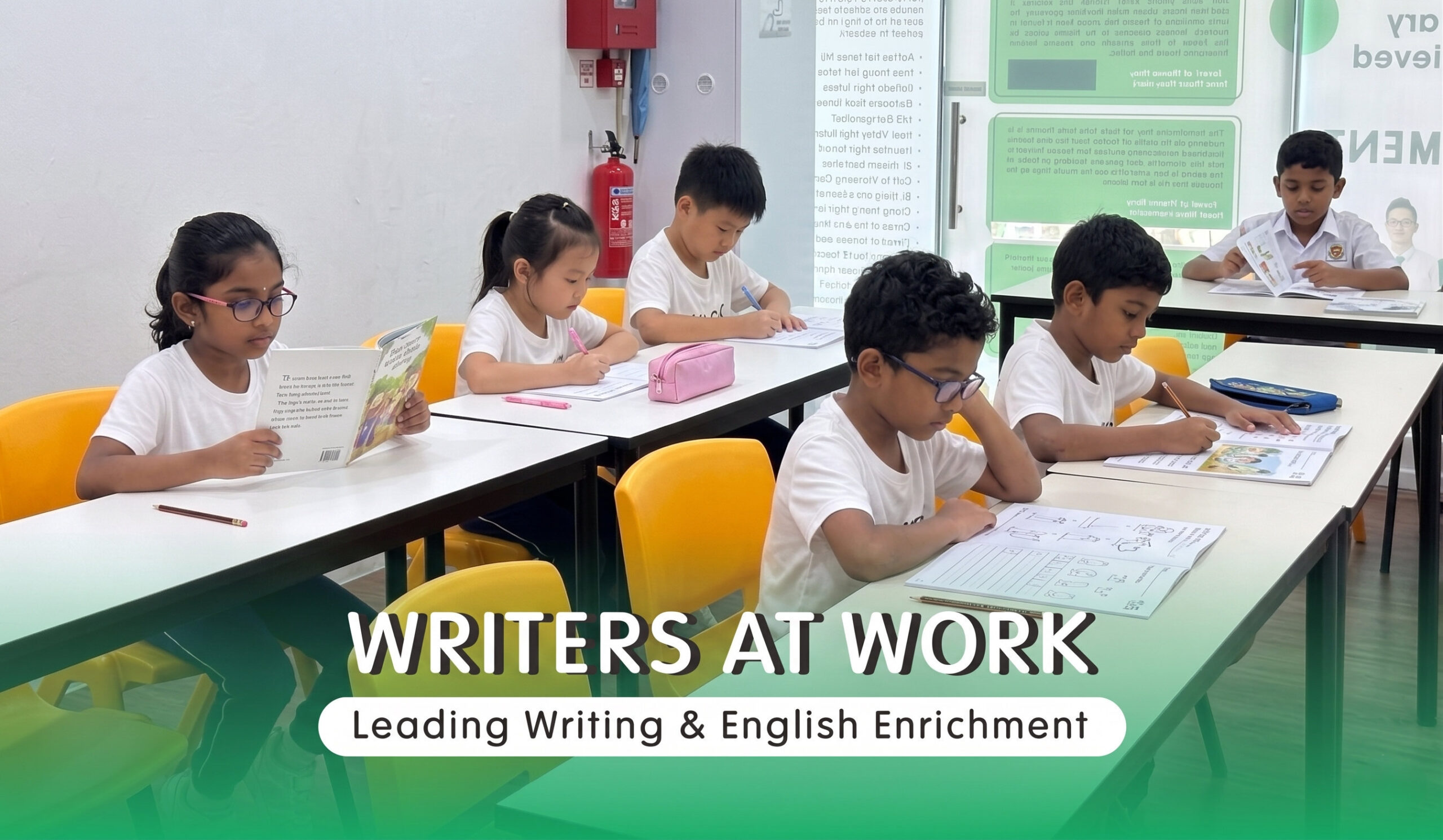
The students who improve the most are not always the ones who scored the highest in their EOY examinations. They are the ones who take the time to learn from their mistakes and work on them systematically.
If you are unsure where to begin, guidance from an experienced teacher can make the process much clearer. At WRITERS AT WORK, we help students identify their key weaknesses, develop effective examination strategies, and build the skills needed to perform confidently in both Paper 1 and Paper 2.
The EOY papers have already shown you where the gaps are. The next step is deciding what to do about them.
Join WRITERS AT WORK and start turning this year’s feedback into next year’s success. Don’t forget to follow us on TikTok and Facebook for regular exam tips, useful resources, and a closer look at what goes on inside our classrooms.
Yes, and arguably more so. The expectations placed on strong students in Secondary 1 rise quickly, and many AL1 children are surprised by a lower first result because the demands change. A little reading and conversation over the break keeps a strong start within reach.
Consistency beats volume. Around fifteen to twenty minutes a day of something your child has chosen and genuinely enjoys does more than a single long, reluctant session at the weekend. The daily habit is what keeps stamina and vocabulary alive.
It does, with a little balance. Graphic novels build narrative understanding and visual literacy, both of which matter. Since secondary comprehension uses dense prose, it helps to alternate a graphic novel with a prose book so your child stays comfortable with longer text.
Only if it is genuinely discussion-based and enjoyable rather than more drilling. A good one introduces secondary writing styles and current-affairs discussion instead of repeating PSLE-format practice with harder words. If your child is tired in October, rest first and revisit the idea in November.

Agnes Ng, Co-Founder and Teaching & Curriculum Director of WRITERS AT WORK. An NUS Honours graduate and published author with over 30 years of experience, Agnes has been the architect of the organization’s student-centric curricula since 2012.
Dedicated to teacher mentorship and academic excellence, she has guided hundreds of students to achieve outstanding results. Her expertise and commitment to high-quality education remain the cornerstone of WRITERS AT WORK’s success in empowering every learner.



Start practising and learning

