When was the last time you read something that had nothing to do with school? Not a comprehension passage, not a model essay. If you are struggling to remember, that might be part of the reason your Secondary English results are not where you want them to be. Scoring well in secondary school is no longer just about avoiding spelling or grammar mistakes. The syllabus changes completely. If you want to write and speak with confidence, you need a solid bank of content knowledge to draw from.
The secondary school syllabus undergoes a massive shift in perspective, moving away from childhood imagination and stepping directly into adulthood and global citizenship.
In secondary school, those comforting topics disappear. Instead, students are confronted with expository, discursive, and argumentative prompts that demand an understanding of the world around them. They might be asked to discuss whether social media should be banned, whether teens should go out more, or if society does enough to conserve the environment. Without a foundational understanding of these topics, a student will find themselves completely lost before they even pick up their pen.
In simple terms, content knowledge refers to the ideas, information, perspectives, and real-world understanding that a student brings to their English work.
Two students may have similar grammar and vocabulary skills. However, the student with stronger content knowledge has a much richer bank of ideas to draw from. They can approach unfamiliar topics with greater confidence, develop their arguments more effectively, and engage more deeply with the issues being discussed. In contrast, a student with limited content knowledge often struggles not because they lack language ability, but simply because they have very little to say.
Content knowledge is especially critical in three major areas:
When tackling discursive or argumentative essays, students are expected to provide concrete arguments and real-world case studies to back up their claims. They cannot simply make sweeping statements, they must prove their points using current events, historical contexts, or societal trends.
A student with strong content knowledge walks into an Oral examination with something good to say. They can offer perspective, support it with a real-world example, and respond thoughtfully when the examiner pushes back. A student without that background knowledge often gives surface-level responses, repeats the same point, or loses confidence the moment the conversation goes somewhere unexpected.smaller, manageable skills. Instead of treating English as one giant, overwhelming challenge, students learn that comprehension, writing, oral communication, grammar, and vocabulary can each be mastered step by step. This gives students a clear sense of direction. Rather than feeling defeated by everything they cannot do all at once, they can focus their energy entirely on the specific skill they are working on at that exact moment.
This is the component where the link between content knowledge and performance is least obvious but very real. The non-narrative texts in Section C often feature complex commentaries on topics like environmental conservation, technological advancements, or psychological behaviours. A student who already possesses a basic understanding of these concepts can decode the passage much faster, allowing them to read between the lines and accurately answer tricky inference questions.
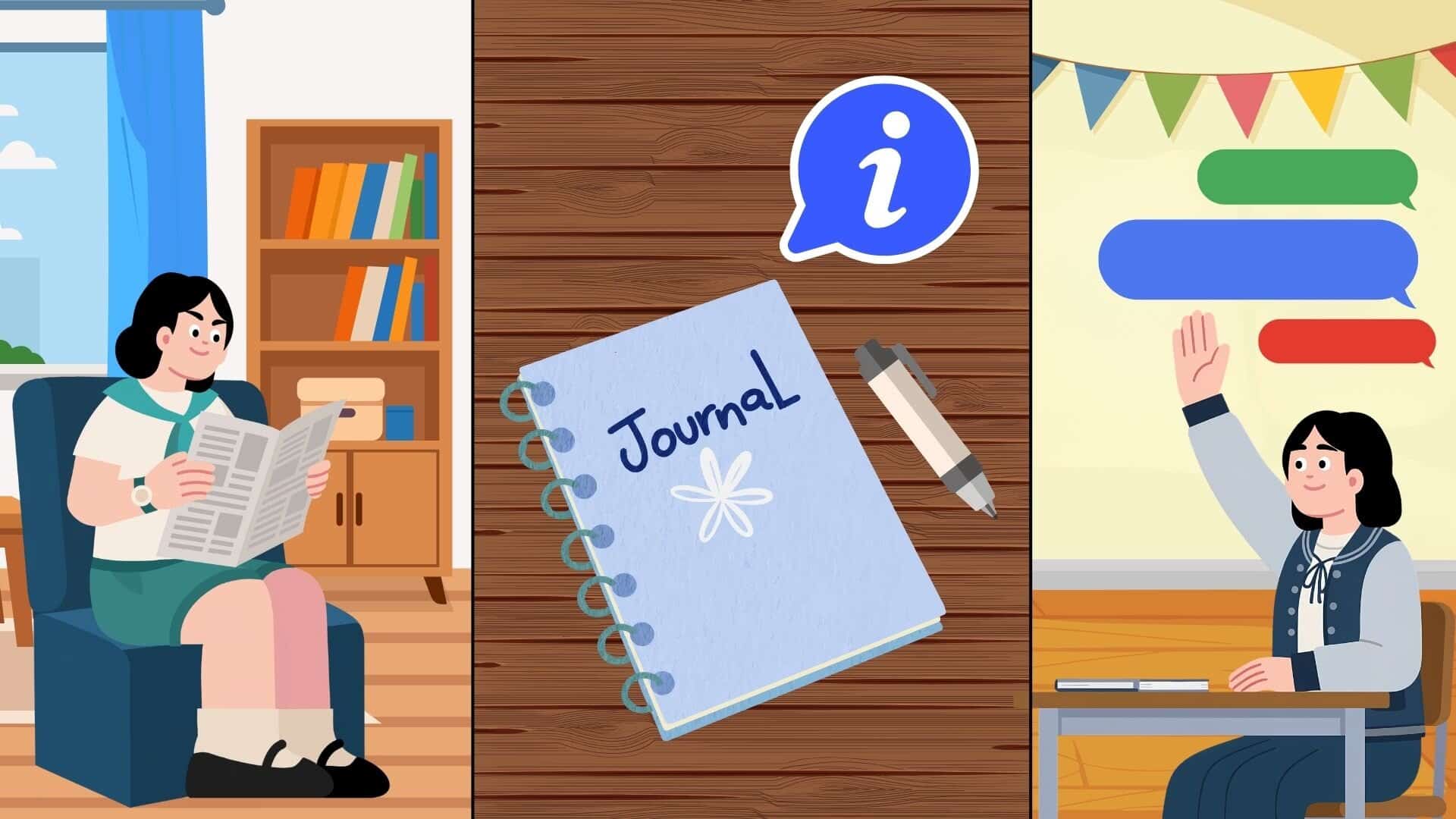
Reading regularly is the single most effective thing a student can do. Students can read opinion pieces, news articles, and commentary on issues that matter in Singapore and other parts of the world. The Straits Times, CNA, and reputable international publications are all good starting points. Even reading for fifteen minutes a day adds up significantly over weeks and months.
Keeping a simple journal is also worth considering. Whenever students come across an interesting statistic or a real-world example that resonates with them, writing it down in their own words makes it far more likely to stick. Over time, they can organise their notes around the themes that appear most frequently, such as technology, the environment, and youth issues, so that when a relevant topic comes up in an essay or oral, they already have something meaningful and specific to draw from.
Finally, engaging actively in class discussions rather than staying quiet is one of the most underrated ways to develop content knowledge. Listening to how classmates and teachers frame arguments, respond to counterpoints, and draw on examples exposes students to a wider range of perspectives than they would develop on their own.
Content knowledge is not something that can be crammed in the week before an exam. It builds gradually, through consistent reading, genuine curiosity, and the habit of engaging with the world beyond the classroom.
At WRITERS AT WORK, our Secondary Comprehensive English programme is designed with this in mind. We do not just teach students how to write and speak correctly. We help them develop the ideas, perspectives, and real-world understanding that give their English work genuine depth and substance. Through structured discussions and current affairs exposure, we help students build the knowledge bank they need to approach any topic with confidence.

It is completely normal for teenagers to find traditional newspapers dry or disconnected from their lives. The trick is to meet them where they are. Documentaries, educational podcasts, and well-researched video essays on platforms like YouTube are incredible tools for building real-world awareness. Infographics on social media that break down current events into bite-sized summaries are also fantastic. The goal is to get them curious about how the world works, regardless of the medium.
Possibly, though the relationship is a nuanced one. A student who performs well in comprehension but struggles in essays is often a student who can engage well with ideas when they are presented but has not yet developed the habit of generating and organising their own ideas independently. Building content knowledge alongside essay planning strategies can be helpful.
Both matter. Singapore-specific issues such as housing, education policy, and ageing population tend to appear regularly and are worth knowing well. Global issues such as climate change and artificial intelligence are equally relevant. Reading both local and international sources gives students the flexibility to approach any topic from multiple angles.

Jemmies Siew, Managing Director and Co-Founder of WRITERS AT WORK Enrichment Centre. With over 15 years of experience in education, entrepreneurship, and marketing, Jemmies has helped shape Singapore’s English enrichment landscape through her vision for transformative learning.
She is passionate about connecting real-world issues with language learning, helping students think critically and express themselves clearly. Connect with her on LinkedIn to follow her insights on education, content marketing, and thought leadership.



Start practising and learning

