For many students, the move from Primary 6 to Secondary 1 changes the way they approach English writing. At primary school, many students are trained to write picture-based compositions with dramatic plots, vivid emotions and clear lessons learnt. In Secondary 1, however, students begin moving towards essay writing, where ideas must be developed with greater logic, structure and purpose.
At WRITERS AT WORK, we often see students who were confident in PSLE composition writing feel uncertain when they first encounter Secondary 1 Continuous Writing. This is because the writing expectations have shifted. A strong secondary essay is not just about an exciting storyline. It must show maturity of thought, clear organisation and a strong understanding of the question.
In Primary 6, Continuous Writing is often built around storytelling. Students are usually given a topic and three pictures, and they must use at least one picture in their composition. This gives them a clear starting point. The pictures provide characters, settings, conflicts or possible events.
In Secondary 1, students have to become more independent. They may be given open-ended questions without pictures. These questions may ask them to write about a personal experience, describe a place, explain an idea or discuss a familiar issue. Instead of simply asking, “What happened next?”, students must start asking, “What is the point of my essay?” and “How do I develop this idea clearly?”.
→ The Writing Shift: Primary compositions often reward plot and description. Secondary essays reward structure, relevance and development.
→ The Thinking Shift: Primary students often focus on events. Secondary students must focus on ideas, reflections and explanations.
→ The Organisation Shift: Primary writing can follow a simple story arc. Secondary writing needs controlled paragraphs, clear topic sentences and logical progression.
To help parents and students understand the change, here is how Continuous Writing expectations differ between primary school and Secondary 1.
Primary School: Students are guided by pictures. These pictures help them decide what to write about, who the characters are and what event might happen.
Secondary 1: Students are often given broader prompts. For example, they may be asked to write about a time they showed responsibility, explain why teamwork matters or discuss whether students should spend less time online.
This means students cannot depend on visual prompts to generate ideas. They must learn how to unpack the question, identify the key words and plan relevant content on their own.
Primary School: Many compositions focus on a sequence of events. A character faces a problem, reacts to it and learns a lesson by the end.
Secondary 1: Even when students write personal recounts, the essay must show a clear purpose. The experience should not be included simply because it is exciting. It must reveal growth, reflection or a meaningful lesson.
For example, a primary composition may focus on losing a wallet and finding it later. A Secondary 1 personal recount should go further by explaining how the incident changed the student’s understanding of responsibility, honesty or gratitude.
Primary School: Students are often encouraged to use descriptive phrases to create suspense, fear or excitement.
Secondary 1: Description is still useful, but it cannot carry the whole essay. Students must explain their ideas clearly. In expository or discursive writing, students need to support their points with reasons and examples.
A sentence like “Teamwork is important” is not enough. A Secondary 1 student must explain why teamwork is important, how it helps students and where it can be applied.

Secondary 1 students begin to encounter a wider range of Continuous Writing genres. This can be challenging for students who are used to writing mainly narratives.
This is the closest to primary composition writing, but it requires more reflection. Students must write about an experience and explain what they learnt from it.
A strong recount should include:
Descriptive writing is not just about listing sights and sounds. In secondary school, students must create a clear atmosphere and control the reader’s impression.
For example, if students describe a hawker centre, they should not simply mention the smell of food, the noise of customers and the sight of stalls. They should shape these details to create a mood, such as warmth, nostalgia or liveliness.
Expository writing explains an idea clearly. Students may be asked to explain why students should manage stress, how young people can build good habits or what qualities make a good friend.
This genre requires students to organise their thoughts logically. They must give clear points, examples and explanations.
Some Secondary 1 students may begin to see simple argumentative or discursive questions. These require students to give opinions, consider different views and support their stand.
For example, a question such as “Should students spend less time on social media?” requires more than personal preference. Students must think about benefits, harms, examples and possible counterpoints.
One of the most important writing tools for Secondary 1 students is the PEEL method.
For example, if the essay question is “Explain why teamwork is important in school”, a student might write:
This kind of structure helps students avoid vague writing. It also trains them to develop one idea fully before moving to the next.
Many students struggle not because they lack ideas, but because they use primary school habits in secondary school essays.
Mistake 1: Writing Too Much Plot
Students may spend too much time describing what happened and too little time explaining why it matters. This can make the essay feel like a simple story rather than a mature response.
Mistake 2: Using Memorised Phrases
Phrases such as “my heart pounded like a drum” or “tears rolled down my cheeks” may sound familiar, but they can become overused. Secondary writing rewards precise and purposeful language.
Mistake 3: Not Answering the Question Directly
Some students write a well-described story that does not fully address the topic. In secondary school, relevance is crucial. Every paragraph should help answer the question.
Mistake 4: Weak Paragraphing
A secondary essay needs clear paragraph control. Students should avoid writing one long block of text. Each paragraph should have a purpose.

The best way to prepare is not to memorise essays. Students should build flexible writing skills that can be applied to different questions.
1. Practise Planning Before Writing
Students should spend a few minutes identifying the question type, key words and main points. A simple plan can prevent scattered ideas.
2. Build Topic Sentences
Every body paragraph should begin with a clear topic sentence. This helps the reader understand the main idea immediately.
3. Expand Ideas with Examples
Students should learn to support their ideas with examples from school, family, friendships, community life or current issues. This makes essays more convincing.
4. Strengthen Reflection
For personal recounts, students should not end with a rushed moral. They should explain how the experience changed their thinking or behaviour.
5. Read More Widely
Reading helps students build vocabulary, sentence control and content knowledge. Students who read opinion articles, short stories and school-related essays will have more ideas to draw from.
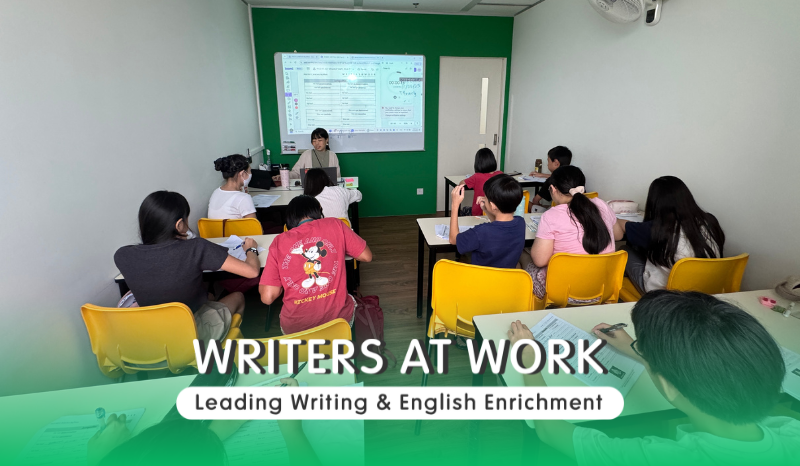
At WRITERS AT WORK, we help students move from primary composition habits to secondary essay skills by training them to understand the question, plan logically and write with clarity. A strong Secondary 1 writer must learn to move beyond memorised storylines and build essays with clear purpose, structure and reflection. To support your child’s transition, explore our guide on back-to-school essentials for secondary students, read our tips for parents on moving from PSLE to Secondary 1, and discover how to ace the Secondary 1 English exam papers. Join WRITERS AT WORK today and give your child the writing foundation needed to step into Secondary 1 with confidence.
The students who improve the most are not always the ones who scored the highest in their EOY examinations. They are the ones who take the time to learn from their mistakes and work on them systematically.
If you are unsure where to begin, guidance from an experienced teacher can make the process much clearer. At WRITERS AT WORK, we help students identify their key weaknesses, develop effective examination strategies, and build the skills needed to perform confidently in both Paper 1 and Paper 2.
The EOY papers have already shown you where the gaps are. The next step is deciding what to do about them.
Join WRITERS AT WORK and start turning this year’s feedback into next year’s success. Don’t forget to follow us on TikTok and Facebook for regular exam tips, useful resources, and a closer look at what goes on inside our classrooms.
This is common because the writing expectations are different. PSLE composition often focuses on story development, while Secondary 1 essays require more independent planning, explanation and structure.
Yes. Personal recount and reflective writing are still important. However, students must go beyond plot and include stronger reflection and clearer purpose.
The biggest change is the move from picture-based prompts to open-ended questions. Students must generate their own ideas and organise them logically.
PEEL stands for Point, Evidence, Explanation and Link. It helps students build clear body paragraphs in expository, discursive and argumentative essays.

Agnes Ng, Co-Founder and Teaching & Curriculum Director of WRITERS AT WORK. An NUS Honours graduate and published author with over 30 years of experience, Agnes has been the architect of the organization’s student-centric curricula since 2012.
Dedicated to teacher mentorship and academic excellence, she has guided hundreds of students to achieve outstanding results. Her expertise and commitment to high-quality education remain the cornerstone of WRITERS AT WORK’s success in empowering every learner.




Start practising and learning

