Healthy habits are a useful theme in composition writing because they go beyond food and exercise. They also allow students to write about discipline, determination, responsibility and personal growth. A story about healthy habits could involve preparing for a sports event, changing an unhealthy routine, learning the importance of sleep, or building stronger self-discipline.
Many students know simple expressions such as “eat well” or “exercise often”, but they may not have the vocabulary to write about the topic in a vivid and precise way. That is where a strong word bank becomes useful. With the right words and phrases, students can describe routines, emotions and progress more clearly.
Healthy habits make excellent composition writing topics because they are relevant to everyday life. They also give students a chance to show character development. For instance, a story about training for a challenge can show how a student becomes more disciplined, builds stamina and learns to balance study with fitness.
This is especially helpful in narrative writing. Instead of merely listing actions, students can show how habits shape a person’s attitude and success. A healthier routine often leads to a stronger ending because the character learns a valuable lesson about perseverance and self-care.
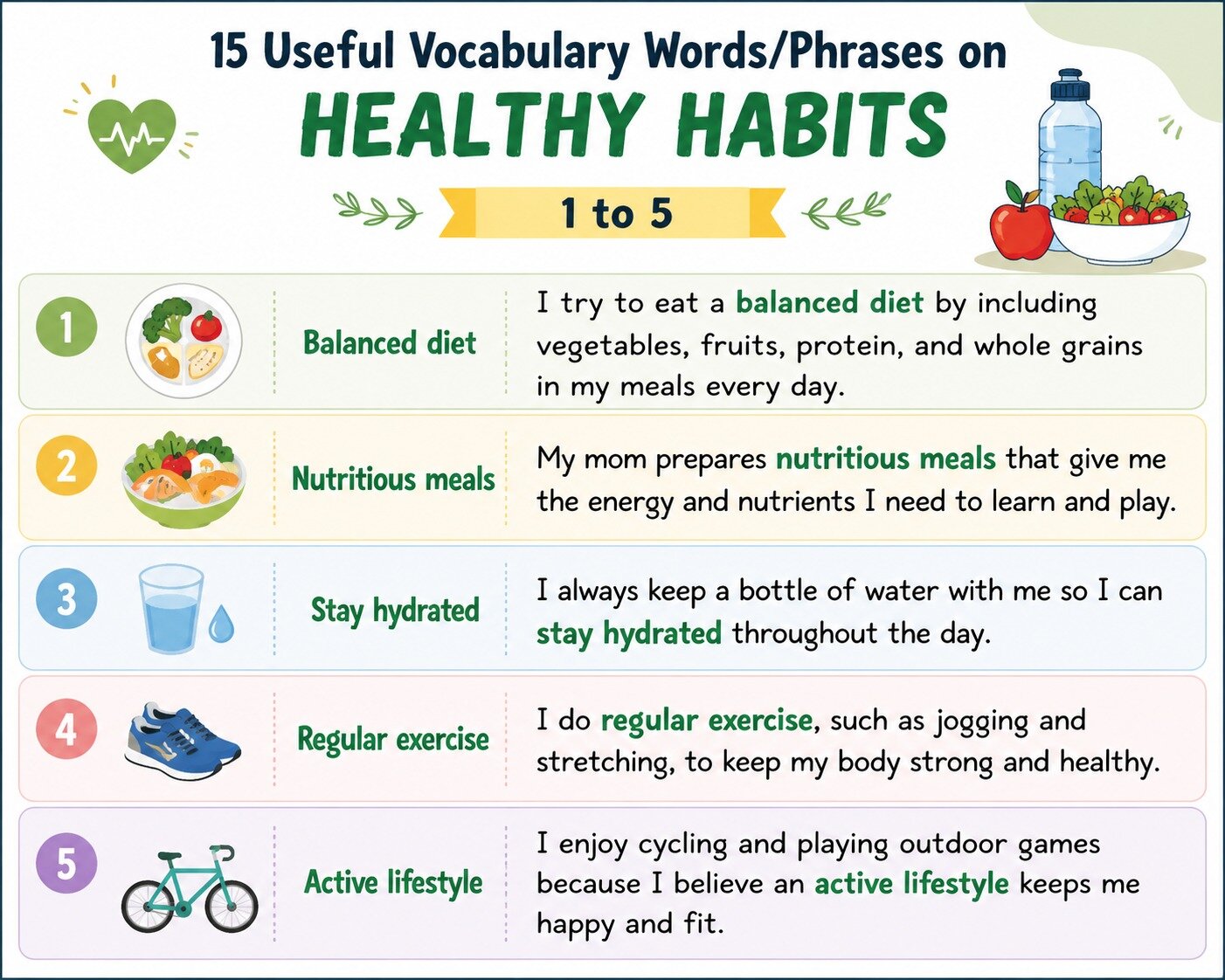
Vocabulary Bank: Healthy Habits
The following vocabulary bank is based on common healthy habits that students may describe in their compositions.
|
Word or Phrase |
Meaning |
Example Sentence |
|
Balanced diet |
Eating the right mix of foods |
Marie followed a balanced diet to prepare her body for training. |
|
Nutritious meals |
Meals that provide good nutrients |
Her mother prepared nutritious meals filled with vegetables and protein. |
|
Stay hydrated |
Drink enough water |
She brought a water bottle everywhere so she could stay hydrated. |
|
Regular exercise |
Physical activity done often |
Regular exercise helped her become stronger each week. |
|
Active lifestyle |
A way of life that includes movement and exercise |
Cycling and swimming were part of her active lifestyle. |
|
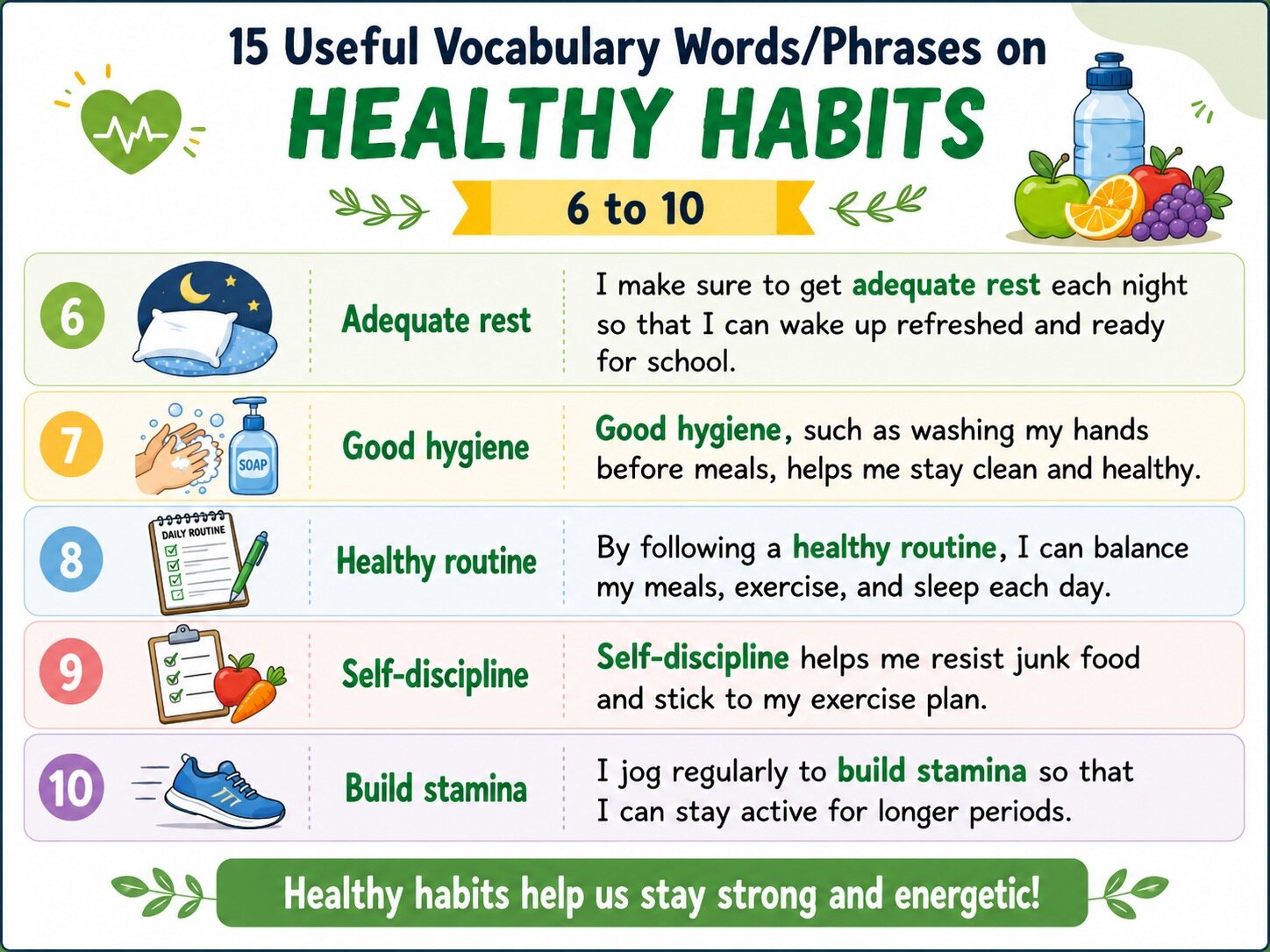
Adequate rest |
Enough sleep and recovery time |
She made sure to get adequate rest after every training session. |
|
Good hygiene |
Clean habits that keep a person healthy |
Good hygiene, such as washing up after exercise, kept her feeling fresh. |
|
Healthy routine |
A regular pattern of good habits |
Her healthy routine included exercise, meals and early bedtimes. |
|
Self-discipline |
The ability to control oneself and stay focused |
Self-discipline helped her avoid junk food and stick to her training plan. |
|
Build stamina |
Increase endurance |
Daily jogging helped her build stamina for the triathlon. |
7 Idioms and Similes for Writing About Healthy Habits
Figurative language can make composition writing more expressive. Here are some idioms and similes students can use for this topic. How many of these do you know?
|
Idiom / Simile |
Meaning |
Example Sentence |
|
As fit as a fiddle |
Very healthy and strong |
After weeks of training, Marie felt as fit as a fiddle. |
|
As fresh as a daisy |
Looking or feeling energetic |
After a good night’s sleep, she woke up as fresh as a daisy. |
|
In the pink of health |
In very good health |
With enough exercise and sleep, Marie was in the pink of health. |
|
Full of beans |
Very lively and energetic |
After her nutritious breakfast, she felt full of beans. |
|
Like clockwork |
Happening regularly and smoothly |
Her morning routine went like clockwork. |
|
A spring in her step |
Moving in a cheerful and energetic way |
There was a spring in her step as she headed for training. |
|
Strong as an ox |
Very strong |
By the final week, her legs felt strong as an ox during the cycling sessions. |
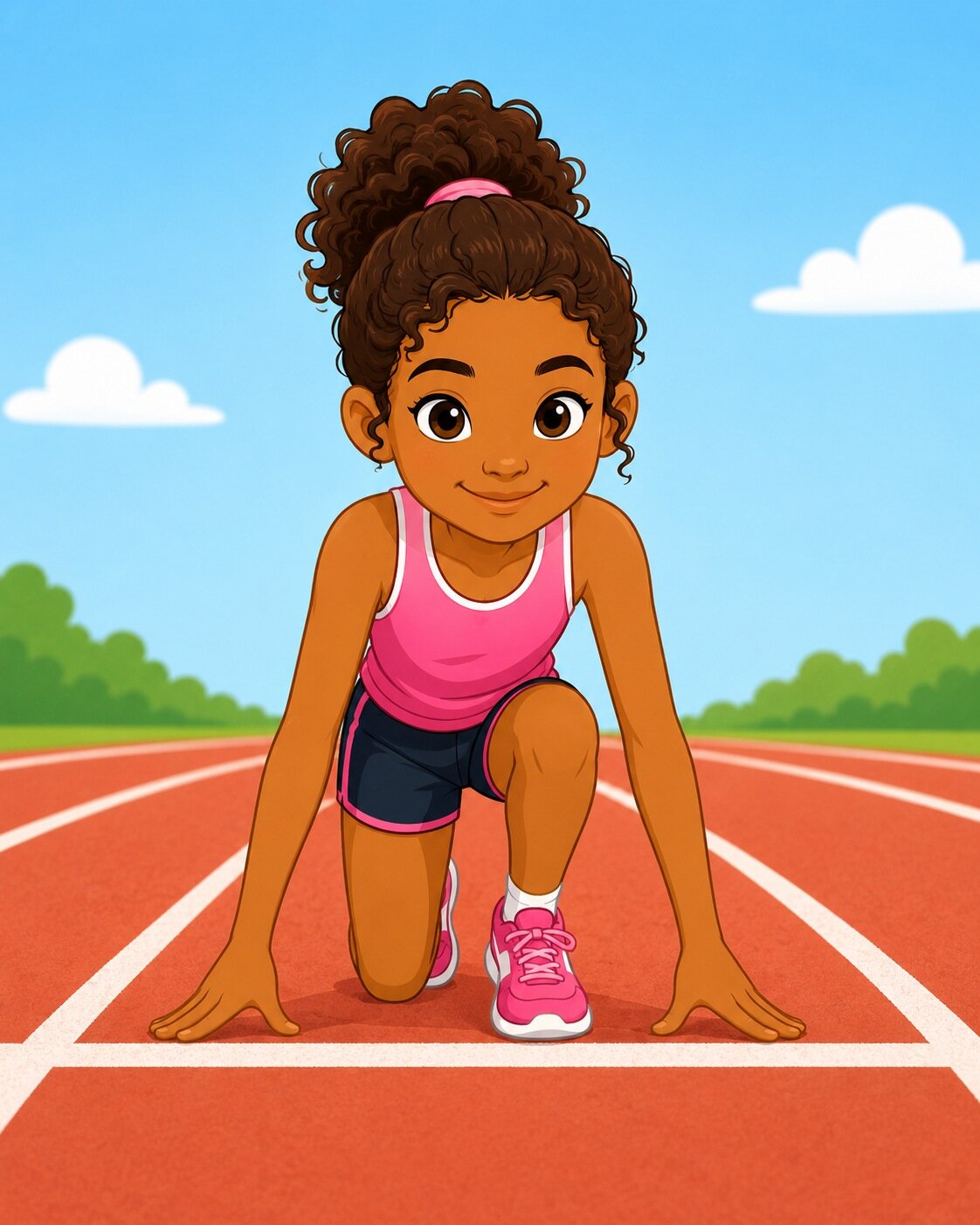
Marie had exactly one month left before her school’s Junior Triathlon Challenge, and she was determined to be ready. At first, the thought of swimming, cycling and running in one event felt overwhelming. However, instead of giving in to self-doubt, she decided to build a healthy routine and stick to it faithfully.
Every morning, Marie woke up early and went jogging around the neighbourhood to build stamina. In the afternoons, she cycled at the park or practised swimming at the community pool. Regular exercise soon became part of her active lifestyle. Although the training was tiring, she reminded herself that improvement would not happen overnight.
At home, Marie’s mother helped her by preparing nutritious meals. Marie also paid attention to her balanced diet, choosing fruits, vegetables and whole grains instead of sugary snacks. She made it a point to stay hydrated by carrying a bottle of water with her throughout the day. Just as importantly, she ensured that she got adequate rest every night so her body could recover.
Slowly, Marie began to notice the change. She no longer felt breathless after every run, and her movements became stronger and steadier. Her routine worked like clockwork, and there was a spring in her step each morning. By the final week of training, she felt as fit as a fiddle. More than that, she realised that healthy habits were not just helping her prepare for the triathlon. They were shaping her into a more disciplined and confident person.
Fill in each blank with the best word or phrase from the box below.
Word Bank: balanced diet, stay hydrated, regular exercise, adequate rest, self-discipline
Answer Key
‘Healthy habits’ is a rich and practical topic for composition writing. They give students useful vocabulary to describe fitness, food, routines and personal growth. More importantly, they help students write stories with a clear lesson. A character who learns to eat better, sleep earlier or train consistently becomes more believable and inspiring.
At WRITERS AT WORK, we help students strengthen their composition writing by teaching them how to use vocabulary meaningfully, not mechanically. Through guided practice, students learn how to turn simple themes into thoughtful and engaging stories.
If you are looking for more support, explore our English tuition for primary students, browse our PSLE composition coaching, or visit WRITERS AT WORK for more writing resources.
Beyond the classroom, students and parents can also tap into our wider learning resources through W@W eSeries, and stay updated with tips, insights, and student support on TikTok and Facebook.

It is a relatable topic that allows students to write about food, exercise, sleep, discipline and personal improvement. It also naturally leads to a meaningful lesson at the end of the story.
Students should learn topic-specific words such as “balanced diet”, “adequate rest”, “self-discipline” and “build stamina”, then practise using them in short paragraphs and full stories.
At WRITERS AT WORK, students learn how to plan, develop and refine their writing using strong vocabulary, clear story structure and purposeful expression. This helps them write more confidently and effectively across a wide range of topics.

Jemmies Siew, Managing Director and Co-Founder of WRITERS AT WORK Enrichment Centre. With over 15 years of experience in education, entrepreneurship, and marketing, Jemmies has helped shape Singapore’s English enrichment landscape through her vision for transformative learning.
She is passionate about connecting real-world issues with language learning, helping students think critically and express themselves clearly. Connect with her on LinkedIn to follow her insights on education, content marketing, and thought leadership.



Start practising and learning

