“How was school today?”
“Good.”
“What did you learn?”
“Nothing much.”
For many parents, conversations like these are a daily occurrence. When this happens during a casual chat at the dinner table, it can be slightly frustrating. But when it happens during an oral examination, it can seriously impact their grades. Many parents assume that children give short answers because they simply do not care. In reality, the root cause is usually structural or psychological. Understanding why your child stops talking is the very first step toward helping them express themselves with total confidence.
Many children genuinely believe they have answered the question once they have provided the basic information being asked for.
Imagine asking your child:
→ “Why do you enjoy playing football?”
They reply:
→ “Because it’s fun.”
From an adult perspective, the answer feels incomplete. We naturally expect an explanation, an example, or a personal experience. However, in the child’s mind, the question has already been answered successfully.
Children often do not realise that strong communication involves adding details, explanations, and supporting examples. Until they develop this awareness, they will continue stopping after the first sentence because they do not see any reason to continue.
Other times, children know exactly what they want to say but struggle to organise their thoughts.
After giving an initial answer, they may not know what should come next. As a result, they pause, lose confidence, and stop speaking altogether.
Think of it like building a house. Even if you have all the materials, construction becomes difficult without a blueprint. In the same way, children often need simple structures to help them organise and develop their answers.
As children grow older, they become increasingly aware that their answers may be judged. Some worry about making grammatical mistakes. Others worry about giving the “wrong” opinion. Some simply dislike the feeling of being put on the spot.
Ironically, the more capable the child, the more likely they may be to overthink their response. Instead of speaking freely, they begin mentally editing every sentence before saying it. By the time they decide whether an answer is good enough, the conversation has already moved on.
Building confidence is therefore just as important as building language skills. Children need opportunities to express themselves in environments where mistakes are seen as part of learning rather than something to fear.
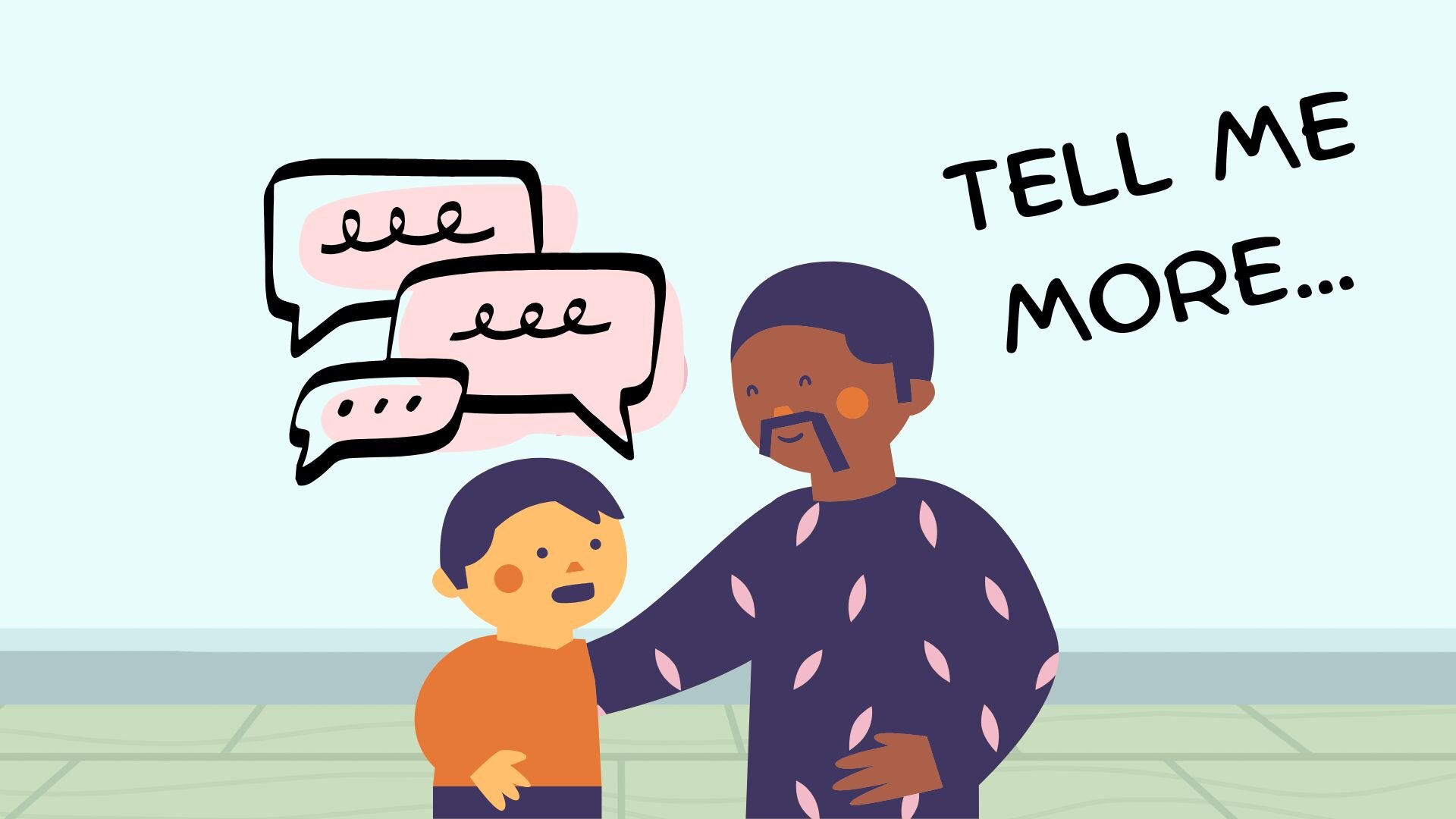
The goal is not to teach children to talk more for the sake of it. The goal is to help them understand that a good answer has layers. Different ages need different entry points into this habit.
For younger children, the most effective strategy is simple and conversational. After your child finishes a sentence, ask “So what?” or “Tell me what happened next.” Not in a challenging way, but with genuine curiosity.
If your child says “I saw a dog at the park,” you ask “So what happened?” If your child says “The dog was big” you ask “Then what?”. Try this with them and resist accepting one-sentence replies. Keep the questions gentle and open. Over time, the habit of extending an answer becomes second nature, and children carry it into the classroom and examination hall without even thinking about it.
You can also explore fun ways to grow your child’s vocabulary at home so they have the words ready when they want to say more.
By Primary 4, children are ready to learn a more structured approach to elaboration. The PEEL framework gives their answers a shape to follow.
For the oral examination specifically, dedicated PSLE oral preparation makes a significant difference. Students who have practised structured responses before the exam do not freeze the same way unprepared students do. They have a mental scaffold to lean on when nerves kick in.
Reviewing past-year PSLE oral topics is also a practical way to familiarise your child with the kinds of questions they are likely to face. Familiarity reduces anxiety, and reduced anxiety means fuller, more confident answers.
One of the quickest practical tools parents and students can use is a bank of sentence starters. These phrases act as bridges between the first sentence and everything that should come after it.
For example:
Practise these at home by asking your child a question and challenging them to use at least two of these starters in their answer.
For children who struggle with oral exam anxiety, having a set of reliable sentence starters also provides a sense of control. Instead of facing an uncomfortable silence, they have a way to begin developing their ideas. in their answer.
Children are not born knowing how to elaborate. It is a skill that develops gradually through practice, guidance, and encouragement.
At WRITERS AT WORK, we help students build these habits systematically through discussion, oral practice, writing activities, and structured feedback. Our lessons are designed not just to prepare students for examinations, but to help them become confident communicators who know how to express themselves clearly and thoughtfully.
Whether your child is preparing for the PSLE Oral examination or simply needs support developing stronger communication skills, we would love to help. Join us today to find out more about our Primary English programmes!
Speaking casually and speaking in an examination setting are very different skills. Many children become nervous when they know they are being assessed. Regular Oral practice helps them become more comfortable organising and expressing their thoughts under pressure.
In many cases, yes. Children who can explain their ideas clearly when speaking often find it easier to express those same ideas in writing. Building oral communication skills helps strengthen vocabulary, organisation, and confidence across multiple areas of English.
Try rephrasing the question or connecting it to your child’s own experiences. Sometimes children feel overwhelmed by broad questions but respond more readily when asked about something familiar.
A good English programme provides students with opportunities to practise speaking, learn response structures, expand their vocabulary, and receive targeted feedback. Over time, these skills help children develop the confidence and habits needed to express their ideas more fully and effectively.

Jemmies Siew, Managing Director and Co-Founder of WRITERS AT WORK Enrichment Centre. With over 15 years of experience in education, entrepreneurship, and marketing, Jemmies has helped shape Singapore’s English enrichment landscape through her vision for transformative learning.
She is passionate about connecting real-world issues with language learning, helping students think critically and express themselves clearly. Connect with her on LinkedIn to follow her insights on education, content marketing, and thought leadership.



Start practising and learning

