
In O Level English Paper 1, students are not locked into a single question. They are given a choice, usually a mix of narrative, personal recount, discursive, and argumentative prompts. That choice feels like a relief, but it comes with its own pressure. The wrong pick can send a student down a path they cannot recover from in the time given. Choosing well is a skill in itself, and this post walks through exactly how to do it.
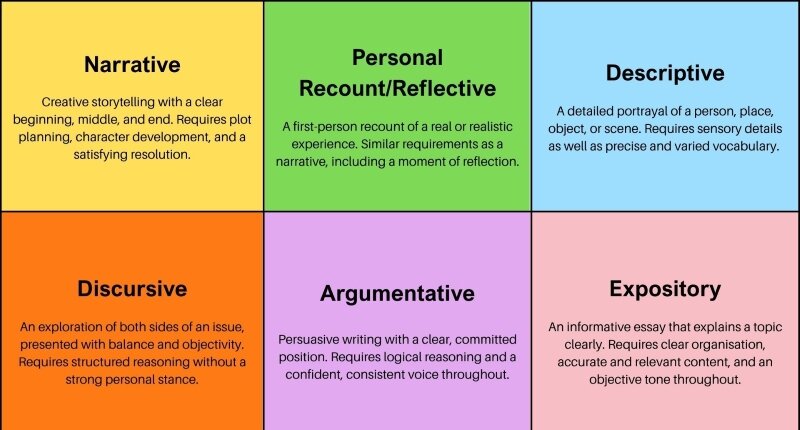
Before a student can choose wisely, they need to know what each question type actually demands. Every genre has its own expectations, tone, and structure. Walking in without that awareness is like agreeing to a contract without reading it.
Study the conventions of each genre as part of your revision. For each type, note down the expected tone, structure, and two or three mistakes students commonly make. Use this as a reference checklist before your exam.
A question that looks exciting in the moment is not necessarily the right one to attempt. Students often choose based on a flash of inspiration, only to find themselves stuck with no clear direction.
Choose the genre you are most confident in. Then check whether this specific prompt actually gives you enough to work with. Run through these three questions quickly before committing:
Picking a narrative prompt because the title sounds interesting, then realising halfway through that there is no clear conflict, no turning point, and no ending in sight. By then, switching questions costs too much time. Enthusiasm is not the same as readiness!
Not every question is as straightforward as it appears. Some prompts are deceptively open, which sounds like an advantage but can quickly become a problem. An open prompt like “Write about a time you were surprised” gives students a lot of freedom, but without a strong story arc and a clear point of reflection, that freedom can work against them. Similarly, an argumentative prompt that expects students to draw on current affairs can fall flat if the student cannot think of specific, credible examples to support their position.
Spend a few minutes unpacking the question and brainstorming ideas. For open-ended narrative questions, decide on a clear takeaway or lesson before planning your plot. For argumentative prompts, quickly list 2–3 relevant examples that you can confidently explain. If you cannot think of specific examples, choose a different question. The safest choice is always the one you can support well.

Many students settle early into a comfort zone. If narrative writing comes naturally, they practise only narrative. If argumentative essays feel manageable, that is all they prepare for. This is an understandable instinct, but it is also a risk. Since you can never guarantee which genres will appear on the actual O Level paper, being too reliant on one can leave you with few good options on exam day. Preparing across all essay types gives you the flexibility to choose the question that best suits you, rather than being forced into one you are not ready for.
During the year, set aside time to write in every genre, not just the ones you feel comfortable with. After each attempt, note what fell short and make a conscious effort to improve that area in your next attempt. The goal is to build versatility so that no matter what question appears in the exam, you are prepared to handle it with confidence.
The ability to choose well under pressure is something that separates prepared students from unprepared ones. It does not come from luck or instinct. It comes from knowing your essay types inside out, being strategic about your strengths, and having practised widely enough to feel comfortable with more than one genre. Start building these habits now, and exam day will feel a lot less daunting.
At WRITERS AT WORK, our Comprehensive English Programme is designed to do exactly that. We help students develop the clarity, confidence, and range they need to perform at their best in Paper 1 and beyond. Give yourself the best possible chance at O Levels and join WRITERS AT WORK today!

It can be. Finishing well ahead of time usually means one of two things: the essay is underdeveloped, or you are not using the remaining time to review. Reading back through for flat language, unclear sentences, or missing transitions can lift the quality of an essay.
It depends on how early you catch it. If you are only a paragraph in and you genuinely have nothing to work with, switching may still be worth it. If you are midway through, it is almost always better to push forward and salvage what you have. The stronger habit to build is front-loading your decision with a proper brainstorm so switching never becomes necessary.
Usually, it is vagueness. A prompt with no clear constraint or angle gives students too much freedom, which paradoxically makes it harder to write well. Without boundaries, it is easy to drift. The best prompts for most students are ones that immediately suggest a specific situation, argument, or conflict, something concrete enough to anchor the writing from the first paragraph.

Agnes Ng, Co-Founder and Teaching & Curriculum Director of WRITERS AT WORK. An NUS Honours graduate and published author with over 30 years of experience, Agnes has been the architect of the organization’s student-centric curricula since 2012.
Dedicated to teacher mentorship and academic excellence, she has guided hundreds of students to achieve outstanding results. Her expertise and commitment to high-quality education remain the cornerstone of WRITERS AT WORK’s success in empowering every learner.



Start practising and learning

