Addressing the question precisely is one of the most important skills in O-Level essay writing, and also one of the most commonly overlooked. Many students assume they are answering the question, when in reality they are responding to a slightly altered version of it in their own minds. Even a well-written essay can lose marks if it does not fully answer the question.
In this guide, we break down how to interpret essay questions accurately so you can stay focused, relevant, and on point from start to finish.
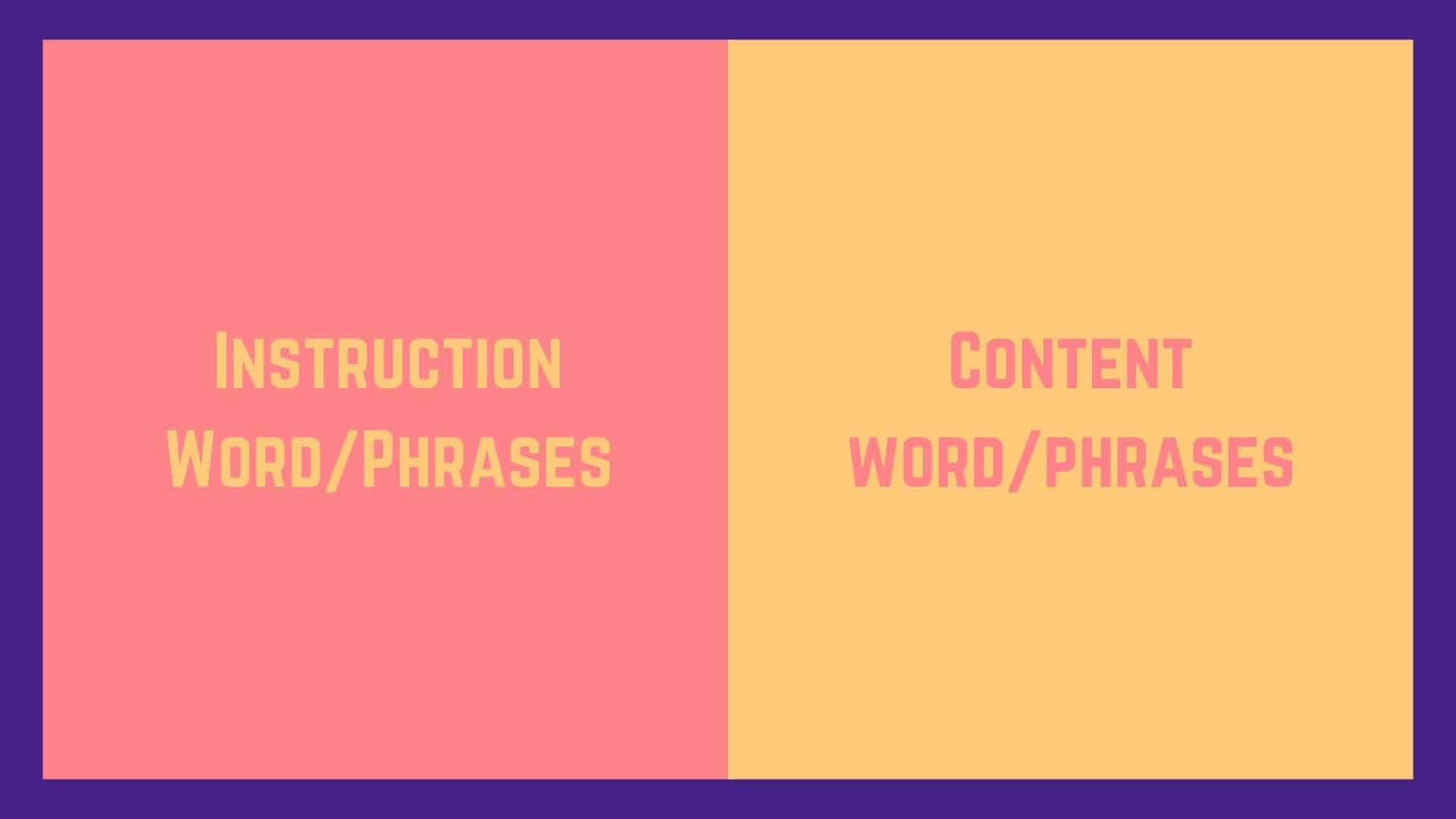
Most O-Level essay questions contain two distinct parts, and you need to pay attention to both of them.
The first is the instruction word. This tells you what you are being asked to do: describe, explain, discuss, argue, evaluate, agree or disagree. Different instruction words call for different approaches.
The second is the content. This is what the question is specifically about: the topic, the angle, the specific scenario or claim being put forward. Even if two questions use the same instruction word, the content determines exactly what your essay needs to address.
Read both parts carefully before you plan anything.
Essay Question: “As I looked back, I realised I had made the right decision.” Write about a time when you felt like this.” (O-Level 2023)
Before you start writing, highlight or underline the important words.
What to highlight/underline ✓
Content phrase 1: looked back … realised (reflection must happen after the event)
Content phrase 2: right decision (the focus is on a choice that is later proven correct)
For this question, you need to describe a situation where you made a decision and only later came to understand that it was the right one. The reflection is key. It is not enough to show that the decision was correct. You must also show the moment of realisation and how your perspective changed over time.
Possible themes for the question:
Essay question: “Social media does more harm than good.” Do you agree? Why or why not? (O-Level 2024)
What to highlight/underline ✓
Instruction: Do you agree? (requires a position)
Content: Social media (not technology in general, stay specific)
Claim 1: harm
Claim 2: good
Key tension: Whether the negative effects of social media outweigh its benefits.
To answer this question, decide which side you find more convincing based on evidence and reasoning, and build your argument around it. At the same time, a strong response should acknowledge the opposing view. An essay that argues social media is harmful without recognising its benefits will come across as one-sided and less convincing.
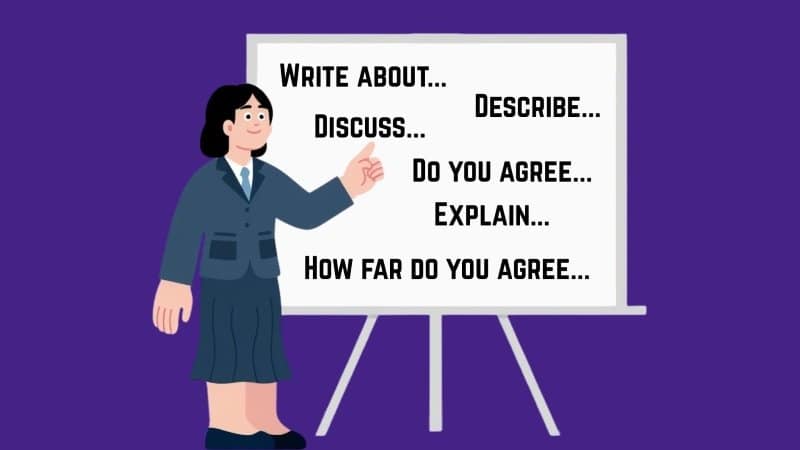
Different instruction words call for different approaches. Here is a quick reference for the ones that appear most often in O-Level essay questions.
This usually appears in narrative or personal reflective essays. You are expected to tell a story or recount an experience based on the given scenario. Focus on clear events, engaging details, and a meaningful outcome that fits the question.
Bring a scene, person, or experience to life using specific details and sensory language. Instead of simply stating what is there, show the reader through literary devices, precise word choice, and carefully selected details that create a strong impression.
Present different perspectives on an issue in a balanced way. A discursive essay explores the topic from more than one angle, usually considering both positives and negatives or differing viewpoints before arriving at a thoughtful conclusion.
You should consider both sides of the argument, but ultimately make a clear judgement about the extent to which you agree. You can use phrases such as “to a large extent” or “to a limited extent”.
Similarly, you should acknowledge both sides of the argument (but devote more paragraphs to the side you agree with). You need to take a clear stance and state it in the introduction and conclusion. Do not sit on the fence!
This is less about arguing and more about helping the reader understand why or how something works. Use examples and reasoning to help the reader understand the topic.
Understanding the question is the foundation of a strong essay. No matter how fluent your writing is or how strong your ideas are, they will not earn full marks if they do not directly address what the question is asking. Take the time to break down the instruction, identify the key content, and stay focused on it throughout your essay. This simple habit can make a significant difference to your overall score.
Practising with past-year O-Level essay questions is one of the most effective ways to improve your ability to interpret and address questions accurately. The more you expose yourself to different question types and learn to break them down, the more instinctive this skill becomes.
If you want guided practice and personalised feedback to sharpen this skill, WRITERS AT WORK is here to help. Our Comprehensive English Programme trains students to break down questions accurately, plan effectively, and write with clarity and confidence. Stop second-guessing what the question means and start answering it with precision. Join us and take your essay writing to the next level.
Do not panic! First, try to infer the meaning from context. Look at the rest of the question and ask yourself what kind of response it is guiding you towards. Often, you can still understand the general direction even if one word is unfamiliar.
If the word is central to the question and you are unsure, it is safer to choose another question rather than risk going off-topic. However, if you decide to proceed, keep your interpretation simple and consistent, and make sure the rest of your essay clearly addresses the task.
If you catch it early, adjust your direction immediately. It is better to correct your approach halfway than to continue writing an irrelevant essay.
If you are already deep into your essay, do not panic or restart unless you have enough time. Instead, try to steer your remaining paragraphs back towards the actual question. You may not score full marks, but you can still recover some credit by addressing the key requirements in your later paragraphs.
Around five to six minutes is a good target. This includes reading the question carefully, underlining the key words, identifying your position or approach, and sketching out a brief plan. Students who skip this step to save time often end up spending more time mid-essay trying to figure out what to write next, or worse, realising they have gone off-topic and cannot recover.

Agnes Ng, Co-Founder and Teaching & Curriculum Director of WRITERS AT WORK. An NUS Honours graduate and published author with over 30 years of experience, Agnes has been the architect of the organization’s student-centric curricula since 2012.
Dedicated to teacher mentorship and academic excellence, she has guided hundreds of students to achieve outstanding results. Her expertise and commitment to high-quality education remain the cornerstone of WRITERS AT WORK’s success in empowering every learner.



Start practising and learning

