Ask most students what a balanced argumentative essay looks like, and they will tell you it means covering both sides. That is not wrong, but it is incomplete. Many students interpret balance as equal weight, spending half the essay arguing one position and the other half arguing the opposite (this is usually for discursive), and then wondering why their score does not reflect the effort they put in. A balanced argumentative essay is not a debate where neither side wins. It is a well-reasoned argument that takes a clear stand, acknowledges the complexity of the issue, and emerges from that complexity stronger, not weaker. Getting that right is harder than it sounds, and this post breaks down exactly how to do it.
In O Level English, argumentative essay questions typically use the keywords “Do you agree?” or “To what extent do you agree?” Both require a clear personal position, not a neutral summary of different views. Balance in argumentative writing is often misunderstood in two specific ways, and clearing up these misconceptions is the first step to writing a stronger essay.
A balanced essay does not give equal space to both sides. It gives appropriate space. Your main argument should dominate. The opposing view gets acknowledged and addressed, but it should never take over the essay.
Balance is not neutrality. An argumentative essay still requires a clear and committed position. Students who continuously sit in the middle often produce conclusions that feel vague or inconclusive.
💡Think of it this way: a balanced essay is one where the writer has clearly thought about both sides and still chosen one. That choice, made with full awareness of the other side, is what makes the argument credible.
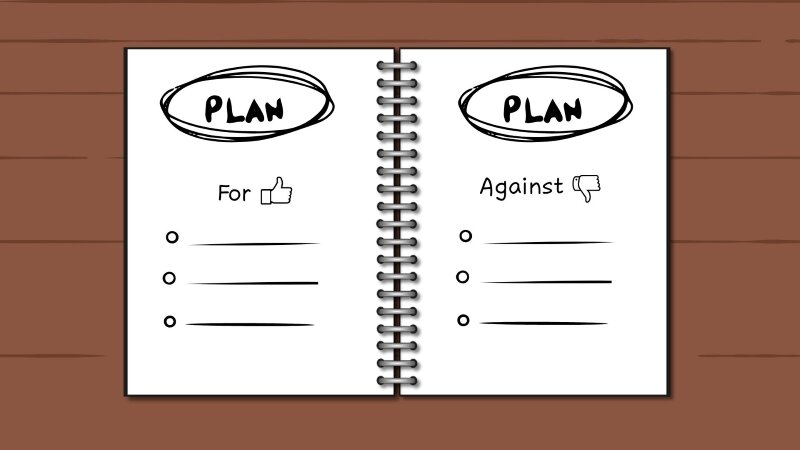
Good essays start with good planning. Before writing a single sentence, spend three to five minutes mapping out your argument. A simple method that works well under timed conditions:
This prevents repetition, ensures your essay stays focused, and means you will never reach the middle of your essay without knowing where it is going.
Before students can write effectively, they need a structure that allows their argument to remain organised, balanced, and persuasive from beginning to end.
Open with a brief context, then state your position clearly. The thesis should tell the examiner what you believe and signal the key reasons you will develop. It should be specific enough to give direction without listing every point in full. A strong thesis takes a stand from the very first paragraph.
This next paragraph develop the reason that support your position. The paragraph should open with a clear topic sentence, followed by reasoning and evidence, and close with a sentence that links back to the thesis.
The next paragraph should be your counter-argument. This is where you acknowledge the strongest objection to your position. Present the counterargument fairly and clearly. It should be the best version of the opposing view, not a weakened one that is easy to dismiss.
This is where you push back. Explain specifically why the counterargument, despite having some merit, does not override your original position.
This follows the same structure as Body Paragraph 1. Develop a second distinct reason that supports your thesis. Ensure it adds something new rather than restating the first point in different words.
This is where you restate your position. Acknowledge what you have conceded, reaffirm why your stand remains the stronger one, and close with a forward-looking or reflective statement that gives the essay a sense of completeness.

An essay that argues one position without ever engaging with the opposing view reads as one-sided, regardless of how well the argument is made. Examiners are looking for evidence that the student can think critically about the issue, and critical thinking includes understanding why reasonable people might disagree. Without a counterargument, the essay misses that dimension entirely.
This is the opposite problem. Some students present the counterargument so fully, with so many concessions, that by the time the rebuttal arrives, the original position feels abandoned. The essay ends up arguing both sides equally without committing to either, which reads as indecisive rather than balanced. Every concession should be followed by a clear, confident pivot back to the main argument.
A rebuttal that simply says “this argument does not hold” without explaining why is not a rebuttal. It is a dismissal. The goal is to explain why it is ultimately less convincing, less realistic, or less significant than your own argument.
Strong rebuttals often:
These phrases help signal to the examiner that you are arguing with awareness and control, rather than simply listing points on both sides.
1. Introducing your position
2. Introducing the counterargument
3. Pivoting to the rebuttal
4. Concluding with nuance
Argumentative writing is one of the most demanding skills in O Level English, and it improves significantly with the right guidance and consistent practice. At WRITERS AT WORK, we help secondary students develop the ability to argue with clarity, engage with opposing views confidently, and write essays that examiners find genuinely persuasive. Whether you are working on essay structure, developing your thesis, or learning how to handle counterarguments, our experienced teachers guide you through every stage of the process. Join our Comprehensive English Programme today!

An argumentative essay asks you to take and defend a clear personal position. The question usually includes “Do you agree?” while a discursive essay asks you to “Discuss” and explore an issue from multiple angles without necessarily committing to one side. It is more open and balanced in the 50/50 sense. Mixing up the two is a common. Always read the question keyword carefully before deciding how to approach your response.
The counterargument and rebuttal together should be roughly the same length as one body paragraph. If they run significantly longer, the opposing view is getting too much space and may start to overshadow the main argument. If they are significantly shorter, the counterargument will feel dismissive and the rebuttal unconvincing. Aim for balance within the paragraph, not across the whole essay.
Yes, but with care. Personal examples can make an argument feel grounded and authentic, which is a strength. The risk is that a purely personal example can read as anecdotal rather than persuasive. Where possible, support your personal example with a broader observation or a widely known fact that shows the experience is not unique to you. This lifts the example from personal opinion to a point that readers can recognise as relevant to the wider issue.

Agnes Ng, Co-Founder and Teaching & Curriculum Director of WRITERS AT WORK. An NUS Honours graduate and published author with over 30 years of experience, Agnes has been the architect of the organization’s student-centric curricula since 2012.
Dedicated to teacher mentorship and academic excellence, she has guided hundreds of students to achieve outstanding results. Her expertise and commitment to high-quality education remain the cornerstone of WRITERS AT WORK’s success in empowering every learner.



Start practising and learning

