Many students treat counterarguments as a formality. They know they are “supposed” to include the opposing view somewhere in the argumentative essay, so they add a short paragraph that briefly mentions the other side before quickly returning to their main point. The result is often weak, mechanical, and unconvincing.
This guide breaks down what strong counterarguments actually look like and how to develop counterarguments that genuinely strengthen your O Level essays.
A counterargument is a paragraph in which the writer acknowledges the strongest objection to their position. It is the moment in the essay where the writer steps back from their own argument and gives the opposing view a fair hearing.
Many students see this as a risk. If you present the other side well, does that not make your own position look weaker? The answer is no, and understanding why is the key to writing a counterargument with confidence.
An essay that argues one position without ever acknowledging the opposing view reads as one-sided. It tells the examiner that the student has only considered part of the issue. An essay that presents the opposing view fairly and then shows why its own position is still stronger tells the examiner that the student has considered the full picture and arrived at a reasoned conclusion. That is the kind of critical thinking that separates a good essay from a genuinely impressive one.
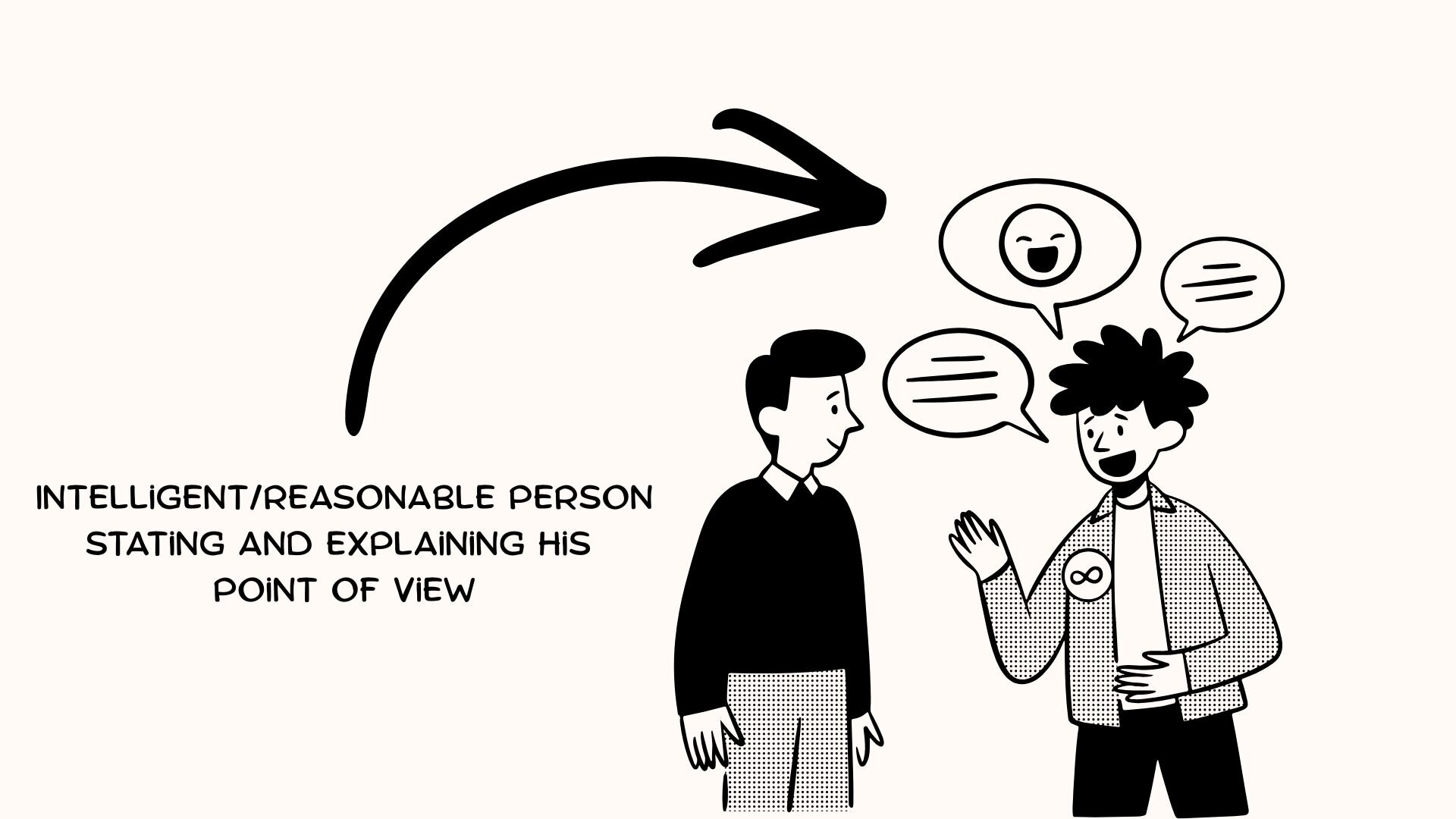
The best counterarguments come from asking a simple question: What would an intelligent person who disagrees with me actually argue?
This forces students to think beyond simplistic oppositions and identify the strongest challenge to their position. A well-developed counterargument also explains why a reasonable person would find that view convincing. Without that reasoning, the counterargument reads as a bare statement rather than a genuine engagement with the other side.
For example, if your essay argues that artificial intelligence creates problems in education, a counterargument might look like this: Supporters of artificial intelligence argue that AI tools improve efficiency and provide students with faster access to information. They believe this allows students to learn more independently, complete tasks more quickly, and receive immediate assistance when teachers are unavailable.
To strengthen it further, relevant evidence can be woven in. It does not have to be a precise statistic. A reference to research findings, a widely known trend, or a real-world example is enough to give the counterargument weight and credibility.
Once you understand the opposing view clearly, write it in its strongest, most reasonable form. Avoid phrases that signal your own bias before the counterargument has even been made, such as “some people mistakenly believe” or “it is hard to understand why anyone would believe”.
The counterargument paragraph should be written as if you almost find it convincing. If it reads as dismissive, the examiner will notice, and the credibility of the whole argument suffers as a result.
A counterargument should be developed clearly, but it should not take over the essay. In most O Level essays, the counterargument sits in one paragraph. Its purpose is to demonstrate awareness and critical thinking, not to replace the central argument.
A simple guideline: explain the opposing view clearly, support it briefly with reasoning or an example, and move on. The essay’s main focus should always remain your own position. Strong essays stay controlled and purposeful throughout.
1. Introducing the Opposing View
For example, instead of saying:
2. Developing the counterargument
3. Maintaining a Balanced and Thoughtful Tone
4. Transitioning between perspectives
Developing strong counterarguments is one of the most learnable skills in O Level argumentative writing, and the difference between a student who does it well and one who does not is almost always guidance and practice. At WRITERS AT WORK, we help secondary students build the critical thinking skills and essay techniques they need to argue with clarity, nuance, and genuine conviction. Our experienced teachers work through real exam questions with students, helping them understand not just what to write but why every choice matters.
If you are looking for secondary English tuition in Singapore, WRITERS AT WORK has 8 convenient locations. To find the centre nearest to you or to learn more about our programmes and class schedules, feel free to contact us today!
Yes. An essay without one almost always reads as one-sided, regardless of how well the main argument is developed. Examiners in the higher mark bands are specifically looking for evidence of critical thinking, and the counterargument is where that evidence lives.
One of the most common and reliable placement is after at least one body paragraph that develops your main argument. This ensures your own position is established before you introduce the opposing view.
A counterargument presents the opposing view fairly. A rebuttal is your response to that view, explaining why it does not override your position. They are two distinct moves that often appear in consecutive paragraphs. This blog focuses on the counterargument itself. A strong counterargument is the foundation that makes a strong rebuttal possible. If the counterargument is weak, there is nothing meaningful to push back against.
This is more common than students realise, and it is actually a useful signal. If the opposing view feels more convincing, it may be worth reconsidering your position before committing to it. In an exam context, choose the position you can argue most confidently and most fully, not necessarily the one you personally agree with.

Jemmies Siew, Managing Director and Co-Founder of WRITERS AT WORK Enrichment Centre. With over 15 years of experience in education, entrepreneurship, and marketing, Jemmies has helped shape Singapore’s English enrichment landscape through her vision for transformative learning.
She is passionate about connecting real-world issues with language learning, helping students think critically and express themselves clearly. Connect with her on LinkedIn to follow her insights on education, content marketing, and thought leadership.



Start practising and learning

