In O-Level English Paper 1, informal emails are often a favourite among students. The warm, friendly tone feels natural, the topics are usually relatable, and many students feel confident going in. But that confidence can be deceiving. Because the writing feels easy and familiar, it is tempting to let the email wander, adding in extra details, sharing unrelated stories, or spending too long on one point while barely touching another. Before long, the email has drifted far from what the question actually asked for. Relevance is one of the key things examiners are looking for, and it is one of the easiest things to lose without realising it.
Relevance means that every part of your email directly addresses what the question has asked you to do. Irrelevant content, no matter how well-written, does not help your score and may even weaken your response.
O-Level informal email questions typically place you in a realistic scenario involving someone you know, such as a friend, cousin, or family member. You are then required to respond in a way that is appropriate to the situation and relationship.
These questions usually include three key elements:
To understand how these elements work together, let’s look at a real O-Level question from 2020:
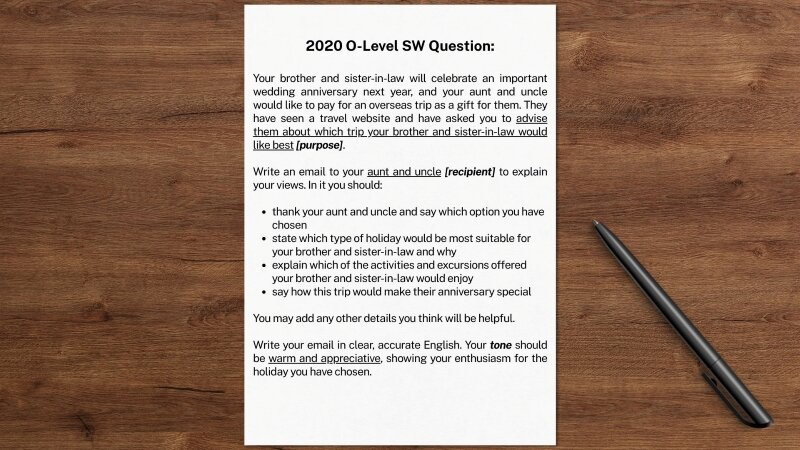
Before you start writing, number the bullet points and make a quick note of what you plan to say for each one. This takes less than two minutes and ensures that no point gets missed. When you are done writing, go back and check each bullet point off. If you cannot find where you addressed it in the email, that is a sign you need to add it in. Skipping even one bullet point can cost marks.
Good structure helps you stay focused and relevant.
One paragraph = one idea. This prevents you from drifting off-topic and makes it easy for the examiner to see that you have addressed everything.
Details and examples make an email feel personal and genuine, but only when they directly support the point you are making. A fond memory, a vivid description, or an amusing anecdote may seem like good ideas in the moment, but if they do not help you fulfil the purpose of the task, they are simply taking up space that could be used more effectively.
For example, if you are advising your aunt and uncle on a holiday destination, a brief detail about the weather or the activities available is useful. A lengthy story about your own holiday there is not. Even when personal details are included, they should be kept concise and clearly linked to your recommendation.
A useful habit is to pause and ask yourself: Does this detail strengthen my answer, or is it just filling space?
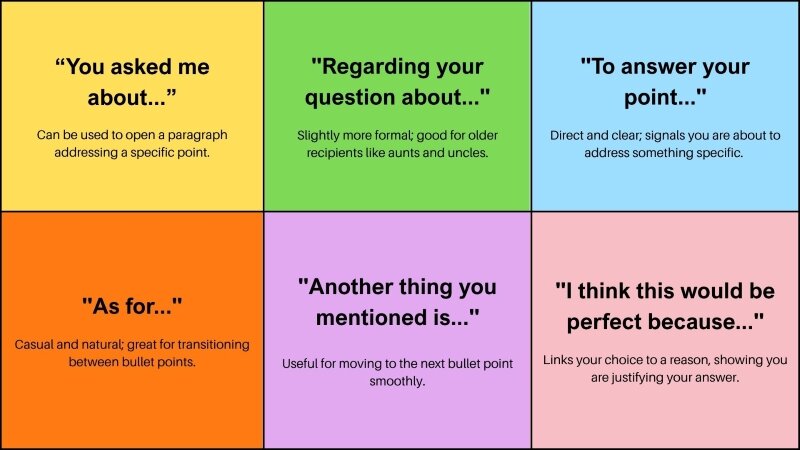
These phrases help signal to the examiner that you are addressing each point deliberately and methodically. They also make the email feel structured without sounding robotic.
At the end of the day, a great informal email is not about impressing the examiner with creative flair. It is about showing that you can read a question carefully, address every point it raises, and communicate clearly and appropriately. That is what relevance looks like in practice and with the right guidance, this is something every student can get right.
At WRITERS AT WORK, our Comprehensive English Programme helps students practise all types of Situational Writing, from informal emails to formal letters, reports, and articles. Our experienced teachers review each piece in detail and give personalised feedback that helps students understand exactly where they are hitting the mark and where they can improve. Over time, that feedback builds the kind of instinct that makes good writing feel natural.
Join WRITERS AT WORK today and start building the skills that will carry you through every part of O Level English!

Yes. A subject line shows awareness of email conventions. Keep it short and relevant to the purpose of the email.
Each bullet point represents a required component of the task, and missing one means incomplete task fulfilment. Examiners mark whether each point has been addressed, so leaving one out almost always results in a direct loss of marks
Formal and informal emails are written for different audiences and use different tones and language.
Yes. Each type, whether it is an informal email, a formal letter, a report, or an article, has its own set of conventions. Using the correct format signals to the examiner that you understand the task and know how to respond appropriately. Check out our cheat sheet for a quick reference guide to the key formats you need to know.

Agnes Ng, Co-Founder and Teaching & Curriculum Director of WRITERS AT WORK. An NUS Honours graduate and published author with over 30 years of experience, Agnes has been the architect of the organization’s student-centric curricula since 2012.
Dedicated to teacher mentorship and academic excellence, she has guided hundreds of students to achieve outstanding results. Her expertise and commitment to high-quality education remain the cornerstone of WRITERS AT WORK’s success in empowering every learner.



Start practising and learning

