Most people can tell a story. Very few can tell one in a way that lingers.
In O Level narrative writing, the difference between an average essay and a memorable one is rarely the plot alone. A dramatic storyline may capture attention briefly, but what truly stays with the reader is the voice behind the story, the tension beneath the surface, and the small details that make the experience feel real.
Keep on reading to know more about the five elements that turn narrative essays from simple storytelling into writing that feels vivid, controlled, and emotionally convincing.
These five elements are not rules to follow mechanically. They are craft decisions that, when handled well, transform a competent essay into a memorable one. Most students are already using some of them without realising it. The goal is to use all five deliberately.

Voice is what makes your writing sound like you. It is the personality behind the words. When an essay has a strong voice, the reader gets a sense of who the narrator is just from the way they describe things, what they notice, and how they react. When an essay has no voice, it could have been written by anyone, and that makes it forgettable.
You do not need to use fancy vocabulary to have a strong voice. You just need to make deliberate choices. Does your narrator notice small, unexpected details? Are they dry and understated, or emotionally open? Do they use short, punchy sentences or longer, more thoughtful ones? These choices add up to a voice.
A simple test: read your opening paragraph and ask yourself, “Can I tell what kind of person is narrating this?” If the answer is no, the voice needs work.
Before and After:
No voice: I walked into the room and saw everyone looking at me. I felt nervous and did not know what to say.
Strong voice: The moment I opened the door, the room went quiet in that particular way rooms do when they have been talking about you. I smiled at no one in particular and found a seat.
Vague descriptions create a blurry picture. Specific ones create a scene the reader can actually see and feel.
The key is not to describe more, but to describe better. One well-chosen detail that does multiple jobs at once such as setting the scene, revealing something about a character, and creating an atmosphere, is worth more than an entire paragraph of general description.
Ask yourself: instead of “the room was messy”, what exactly was messy about it? Instead of “it smelled strange”, what did it actually smell like? The more specific you are, the more convincing and alive the writing becomes.
Before and After:
Generic: The classroom was messy and there were things everywhere. It smelled strange.
Specific: The classroom smelled of whiteboard markers and someone’s forgotten lunch. Three chairs were stacked against the back wall for no reason anyone could explain.
Pace is how fast or slow your story moves at different points. Most students write at the same speed throughout their entire essay, which is a missed opportunity. Not every moment in your story deserves equal space. The parts that matter most should be slowed down. The parts that are just setup can be moved through quickly to ensure the reader is kept engaged.
One of the easiest ways to control pace is through sentence length. Short sentences slow things down and add weight. Long sentences carry the reader forward. Try using both in the same scene and notice the difference.
Before and After:
Flat pacing: I walked to school, had lessons, ate lunch, and then went to the competition. I performed my piece. Everyone clapped. I felt happy and relieved.
Controlled pacing: The walk to school and the lessons that followed passed in a blur. Lunch happened. I ate something. Then it was time. I stood at the edge of the stage. The lights were warmer than I expected. I took one breath, then another. The first note came out steady and clean, and something in my chest unclenched for the first time all day.
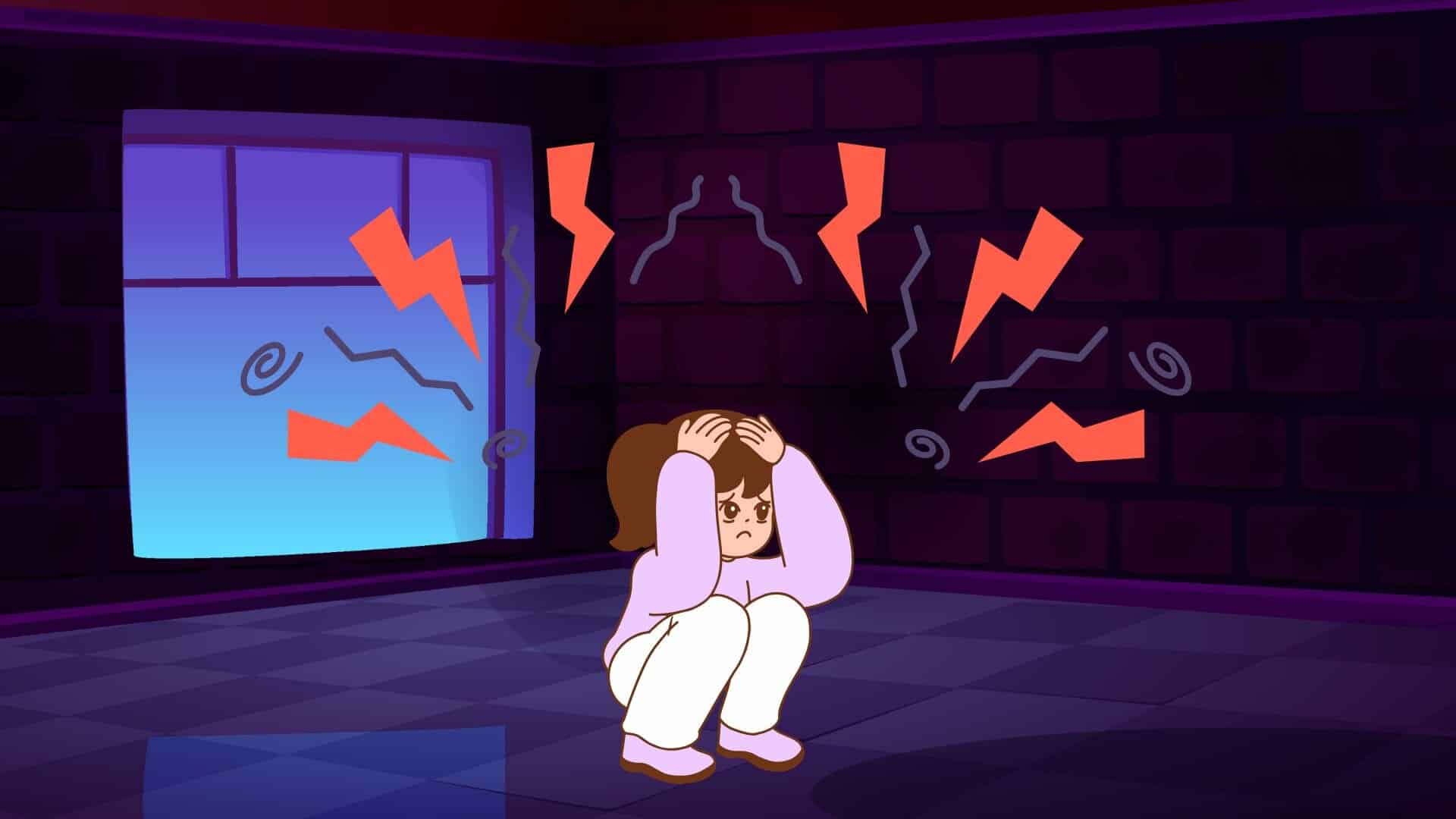
Tension is what keeps the reader reading. Without it, a story feels flat because there is nothing pushing the reader forward.
Many students think tension requires something dramatic such as an accident, a big argument, or a crisis. It does not. Tension comes from uncertainty, not from drama. A story about whether someone will say the right thing at the right moment can be just as tense as a story about something far more extreme, if it is written well.
One of the simplest ways to create tension is to let the reader know that something important is at stake before revealing how the situation will unfold. The longer the uncertainty lasts, the stronger the tension becomes.
Internal tension works too. A character torn between two choices, or wanting to do something but holding back, creates suspense without anything dramatic needing to happen.
Before and After:
No tension: I had to tell my friend the truth. I went up to her and told her what had happened. She was upset at first but then she understood.
With tension: I had been rehearsing the words for three days. Standing in front of her now, every version I had practised felt wrong. She was looking at me the way she always did when she was waiting for good news.
Reflection is what gives your story meaning. It is the moment when the narrator understands something or changes in some way. Without reflection, even a well-written story is just a sequence of things that happened.
The approach is to show the change through a specific action, image, or detail rather than naming it. Think about what your narrator does differently at the end of the story compared to the beginning and show that difference. You do not need to explain what it means. If the story has been told well, the reader will already understand.
Before and After:
Stated: After that experience, I realised how important it is to speak up for yourself. I promised myself I would never stay silent again.
Shown: The next time someone spoke over me in class, I waited for a breath and said, quietly but clearly, that I had not finished.
The opening of a narrative essay sets the tone, establishes the voice, and signals to the examiner whether this will be a routine essay or a memorable one. It is worth spending time on. Here are some ways:
1. Drop into the scene
This is where students start the essay mid-action without any setup. E.g. The argument had already started by the time I arrived.
2. Open with a specific detail
This creates curiosity and grounds the story in something concrete. E.g. The trophy was smaller than I had imagined.
3. Lead with voice
This establishes character and tension immediately. E.g. My mother has a particular silence for disappointment. This was that silence.
4. Use contrast
This signals that something has changed. E.g. I had been to that corridor a hundred times. That morning, it looked completely different.
The middle of a narrative essay is where most students lose control. The opening was planned, the ending is vaguely in mind, but the middle is where the story is supposed to happen, and without a clear sense of what each scene is doing, it drifts.
Every scene in the middle of a narrative essay should do at least one of three things: reveal something about the narrator, build tension toward the turning point, or establish a detail that will matter later. If a scene does none of these things, it is likely filler, and filler is what separates a focused essay from a meandering one.
The ending is the last thing the examiner reads. It shapes the impression the entire essay leaves, which means it deserves just as much thought as the opening. A weak ending simply stops the story, but a strong ending completes it by showing what the experience has come to mean.
One effective way to end a narrative is through reflection. Rather than stating what was learnt, show it. Let the narrator do something, notice something, or respond to something differently than they would have at the start of the story. The change speaks for itself.
Another approach is the full circle ending, where you return to a detail, image, or phrase from your opening. This gives the reader a satisfying sense of “closure” and shows that your essay was carefully planned.
For example, if your essay opened with the narrator staring at a locked door, a full circle ending might return to that same door, now open, or approached differently. The image is the same. What has changed is the narrator standing in front of it.
Writing a narrative essay that stands out is entirely achievable with the right guidance and consistent practice. At WRITERS AT WORK, we help secondary students develop a genuine writing voice, build the habits of specific observation, and master the structural instincts that make narrative essays compelling rather than merely competent. Our experienced teachers work through real exam questions with students, helping them understand not just what to write but how to make every sentence count.
If you are looking for secondary English tuition in Singapore, WRITERS AT WORK has 8 convenient locations. To find the centre nearest to you or to learn more about our programmes and class schedules, feel free to contact us today!

One of the most common signs is the use of tired, predictable phrases that examiners have seen thousands of times. Openings like “One fine day…” or “It was a bright sunny morning…” signal immediately that the writer has not thought carefully about how to draw the reader in. Endings like “I woke up and realised it was all a dream” are particularly damaging because they undo everything the story has built and leave the reader feeling cheated.
Other signs of immature writing include stating emotions directly instead of showing them, using the same sentence structure throughout the entire essay, and resolving conflict too quickly and too neatly.
There is no fixed amount, but a useful guideline is to use dialogue sparingly and purposefully. Every line of dialogue should be earning its place by revealing character, building tension, or moving the story forward.
Yes, and a sad ending can be genuinely powerful if it is handled well. What matters is not whether the ending is happy or sad but whether it feels earned. An ending that leaves the reader with a sense of loss, quiet grief, or unresolved longing can be just as satisfying as a hopeful one, provided the story has been building toward it.

Agnes Ng, Co-Founder and Teaching & Curriculum Director of WRITERS AT WORK. An NUS Honours graduate and published author with over 30 years of experience, Agnes has been the architect of the organization’s student-centric curricula since 2012.
Dedicated to teacher mentorship and academic excellence, she has guided hundreds of students to achieve outstanding results. Her expertise and commitment to high-quality education remain the cornerstone of WRITERS AT WORK’s success in empowering every learner.



Start practising and learning

