The O Level English paper is a rigorous test of your communication skills, but the GCE O Level English Oral often feels like the ultimate high-stakes performance. Whether you are tackling the Planned Response or the Spoken Interaction, the difference between a good grade and a distinction lies in your ability to remain coherent under pressure. At our English enrichment for secondary school, we see many students freeze up the moment examiners ask them to share personal feelings or experiences. By shifting your approach from a rigid recitation to a natural dialogue, you can master O Level English oral questions and approach the exam with genuine confidence.
One of the biggest mistakes students make when hit with personal response questions is slipping into a defensive, interrogation mindset. Out of nervousness, candidates often deliver short, monosyllabic retorts that completely cut off the conversational flow.
To score well for interactive capability, you must view personal prompts as an invitation to share an authentic piece of your world with an intellectual peer. Instead of panicking over what the “perfectly correct” answer should be, focus on expanding your interactive communication. Treat the examiners like interested listeners, ensuring your tone remains conversational, engaged, and structurally sound from your very first sentence.
A major source of exam anxiety is the fear of receiving a personal question about a situation you have never actually experienced. When this happens, forcing yourself to fabricate a complex, dishonest lie usually results in a hesitant delivery full of repetitive filler words.
If you find yourself stuck without a direct personal anecdote, the winning strategy is to pivot masterfully to a hypothetical scenario or general observation. Use standard exam-ready phrases to bridge the gap smoothly. For example, you can say: “While I have not personally encountered this situation in my own school life, I can imagine that if I were placed in these circumstances, I would feel…” This allows you to maintain your professional situational register while demonstrating high-level critical thinking.

When sharing a personal experience, avoid giving broad, sweeping statements that sound like a memorised essay script. General comments like “it was a very good day and I learnt a lot” offer the examiner zero linguistic material to award high marks for expression and vocabulary.
Instead, upgrade your response by grounding it in specific, micro-level details. Describe the exact emotions you felt, the visual elements of the setting, or the specific words spoken during the event. For instance, rather than saying a school assignment was hard, explain how your team faced fractured execution or had to use rigorous time management to clear a tight deadline. These precise, topic-specific terms add academic weight while keeping your narrative highly engaging.
While the prompt may start with your personal view, a distinction-grade response rarely stays confined to a single individual’s lens. To truly showcase your critical maturity, you should use your personal experience as a springboard to discuss broader community or societal trends.
If you are asked about your personal recycling habits, begin with your domestic micro-habits, but fluidly expand your point. Link your personal routine to how your school or local neighbourhood encourages civic-mindedness, and conclude with a reflection on Singapore’s collective responsibility toward environmental sustainability. This “3D” approach instantly signals to the examiner that you possess the analytical focus required for an upper-tier mark.
How you finish your personal response is just as critical as how you open it. Far too many secondary school students deliver an eloquent personal anecdote, only to let their structural control completely dissolve at the end by trailing off into the filler trap.
Avoid ending your thoughts abruptly with casual phrases like “so yeah, that’s why I think that” or “basically, that’s my experience”. This breaches professional decorum. Instead, bring your argument to a polished finish by using a reliable mental blueprint. Use formal concluding phrases to explicitly tie your personal lesson back to the overarching question, ensuring your presentation closes with absolute precision.
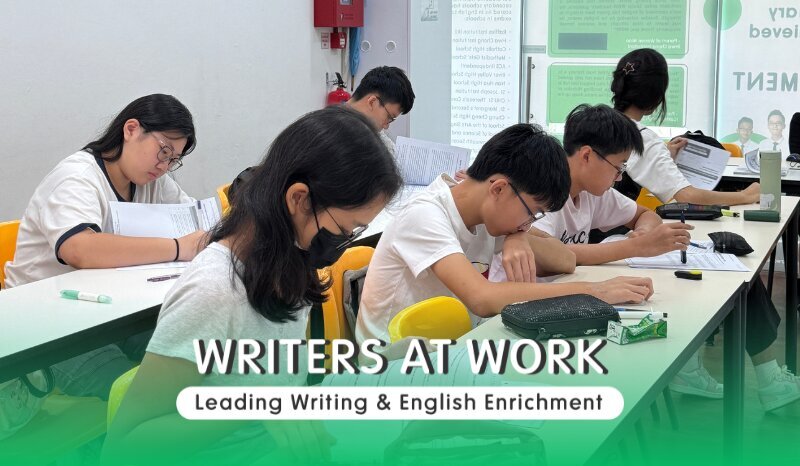
Mastering the O Level English Paper requires more than just memorisation; it demands strategic, hands-on practice under expert guidance. At WRITERS AT WORK, we empower students to transform their oral performances from hesitant to high-scoring. Whether you are looking to master the latest O-Level Oral Topics or want to sharpen your skills with a comprehensive bank of Past-Year O-Level Oral Questions, our curriculum is designed to give you a competitive edge.
To help your child trace and prepare for long-term examination patterns, we have compiled detailed analyses of previous national papers, including the 2019 O-Level Oral Question, the 2020 O-Level Oral Question, and the 2021 O-Level Oral Question. Don’t leave your results to chance. Explore our Secondary Programmes to find the right fit for your academic journey. Secure your spot today and start writing your own success story.
Not at all. Examiners do not require your personal anecdote to be a massive, life-altering achievement. A simple, relatable example—such as a minor disagreement during a school group project or a regular commuting habit on public transport—is perfectly fine, provided you use a structured framework like PEEL to develop your points with linguistic precision.
While the Planned Response requires a presentation that is approximately 2 minutes long, your Spoken Interaction answers should flow like a substantial, natural dialogue. For a personal follow-up question, aim to speak for about 1 minute, which gives you enough time to state your view directly, share your specific example, and relink it cleanly to the prompt.
The oral examination does not assess the moral correctness or popularity of your lifestyle choices; it tests your capacity for critical balance and clear expression. If your personal habit is less conventional, embrace it honestly, but ensure you maintain a respectful, formal tone and use logical arguments to explain your perspective objectively.
The best method is implementing daily “quick-fire” drills. Have a family member or tutor throw unpredictable personal questions at you, or pick a random everyday object and try to speak about how it relates to your life for one minute without stopping. Recording these drills allows you to review your speaking pace and actively eliminate repetitive filler words.

Agnes Ng, Co-Founder and Teaching & Curriculum Director of WRITERS AT WORK. An NUS Honours graduate and published author with over 30 years of experience, Agnes has been the architect of the organization’s student-centric curricula since 2012.
Dedicated to teacher mentorship and academic excellence, she has guided hundreds of students to achieve outstanding results. Her expertise and commitment to high-quality education remain the cornerstone of WRITERS AT WORK’s success in empowering every learner.



Start practising and learning

