W@W Blog

O-Level Oral Tips: Community and Social Responsibility

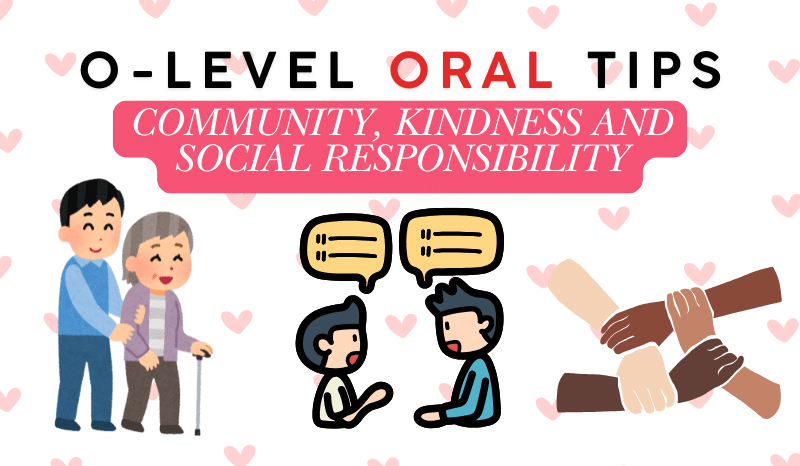
Conversation between two people talking about community initiatives, kindness, and volunteer work in Singapore.

Introduction: Why This Topic Matters for O-Level Oral

In the modern educational landscape, themes surrounding civic consciousness and social cohesion are increasingly prominent. During the oral communication examination, students are frequently required to respond to real-life issues, everyday situations, social trends, or personal experiences. Because an ageing population, volunteer frameworks, and social inclusivity directly shape public policy and community life in Singapore, understanding how to discuss these concepts with nuance is critical.

While no one can predict exactly which prompts will appear in the national examinations, mastering this topic cluster equips you with versatile arguments that can be adapted to a wide array of questions about active citizenship, social empathy, and our collective responsibility toward vulnerable groups.

Quick Overview: The 3 Themes Covered in This Blog

To give you a structured road map for your revision, this guide breaks down the community and social responsibility domain into three highly integrated themes:
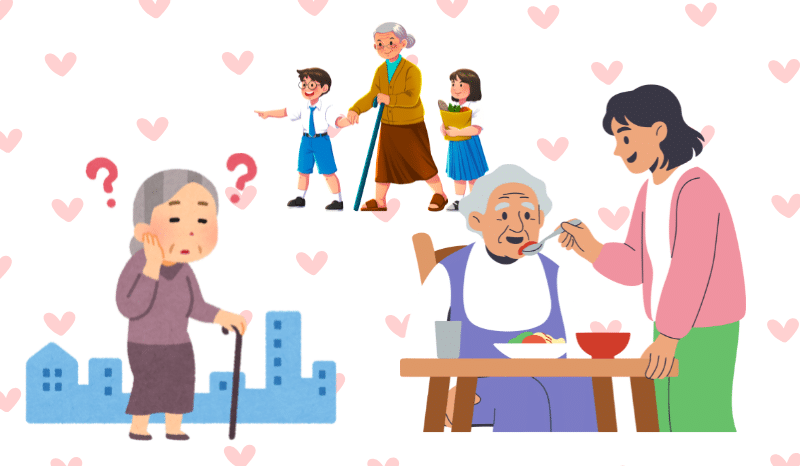
  1. Helping the Elderly: Navigating the realities of an ageing population, filial piety, and community-driven eldercare.
  2. Volunteerism and Community Service: Evaluating the impact of school-based Values in Action (VIA) projects and genuine grassroots service.
  3. Inclusivity and Empathy: Assessing how Singapore can foster a supportive environment for persons with disabilities (PWDs), migrant workers, and individuals from diverse backgrounds.

Theme 1: Helping the Elderly

A. What This Theme Is About

Singapore is transitioning into a super-aged society, making elderly care an urgent national priority rather than a distant policy issue. This theme moves beyond basic ideas of “holding an old person’s hand across the street.” Instead, it examines the structural challenges of an ageing population, the balance between state support and family responsibility, and how youths can actively preserve intergenerational respect.

B. Possible O-Level Oral Question Angles

  • Do you agree that looking after senior citizens should be the absolute responsibility of the family rather than the government?
  • What are the main obstacles secondary school students face when trying to connect with or volunteer for the elderly?
  • How effective are public campaigns and infrastructure designs in building an elder-friendly community in Singapore?
  • In what ways can communities encourage healthy, active ageing among seniors living alone?

C. 3 Useful Speaking Points for Helping the Elderly

Point 1: Intergenerational volunteerism bridges the growing emotional chasm in an ageing society.

  • Explanation: Spending time with seniors at active ageing centres provides emotional companionship, reducing the acute risks of social isolation and depression among older populations.
  • Example: School visits where youths teach digital literacy skills to seniors allow teenagers to share technical knowledge while gaining valuable historical perspectives from the elderly.
  • Balanced Perspective: However, ad-hoc, one-off volunteering sessions offer limited value; sustainable relationships require consistent, long-term community commitment.

Point 2: Filial piety must be supported by state infrastructure to remain viable.

  • Explanation: While family responsibility forms the ethical bedrock of eldercare, the “sandwich generation” faces massive financial and emotional strain trying to balance work and caregiving.
  • Example: Government initiatives like subsidized day-care hubs and proximity housing grants help families care for aged relatives without completely sacrificing their career aspirations.
  • Balanced Perspective: Despite state assistance, personal accountability and emotional presence within the family cannot be outsourced entirely to professional domestic helpers or healthcare workers.

Point 3: Active ageing programs redefine senior citizens as valuable community assets.

  • Explanation: Shifting the narrative away from seeing seniors as a passive burden allows us to tap into their immense life experiences through mentorship and community leadership.
  • Example: Senior volunteer networks where retirees assist in managing local community gardens or guiding younger residents foster a deep sense of purpose.
  • Balanced Perspective: Nevertheless, active ageing frameworks must be carefully calibrated to ensure seniors with physical frailties or cognitive declines are not left behind.

D. Useful Vocabulary and Phrases

  • Super-aged society: A demographic milestone where more than 21% of the population is aged 65 and above.
  • Intergenerational emotional chasm: The gap in understanding, communication, and empathy between different age groups, particularly the youth and the elderly.
  • Social isolation / Solitary seniors: The state of living alone without regular human interaction, which poses severe risks to mental and physical well-being.
  • Sandwich generation: Adults who are simultaneously supporting their own growing children and caring for their ageing parents.
  • Active ageing frameworks: Public policies and community initiatives designed to optimize health, security, and participation for seniors as they age.
  • Filial piety: The traditional virtue of showing respect, gratitude, and care toward one’s parents and elders within the family.

E. Sample Answer Starter

“From my perspective, addressing the needs of our super-aged society requires a delicate balance between policy frameworks and personal responsibility. While the state must provide robust eldercare infrastructure, families must ensure that filial piety remains an active duty rather than a forgotten concept…”

Theme 2: Volunteerism and Community Service

A. What This Theme Is About

Community service is a mandatory element of the local secondary curriculum, primarily run through the Values in Action (VIA) framework. This theme explores how structured school volunteerism shapes character, evaluates whether mandatory charity hours dilute the true spirit of altruism, and examines how community service can transition from a transactional checklist item into a transformative lifecycle habit.

B. Possible O-Level Oral Question Angles

  • Do you think making Values in Action (VIA) projects compulsory for all secondary students defeats the true purpose of volunteerism?
  • How can charity organizations design service opportunities that resonate authentically with modern youths?
  • To what extent does participating in community service build critical soft skills that traditional academics cannot provide?
  • What are the hallmarks of a truly meaningful community project compared to a superficial service event?

C. 3 Useful Speaking Points for Volunteerism and Community Service

Point 1: Compulsory VIA frameworks act as an essential entry point for civic engagement.

  • Explanation: Forcing students out of their academic comfort zones exposes them directly to socioeconomic realities they might otherwise remain completely oblivious to.
  • Example: Participating in an institutional beach cleanup or food ration packing drive introduces young students to environmental and welfare needs in Singapore.
  • Balanced Perspective: However, if schools place too much emphasis on clocking hours for a portfolio, students develop a transactional mindset, treating service as a checkbox exercise.

Point 2: Meaningful community service must prioritize sustainable empathy over superficial pity.

  • Explanation: High-impact volunteerism avoids treating beneficiary groups as passive objects of charity. Instead, it seeks to empower them and address systemic needs.
  • Example: A meaningful project involves spending months tutoring underprivileged children to close educational gaps, rather than showing up for a single day to take promotional photos.
  • Balanced Perspective: While sustained projects are ideal, short-term charity events are still helpful for raising immediate funding or mobilizing massive numbers of volunteers quickly.

Point 3: Grassroots volunteerism cultivates deep social empathy and active citizenship.

  • Explanation: Actively step-ping forward to solve community vulnerabilities without relying on school instructions transforms a student into an agent of change.
  • Example: Teenagers independently organizing peer donation drives or raising awareness for local animal shelters on social media showcases authentic social responsibility.
  • Balanced Perspective: Even so, independent youth projects require mature guidance from established non-profit experts to ensure their efforts line up with actual community needs.

D. Useful Vocabulary and Phrases

  • Values in Action (VIA): A structured values education program in Singapore schools that fosters civic responsibility through community engagement.
  • Transactional mindset: A short-term, self-serving attitude where a student performs community service purely to check off a requirement or enhance a resume.
  • Socioeconomic realities: The actual, lived financial and social conditions faced by different communities, especially vulnerable or low-income households.
  • Sustainable empathy: A deep, enduring understanding of others’ struggles that drives continuous supportive action, as opposed to temporary pity.
  • Altruism / Civic engagement: Unselfish concern for the welfare of others paired with active participation in improving public and community life.
  • Checkbox exercise: Doing a task in a minimal, superficial way simply to satisfy a rule or formal requirement rather than to make a real impact.

E. Sample Answer Starter

“I firmly believe that while school-managed VIA projects provide a necessary foundation for civic engagement, we must prevent students from adopting a transactional mindset. True volunteerism occurs when a youth moves beyond checking a box and embraces sustainable empathy…”

Theme 3: Inclusivity and Empathy

A. What This Theme Is About

A progressive society is measured by how it integrates and respects its marginalized or less visible populations. This theme centers on expanding social inclusivity in Singapore—fostering genuine empathy for persons with disabilities (PWDs), recognizing the vital contributions of migrant worker communities, and learning to navigate interactions with individuals from diverse socioeconomic or cultural backgrounds.

B. Possible O-Level Oral Question Angles

  • How far has Singapore come in transitioning from a purely accessible city to a truly inclusive society for persons with disabilities?
  • Do you feel that the contributions of foreign migrant workers are adequately appreciated by the general public in Singapore?
  • What role can youths play in breaking down invisible social barriers between people of different economic or cultural backgrounds?
  • Why is cultivating digital empathy and online courtesy essential for maintaining harmony in a diverse community?

C. 3 Useful Speaking Points for Inclusivity and Empathy

Point 1: Physical infrastructure upgrades must be matched by structural social acceptance.

  • Explanation: Installing barrier-free ramps, tactile paving, and audio cues across public transit systems ensures physical mobility but does not automatically dissolve social stigma.
  • Example: Commuters actively offering space on public transport to wheelchair users or showing patience to neurodivergent individuals reflects genuine societal integration.
  • Balanced Perspective: While behavioral change is crucial, world-class accessible architecture remains an indispensable physical prerequisite for any inclusive city.

Point 2: Integrating migrant worker communities strengthens the national social fabric.

  • Explanation: Moving away from seeing foreign laborers as mere transient economic tools toward treating them as valued members of society dismantles toxic social silos.
  • Example: Grassroots non-governmental organizations (NGOs) arranging sports matches, language exchanges, and free medical checkups for foreign workers foster mutual respect.
  • Balanced Perspective: However, complete integration requires structural policy support, such as improving employment welfare and housing conditions, alongside community kindness.

Point 3: Active perspective-taking bridges hidden socioeconomic divides.

  • Explanation: Intentionally listening to the lived struggles of individuals from low-income or marginalised backgrounds prevents youths from forming elitist or echo-chamber worldviews.
  • Example: School dialogue sessions that connect students with representatives from disability advocacy groups help dismantle unconscious cognitive biases.
  • Balanced Perspective: Mere exposure is not enough; these dialogues must be guided carefully to prevent them from becoming patronizing or reinforcing unhelpful stereotypes.

D. Useful Vocabulary and Phrases

  • Persons with disabilities (PWDs): Individuals with long-term physical, mental, intellectual, or sensory impairments that interact with various barriers to hinder full participation in society.
  • Social silos / Marginialisation: The isolation or separation of specific groups from mainstream society, preventing cohesive cross-cultural interaction.
  • Transient economic tools: A cold, exploitative view that treats foreign workers merely as temporary resources for labor rather than human beings with rights and dignity.
  • Cognitive bias / Stigma: Unconscious prejudices, stereotypes, or negative cultural beliefs held against specific marginalised communities.
  • Active perspective-taking: The deliberate psychological effort to step into someone else’s shoes to understand their unique lived experiences and feelings.
  • Social cohesion / Social fabric: The strength of relationships, trust, and shared values that bind a diverse community together in peaceful harmony.

E. Sample Answer Starter

“In my view, achieving a truly inclusive society demands that we move beyond basic infrastructure accessibility and focus on dismantling our underlying cognitive biases. We must stop viewing marginalised groups or migrant workers as transient tools…”

How to Use These Ideas in Planned Response

When preparing for your Planned Response, avoid listing random points or vomiting out memorised phrases. The examiners are assessing your capacity for structural logic and structural control. Instead of rushing, use this Planned Response Framework to build a coherent argument:

  • State your view clearly: Open with a direct, unambiguous response to the video stimulus or prompt question.
  • Explain your first reason: Introduce your primary thematic argument, keeping the transition smooth.
  • Give a relevant example: Ground your point in a concrete scenario (e.g., school life in Singapore or local national policies).
  • Add a second perspective: Introduce a counter-argument or a balanced view to demonstrate critical maturity.
  • End with a thoughtful conclusion: Summarise your stance neatly without introducing entirely new concepts.
  • Suggested Wording: When preparing for Planned Response, students should avoid listing random points. Instead, they should choose two strong ideas, explain them clearly and support them with examples.

How to Use These Ideas in Spoken Interaction

Unlike the static nature of a presentation, Spoken Interaction requires students to respond naturally and develop their answers fluidly based on the conversational flow. Treat this section as a dialogue with an intellectual peer, rather than a rigid interrogation.

To ensure your spontaneous answers maintain depth, implement this structural sequence:
  1. Answer the question directly: Show the examiner you have fully digested the specific angle of their query.
  2. Explain your view: Dive into the underlying reasons behind your initial stance.
  3. Give an example: Draw from personal experience, school life, or broader Singaporean society.
  4. Add a thoughtful comment or balanced view: Wrap up by looking at the bigger picture.
  5. Example: If the examiner asks whether social media is harmful, students should avoid giving a one-sided answer. A stronger response would explain both the benefits and risks before giving a personal opinion.

Common Mistakes Students Make for This Topic

  1. Giving very general answers: Avoid broad, sweeping statements like “We must be kind and help poor people.” Use specific terms like super-aged society, sustainable empathy, or cognitive bias to add academic weight.
  2. Repeating the same idea in different words: Repeating a point does not make it stronger. If you have run out of points, move to a balanced counter-perspective to expand your response logically.
  3. Using examples that are not relevant: Citing a random story about an act of kindness that has no direct connection to the structural question asked shows a lack of analytical focus.
  4. Giving one-sided opinions: Presenting social issues as simple matters of “good vs. bad” without acknowledging structural challenges shows a superficial understanding of community mechanics.
  5. Using casual language that sounds too informal: Phrases like “Yeah, it’s like, so sad that migrant workers live like that, you get me?” will penalise your language score. Aim for formal discourse markers such as “Furthermore,” “Conversely,” and “This illustrates that…”
  6. Memorising fixed answers instead of adapting ideas: Examiners can tell instantly when a student is reciting a script. Use your points as flexible building blocks, not rigid monologues.

Mini Practice Section

Planned Response Practice Prompts

  1. “In an urbanised city like Singapore, formal government welfare programs are far more critical than individual acts of neighborly kindness.” To what extent do you agree with this statement?
  2. With reference to community volunteerism, discuss whether you feel schools or corporate organizations bear the greatest responsibility for driving local charity efforts.
  3. Look at an image of a commuter offering their seat to a pregnant woman or a person with disabilities on an MRT train. Share your thoughts on what constitutes true civic consciousness in daily life.

Spoken Interaction Practice Questions

  1. Some people believe that young people today are too self-absorbed with their academic studies to care about marginalised communities. What are your views on this issue?
  2. Do you think that commercial companies should be legally forced to employ a fixed percentage of persons with disabilities to guarantee true workplace inclusivity? Why or why not?

Student Self-Checklist

  • Did I answer the prompt question directly in my opening sentence?
  • Did I explain my points clearly using high-level vocabulary rather than generic terms?
  • Did I include a relevant example from Singapore context or personal student experiences?
  • Did I offer a balanced, multi-dimensional view to demonstrate critical maturity?
  • Did I sound natural, composed, and thoughtful throughout my delivery?

See Improvement with WRITERS AT WORK

Building strong O-Level Oral answers takes more than memorising model responses. At WRITERS AT WORK, students learn how to organise their ideas, develop relevant examples and express their opinions with clarity. Our English programmes help students strengthen their speaking, writing and overall communication skills for exam readiness and beyond.

To give your child a head start in their preparation, it is helpful to look at how these oral themes build up alongside contemporary global trends and historical benchmarks; you can explore our analysis of past trends in our breakdown of the 2023 O-Level Oral Question or discover how modern critical thinking extends into digital spaces by reading our guide on Media Literacy for Secondary School Students.

By engaging with our structured “Thinking Frameworks,” students gain the linguistic precision and analytical confidence needed to excel across all components of the secondary syllabus. Navigating these demanding exam components early is critical for a smooth transition from primary school achievements to secondary milestones. You can learn how to bridge these academic levels effectively by exploring our guide on Mastering the O-Level Paper: PSLE Smart Study Strategies for Success. Turn your potential into a distinction-grade performance by visiting our nearest enrichment branch today!

Frequently Asked Questions (FAQs)

Q1: Will community and social responsibility topics definitely come up as the main focus for my O-Level Oral exam?

While no one can guarantee exactly what topics the Ministry of Education (MOE) will select, community dynamics and social responsibility are highly recurring themes. Because these issues directly intersect with national population shifts, active citizenship values, and school welfare initiatives in Singapore, mastering this topic cluster gives you a highly versatile bank of arguments that can be adapted to many different prompts.

Q2: Is it better to argue completely in favor of mandatory school VIA projects to sound like a responsible citizen?

It is almost always better to offer a balanced perspective rather than an idealised, one-sided argument. The O-Level oral examination rewards critical thinking and intellectual maturity. A distinction-grade response will voice clear support for early exposure to community service while thoughtfully evaluating the practical limitations of compulsory systems, such as the risk of students developing a transactional checklist mindset rather than genuine altruism.

Q3: What should I do if the examiner asks a specific question about a community group or local charity model I am completely unfamiliar with?

Do not panic, and avoid giving a silent or rushed response. You can elegantly pivot the conversation to broader, related social responsibility concepts that you do know. Use strategic phrases like, “While I am not personally familiar with the exact parameters of that specific community organisation, it reminds me of how vital it is for grassroots initiatives to move past superficial pity and focus on sustainable empowerment…” This keeps your answer fluid and maintains your score for structural control.

Q4: How can I naturally upgrade my vocabulary during the Spoken Interaction section without sounding robotic?

The key is to replace generic filler words with precise topic-specific phrases. Instead of saying, “People don’t care about foreign workers because they are just temporary,” upgrade your phrasing to, “Treating foreign laborers as transient economic tools causes society to isolate them into social silos instead of strengthening the national social fabric.” Practising these key terms in your weekly English classes ensures they roll off your tongue naturally during the actual exam.

Jemmies Siew
Article Written By

Jemmies Siew

Jemmies Siew, Managing Director and Co-Founder of WRITERS AT WORK Enrichment Centre. With over 15 years of experience in education, entrepreneurship, and marketing, Jemmies has helped shape Singapore’s English enrichment landscape through her vision for transformative learning.

She is passionate about connecting real-world issues with language learning, helping students think critically and express themselves clearly. Connect with her on LinkedIn to follow her insights on education, content marketing, and thought leadership.

Share

2026 Registration
W@W-LOGO-WRITERS-AT-WORK
Primary 4 model compositions

Unlock Our Free Resources Today

Start practising and learning
