Introduction: Why This Topic Matters for O-Level Oral
In the modern educational landscape, themes surrounding holistic growth and character development are increasingly prominent. During the oral communication examination, students are frequently required to respond to real-life issues, everyday situations, social trends, or personal experiences. Because sporting participation, collaborative school projects, and Co-Curricular Activities (CCAs) directly shape the physical and psychological resilience of teenagers in Singapore, understanding how to discuss these concepts with nuance is critical.
While no one can predict exactly which prompts will appear in the national examinations, mastering this topic cluster equips you with versatile arguments that can be adapted to a wide array of questions about youth mentorship, values education, and the cultivation of a robust civic spirit.
Quick Overview: The 3 Themes Covered in This Blog
To give you a structured road map for your revision, this guide breaks down the sports and character domain into three highly integrated themes:
- Sports and Discipline: Evaluating how rigorous training routines, healthy competition, and personal perseverance forge a strong work ethic.
- Teamwork and Leadership: Assessing the mechanics of group dynamics, interpersonal trust, and effective communication within collaborative frameworks.
- Winning, Losing and Sportsmanship: Navigating the emotional maturity required to embrace humility in victory and maintain resilience when learning from defeat.
Theme 1: Sports and Discipline
A. What This Theme Is About
Sporting pursuit is often romanticised as a path to glory, but its true value lies in the unseen hours of mundane, rigorous preparation. This theme moves beyond simply saying “exercise is good for health.” Instead, it examines how regular training schedules serve as a primary crucible for building self-regulation, delayed gratification, and healthy competitive drive among teenagers juggling dense academic calendars.
B. Possible O-Level Oral Question Angles
- Do you agree that the strict discipline demanded by competitive sports translates directly into better academic performance for secondary students?
- What are the most significant psychological barriers preventing modern youths from persevering with sports when training becomes difficult?
- To what extent does a hyper-fixation on winning regional school tournaments destroy the intrinsic value of physical education?
- How can sports coaches strike a healthy balance between pushing an athlete toward excellence and protecting them from mental exhaustion?
C. 3 Useful Speaking Points for Sports and Discipline
Point 1: Structured athletic commitments force the development of rigorous self-regulation.
- Explanation: Committing to a sports team requires prioritising long-term developmental goals over immediate comfort, effectively training the brain to resist procrastination.
- Example: School athletes who wake up at dawn for grueling fitness drills before attending regular classes master early habits of punctuality and personal accountability.
- Balanced Perspective: However, if the physical demands of an athletic routine are left unmonitored, the resulting fatigue can inadvertently impair classroom concentration.
Point 2: Healthy competition teaches youths to view external rivals as catalysts for growth.
- Explanation: Engaging in fair play allows students to appreciate that a strong opponent pushes them to elevate their personal skills, reframing rivalry as mutual improvement.
- Example: Facing an equally skilled team in the National School Games encourages athletes to refine their strategies rather than resorting to hostile or underhanded tactics.
- Balanced Perspective: Nevertheless, this positive dynamic can easily turn toxic if schools or parents place undue emotional pressure on kids to secure medals at all costs.
Point 3: Sporting perseverance instils a profound understanding of delayed gratification.
- Explanation: Unlike the immediate validation common in digital spaces, athletic progress is slow, demonstrating that meaningful mastery requires prolonged effort.
- Example: A student practising a complex gymnastic routine or basketball manoeuvre for months before seeing a noticeable improvement learns that hard work takes time to yield results.
- Balanced Perspective: To support this mindset, coaches must consistently praise a student’s technical effort and dedication rather than solely celebrating their innate talent.
D. Useful Vocabulary and Phrases
- Crucible for self-regulation: A challenging environment or experience that forces an individual to develop deep self-control and emotional mastery.
- Delayed gratification: The vital psychological ability to resist an immediate reward in favour of achieving a more valuable, long-term goal.
- Hyper-fixation on results: An unhealthy, obsessive focus strictly on winning or achieving top marks, which often overshadows personal growth.
- Rigorous self-regulation: The disciplined habit of managing one’s time, behaviour, and emotional impulses without needing external supervision.
- Audited lifestyle routine: A highly structured, carefully planned daily schedule necessary to balance multiple intense commitments successfully.
- Intrinsic value of physical movement: The natural, internal benefits of exercise—such as joy, health, and personal growth—independent of winning trophies.
E. Sample Answer Starter
“From my perspective, the real worth of sports lies in its function as a crucible for self-regulation. While many celebrate raw athletic talent, true development relies on a student’s capacity for delayed gratification and their willingness to embrace rigorous discipline…”

Theme 2: Teamwork and Leadership
A. What This Theme Is About
In modern society, individual brilliance is rarely enough to solve complex challenges. This theme focuses on the interpersonal mechanics developed through group projects, uniform groups, and sports CCAs. It evaluates how authentic leadership is built on a foundation of empathy and clear communication, and explains why establishing mutual trust within a team is a prerequisite for collective success.
B. Possible O-Level Oral Question Angles
- Do you think that true leadership is a natural personality trait, or can it be systematically cultivated through school-based CCA responsibilities?
- Why do many secondary school students struggle to manage interpersonal conflicts when working on compulsory group projects?
- To what extent does a student leader’s ability to show empathy matter more than their capacity to enforce strict discipline?
- How can school team sports effectively teach youths to place collective team goals above personal recognition?
C. 3 Useful Speaking Points for Teamwork and Leadership
Point 1: Authentic leadership is defined by empathy and service rather than raw authority.
- Explanation: Effective student leaders do not simply issue commands from a position of power; they actively identify and support the varied strengths of their peers.
- Example: A compassionate sports captain will spend extra time mentoring struggling teammates after hours rather than publicly criticising their technical mistakes.
- Balanced Perspective: While an empathetic approach builds high morale, leaders must still maintain a firm baseline of accountability to keep the team moving forward.
Point 2: Interpersonal trust is the vital prerequisite for high-stakes peer collaboration.
- Explanation: Without absolute trust in each teammate’s reliability, a group splits into defensive factions, leading to fractured execution and scattered focus.
- Example: In a synchronised performance or a complex science group assignment, individuals must trust that their peers will deliver their specific components perfectly.
- Balanced Perspective: Building this level of mutual trust takes time and requires open channels of communication where team members feel safe to voice honest mistakes.
Point 3: Group projects mimic real-world diplomatic challenges, forcing conflict-resolution maturity.
- Explanation: Navigating differing viewpoints teaches students to compromise, manage their egos, and use constructive dialogue to resolve inevitable friction.
- Example: Resolving a creative disagreement during a project meeting requires students to focus objectively on the assignment rubric rather than taking criticisms personally.
- Balanced Perspective: To facilitate this growth, teachers should provide clear mediation frameworks rather than stepping in to solve every minor peer dispute immediately.
D. Useful Vocabulary and Phrases
- Interpersonal mechanics: The complex social skills and communication dynamics required to interact, cooperate, and build relationships effectively with others.
- Fractured execution / Defensive factions: Poor team performance and division caused by a lack of trust, communication, or shared focus among members.
- Conflict-resolution maturity: The ability to handle disagreements calmly, objectively, and diplomatically to reach a productive compromise.
- Mediation frameworks: Structured, step-by-step guidelines used by mentors to help conflicting parties resolve their issues constructively.
- Ego management: The critical personal skill of keeping one’s pride in check to prioritise collective success over individual recognition.
- Systematically cultivated: Values, habits, or leadership skills that are intentionally developed through structured training rather than left to chance.
E. Sample Answer Starter
“In my view, authentic leadership within our school CCAs cannot be systematically cultivated through raw authority alone. True leadership requires deep empathy and precise interpersonal mechanics, ensuring that collective trust always overrides individual ego…”

Theme 3: Winning, Losing and Sportsmanship
A. What This Theme Is About
How a person handles failure and success reveals their true internal maturity. This theme explores the deep philosophy of sportsmanship, moving beyond the cliché of “saying thank you after a game.” It examines how learning to process defeat acts as an essential psychological vaccine against future real-world setbacks, and explains why maintaining humility in victory is the hallmark of a distinction-grade character.
B. Possible O-Level Oral Question Angles
- To what extent is experiencing failure in a school competition more instructive for character growth than achieving an easy victory?
- Why is it increasingly difficult for modern youths to display sportsmanship and humility when competing in public or online spaces?
- Do you agree that the intense desire to win can sometimes justify using aggressive or unsporting tactics during a high-stakes match?
- How can parents help their children decouple their personal self-worth from their competitive wins or losses?
C. 3 Useful Speaking Points for Winning, Losing and Sportsmanship
Point 1: Processing defeat constructively builds an essential psychological vaccine against real-world setbacks.
- Explanation: Experiencing a loss in a controlled environment like a school match teaches students to detach failure from their identity, viewing it instead as diagnostic feedback.
- Example: Analysing tactical errors with a coach after losing a basketball final helps a student learn how to refine their skills calmly rather than descending into despair.
- Balanced Perspective: However, for this experience to be constructive, the surrounding adult network must validate the student’s resilience rather than expressing disappointment over the score.
Point 2: True sportsmanship demands maintaining unyielding respect for your opponent’s dignity.
- Explanation: Treating an adversary with genuine courtesy, regardless of the match outcome, proves that a student values the shared ethics of the sport over raw dominance.
- Example: Applauding an opponent’s exceptional skill or offering a sincere handshake after a hard-fought tennis match reflects high personal maturity.
- Balanced Perspective: While showing this level of respect is straightforward during friendly matches, it requires immense emotional control during high-pressure national finals.
Point 3: Humility in victory is the definitive indicator of a mature and stable character.
- Explanation: Celebrating a win without gloating shows that the victor acknowledges the role of luck, continuous effort, and their opponent’s hard work in the final outcome.
- Example: Refraining from boasting on social media platforms after winning a debate tournament shows that a student respects their peers’ feelings.
- Balanced Perspective: While avoiding boasting is crucial, teams should still be encouraged to celebrate their hard-earned success joyfully and authentically together.
D. Useful Vocabulary and Phrases
- Psychological vaccine: An early, controlled exposure to failure or hardship that builds an individual’s long-term mental resilience against major life setbacks.
- Diagnostic feedback: Viewing errors or losses objectively as helpful data to improve performance, rather than as a personal emotional attack.
- Unyielding respect / Moral dignity: Maintaining consistent courtesy and respect for others, regardless of competitive pressure or the final result.
- Decouple self-worth from metrics: The vital habit of separating one’s personal identity and value from outward scores, grades, or competitive results.
- Raw dominance / Gloating: Boasting or displaying arrogant satisfaction over a victory, which diminishes the opponent’s effort and reflects poor character.
- Controlled athletic environment: Safe, supervised school or community frameworks where students can experience intense competition and failure constructively.
E. Sample Answer Starter
“I firmly believe that experiencing defeat within a controlled athletic environment serves as an indispensable psychological vaccine for youths. True sportsmanship occurs when an individual can decouple their self-worth from metrics and view failure as diagnostic feedback…”
How to Use These Ideas in Planned Response
When preparing for your Planned Response, avoid listing random points or vomiting out memorised phrases. The examiners are assessing your capacity for structural logic and structural control. Instead of rushing, use this Planned Response Framework to build a coherent argument:
- State your view clearly: Open with a direct, unambiguous response to the video stimulus or prompt question.
- Explain your first reason: Introduce your primary thematic argument, keeping the transition smooth.
- Give a relevant example: Ground your point in a concrete scenario (e.g., school life in Singapore or local national policies).
- Add a second perspective: Introduce a counter-argument or a balanced view to demonstrate critical maturity.
- End with a thoughtful conclusion: Summarise your stance neatly without introducing entirely new concepts.
- Suggested Wording: When preparing for Planned Response, students should avoid listing random points. Instead, they should choose two strong ideas, explain them clearly and support them with examples.
How to Use These Ideas in Spoken Interaction
Unlike the static nature of a presentation, Spoken Interaction requires students to respond naturally and develop their answers fluidly based on the conversational flow. Treat this section as a dialogue with an intellectual peer, rather than a rigid interrogation.
To ensure your spontaneous answers maintain depth, implement this structural sequence:
- Answer the question directly: Show the examiner you have fully digested the specific angle of their query.
- Explain your view: Dive into the underlying reasons behind your initial stance.
- Give an example: Draw from personal experience, school life, or broader Singaporean society.
- Add a thoughtful comment or balanced view: Wrap up by looking at the bigger picture.
- Example: If the examiner asks whether social media is harmful, students should avoid giving a one-sided answer. A stronger response would explain both the benefits and risks before giving a personal opinion.
Common Mistakes Students Make for This Topic
- Giving very general answers: Avoid broad, sweeping statements like “Sports are fun and teamwork is good.” Use specific terms like crucible for self-regulation, interpersonal mechanics, or psychological vaccine to add academic weight.
- Repeating the same idea in different words: Repeating a point does not make it stronger. If you have run out of points, move to a balanced counter-perspective to expand your response logically.
- Using examples that are not relevant: Citing a basic personal sports story that has no direct connection to the underlying character trait being evaluated shows a lack of analytical focus.
- Giving one-sided opinions: Presenting competition as entirely evil or completely flawless indicates a superficial understanding of youth development dynamics.
- Using casual language that sounds too informal: Phrases like “Yeah, it’s like, so bad when players lose their cool, you know what I mean?” will penalise your language score. Aim for formal discourse markers such as “Furthermore,” “Conversely,” and “This illustrates that…”
- Memorising fixed answers instead of adapting ideas: Examiners can tell instantly when a student is reciting a script. Use your points as flexible building blocks, not rigid monologues.
Mini Practice Section
Planned Response Practice Prompts
- “In our modern society, character traits like sportsmanship and humility are far less valuable to a young person’s future career than a fierce drive to win.” To what extent do you agree with this statement?
- With reference to school-based activities, discuss whether team sports or academic group projects exert a greater impact on a student’s interpersonal communication skills.
- Look at an image of a student captain comforting a crying teammate after a narrow defeat in a sports final. Share your thoughts on what constitutes authentic leadership in high-pressure moments.
Spoken Interaction Practice Questions
Some people believe that forcing introverted students to take up leadership roles in CCAs causes unnecessary emotional distress. What are your views on this issue?
Do you think that schools should completely eliminate individual “Most Valuable Player” awards to ensure that values like collective teamwork are prioritised? Why or why not?
Student Self-Checklist
Before completing your practice session, review your performance with this quick checklist:
[ ] Did I answer the prompt question directly in my opening sentence?
[ ] Did I explain my points clearly using high-level vocabulary rather than generic terms?
[ ] Did I include a relevant example from Singapore context or personal student experiences?
[ ] Did I offer a balanced, multi-dimensional view to demonstrate critical maturity?
[ ] Did I sound natural, composed, and thoughtful throughout my delivery?
How WRITERS AT WORK Can Help
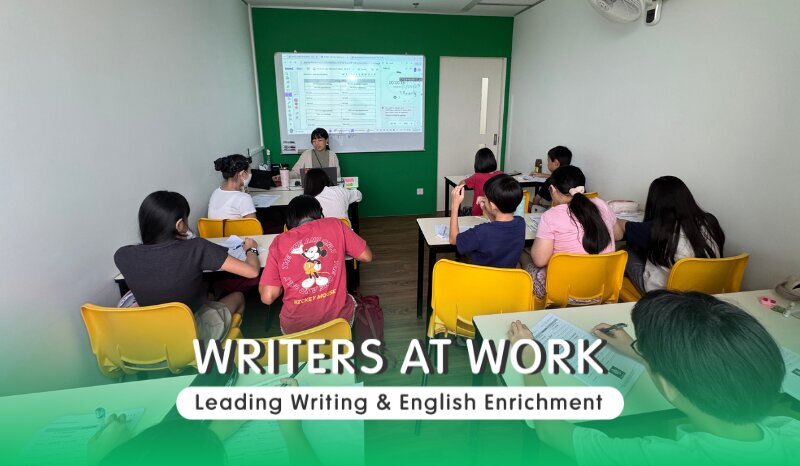
Building strong O-Level Oral answers takes more than memorising model responses. At WRITERS AT WORK, students learn how to organise their ideas, develop relevant examples and express their opinions with clarity. Our English programmes help students strengthen their speaking, writing and overall communication skills for exam readiness and beyond.
To give your child a head start in their preparation, it is helpful to look at how these oral themes build up alongside shifting assessment trends and text analysis skills; you can explore our detailed breakdowns of past examinations such as the 2022 O-Level Oral Question and our comprehensive compilation of the 2024 O-Level Oral Questions and Model Responses.
By engaging with our structured “Thinking Frameworks,” students gain the linguistic precision and analytical confidence needed to excel across all components of the secondary syllabus. These structural communication tools do not just help with spoken tasks; they directly enhance written text evaluation as well. You can learn how to apply this level of linguistic precision to Paper 2 by exploring our essential guide on 50 Words to Describe Author’s Tone for O-Level English Comprehension. Turn your potential into a distinction-grade performance by visiting our nearest enrichment branch today!
Frequently Asked Questions
Q1: Will sports, teamwork, and character topics definitely come up as the main focus for my O-Level Oral exam?
While no one can guarantee exactly what topics the Ministry of Education (MOE) will select, youth CCAs, sports, and character traits are highly recurring themes. Because these issues directly intersect with daily student life, holistic school policies, and adolescent development in Singapore, mastering this topic cluster gives you a highly versatile bank of arguments that can be adapted to many different prompts.
Q2: Is it better to argue completely in favor of losing to sound like a humble and resilient student?
It is almost always better to offer a balanced perspective rather than an emotional, one-sided argument. The O-Level oral examination rewards critical thinking and intellectual maturity. A distinction-grade response will voice clear support for resilience and learning from defeat, while thoughtfully evaluating the practical value of healthy winning ambitions, which teach core habits like dedication, goal setting, and strategic improvement.
Q3: What should I do if the examiner asks a specific question about a sporting icon or national team I am completely unfamiliar with?
Do not panic, and avoid giving a silent or rushed response. You can elegantly pivot the conversation to broader, related character concepts that you do know. Use strategic phrases like, “While I am not personally familiar with the exact parameters of that specific athletic milestone, it reminds me of how vital it is for competitors to decouple their self-worth from metrics and focus on maintaining unyielding respect for their opponent’s dignity…” This keeps your answer fluid and maintains your score for structural control.
Q4: How can I naturally upgrade my vocabulary during the Spoken Interaction section without sounding robotic?
The key is to replace generic filler words with precise topic-specific phrases. Instead of saying, “Losing teaches you to try again next time,” upgrade your phrasing to, “Processing defeat constructively within a controlled athletic environment serves as an indispensable psychological vaccine against real-world setbacks.” Practising these key terms in your weekly English classes ensures they roll off your tongue naturally during the actual exam.