W@W Blog

O-Level Oral Tips: Technology, AI, and Digital Life

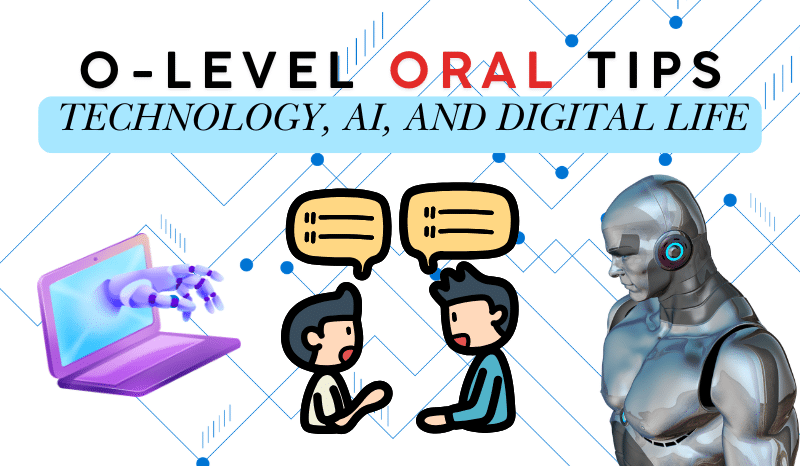
Conversation between two people talking about technology.

Introduction: Why This Topic Matters for O-Level Oral

In the modern educational landscape, themes surrounding digital transformation are increasingly prominent. During the oral communication examination, students are frequently required to respond to real-life issues, everyday situations, social trends, or personal experiences. Because technology, artificial intelligence (AI), and digital platforms shape how teenagers study, interact, and relax in Singapore, understanding how to discuss these concepts with nuance is critical.

While no one can predict exactly which prompts will appear in the national examinations, mastering this topic cluster equips you with versatile arguments that can be adapted to a wide array of questions about modern society, youth culture, and education.

Quick Overview: The 3 Themes Covered in This Blog

To give you a structured road map for your revision, this guide breaks down the digital lifestyle domain into three highly integrated themes:

  1. Artificial Intelligence in Daily Life: How AI tools, automation, and smart devices are reshaping learning and daily tasks.
  2. Social Media and Youth: The impact of screen time, online influence, and peer dynamics on self-image and mental health.
  3. Online Safety and Digital Responsibility: Navigating cyber threats like scams, fake news, and the permanence of our digital footprints.

Theme 1: Artificial Intelligence in Daily Life

A. What This Theme Is About

Artificial Intelligence is no longer a concept confined to science fiction. From automated recommendation algorithms to large language models like ChatGPT, AI has integrated itself into the modern Singaporean household. Students frequently encounter these tools during home-based learning, using them for quick translations, custom revision quizzes, or drafting content outlines.

B. Possible O-Level Oral Question Angles

  • How has generative technology altered the way secondary school students approach independent learning?
  • Do you think students should be allowed to use AI tools freely to complete their academic schoolwork?
  • What are the primary advantages and disadvantages of relying heavily on smart devices in our daily routines?
  • In what ways can educational institutions guide young people to use automation tools responsibly?

C. 3 Useful Speaking Points for Artificial Intelligence in Daily Life

Point 1: AI acts as an efficient, personalised learning companion.

  • Explanation: It can instantly break down complex scientific concepts or check grammatical errors in essays outside school hours.
  • Example: A student struggling with a specific physics formula can ask an AI bot to generate step-by-step practice questions tailored to their immediate weakness.
  • Balanced Perspective: However, over-reliance on these platforms can stifle genuine problem-solving skills, leading to a decline in independent critical thinking.

Point 2: Smart automation enhances daily productivity.

  • Explanation: Algorithms can streamline tedious, administrative tasks, giving people more time to focus on creative and high-value work.
  • Example: Singapore’s Smart Nation initiatives utilise AI to optimise public transport schedules and manage traffic flow during peak hours.
  • Balanced Perspective: On the flip side, rapid automation may lead to job displacement in traditional industries, creating economic anxieties that society must address.

Point 3: AI fosters algorithmic bias and reduces real-world exposure.

  • Explanation: Because automated platforms learn from historical human data, they can unintentionally replicate and amplify existing prejudices.
  • Example: Social media algorithms serve users content that aligns strictly with their past preferences, creating ideological echo chambers.
  • Balanced Perspective: While personalised feeds are highly engaging, users must actively seek out diverse perspectives to maintain a balanced worldview.

D. Useful Vocabulary and Phrases

  • Generative artificial intelligence: Technology capable of creating text, images, or other media in response to prompts.
  • Over-reliance / Cognitive laziness: Relying so heavily on technology that one’s own mental faculties and critical thinking skills deteriorate.
  • Algorithmic recommendation feeds: Systems that filter and suggest content based on a user’s digital data profile.
  • Independent critical thinking: The ability to analyse information objectively and form a judgment without external automated assistance.
  • Smart Nation initiatives: Government strategies aimed at leveraging digital tech to improve liveability and economic growth.
  • Ideological echo chambers: Environments where a person only encounters information or opinions that reflect and reinforce their own.

E. Sample Answer Starter

“From my perspective, artificial intelligence serves as a highly efficient tool for modern students, particularly when it acts as a supplementary guide for self-directed learning. However, I am also of the opinion that a line must be drawn to prevent academic dishonesty and the erosion of original thought…”

Theme 2: Social Media and Youth

A. What This Theme Is About

For the average teenager in Singapore, platforms like Instagram, TikTok, and Discord are central to their social lives. While these spaces offer community and self-expression, they also expose young minds to intense peer pressure, idealised lifestyles, and constant connectivity that can impact their psychological well-being.

B. Possible O-Level Oral Question Angles

  • To what extent does excessive screen time affect the mental well-being of teenagers in Singapore?
  • Do you agree that social media influencers exert too much control over the choices of young people today?
  • What steps can individuals take to protect themselves against the psychological effects of cyberbullying?
  • How can parents effectively manage their children’s digital habits without causing familial conflict?

C. 3 Useful Speaking Points for Social Media and Youth

Point 1: Social media democratises global community building and self-expression.

  • Explanation: It allows introverted youths or those with niche interests to find supportive peers beyond their immediate physical school environment.
  • Example: Student artists and musicians in Singapore frequently use digital portfolios online to share their creations and receive constructive global feedback.
  • Balanced Perspective: Nonetheless, this virtual validation can turn into an obsession with metrics like ‘likes’ and views, fostering deep insecurity.

Point 2: Constant exposure to curated realities damages self-esteem.

  • Explanation: Users naturally post only the highlights of their lives, leading peers to make unrealistic, unhealthy comparisons.
  • Example: Many teenagers experience FOMO (Fear Of Missing Out) or body dysmorphia after consuming filtered imagery from mainstream digital influencers.
  • Balanced Perspective: Recognising that these profiles are heavily curated commercial entities can help youths distance their self-worth from online standards.

Point 3: The digital landscape exacerbates toxic behavior like cyberbullying.

  • Explanation: The anonymity provided by the internet reduces empathy, making it easier for individuals to harass others without witnessing the direct emotional fallout.
  • Example: Mean-spirited comments on school confession pages can severely disrupt a student’s peace of mind and academic focus.
  • Balanced Perspective: While platforms are implementing stricter reporting features, true change requires cultivating digital empathy within the student community itself.

D. Useful Vocabulary and Phrases

  • Curated digital realities: Online profiles that are carefully selected and edited to show only the most glamorous aspects of someone’s life.
  • Fear of missing out (FOMO): Anxiety that an exciting or interesting event may currently be happening elsewhere, often aroused by posts seen on a social media website.
  • Anonymity-driven malice: Hostile or cruel behavior facilitated by the fact that the perpetrator’s identity is hidden online.
  • Virtual validation: Seeking self-worth through digital metrics such as likes, comments, shares, and follower counts.
  • Digital empathy: The ability to understand and value the feelings of others when communicating via digital platforms.
  • Confession portals: Unofficial, anonymous online pages where students submit unfiltered thoughts or gossip about their school peers.

E. Sample Answer Starter

“I firmly believe that while social media offers unprecedented opportunities for cross-cultural connection and creative expression, it simultaneously acts as a double-edged sword by trapping young people in endless cycles of social comparison…”

Theme 3: Online Safety and Digital Responsibility

A. What This Theme Is About

As our daily transactions move online, the internet has become a prime target for malicious actors. From sophisticated phishing scams to the viral spread of deliberate misinformation (fake news), staying safe online requires a high level of digital literacy and an acute awareness of our permanent digital footprints.

B. Possible O-Level Oral Question Angles

  • Why do you think young people, despite being tech-savvy, still fall prey to internet scams?
  • How far should the government go in regulating the spread of deliberate misinformation online?
  • Why is it essential for students to consider their permanent digital footprint before posting content?
  • What does it mean to be a socially responsible digital citizen in modern society?

C. 3 Useful Speaking Points for Online Safety and Digital Responsibility

Point 1: Digital literacy must evolve past technical operation to critical evaluation.

  • Explanation: Being able to navigate an app quickly does not mean a student possesses the scepticism needed to spot a sophisticated financial or data scam.
  • Example: E-commerce scams frequently trap tech-literate students looking for discounted concert tickets or limited-edition merchandise online.
  • Balanced Perspective: Public education campaigns are helpful, but individual vigilance and a healthy dose of skepticism remain the primary lines of defense.

Point 2: Misinformation threatens societal cohesion and public trust.

  • Explanation: Sensationalist fake news spreads faster than factual retractions, manipulating public emotions and stirring unnecessary panic.
  • Example: During public health crises or national emergencies, unverified text forwards on WhatsApp can trigger unnecessary panic buying in local supermarkets.
  • Balanced Perspective: While anti-misinformation laws protect the public, they must be carefully balanced to ensure they do not inadvertently suppress legitimate freedom of expression.

Point 3: Digital footprints have enduring real-world consequences.

  • Explanation: Content published online is rarely permanently deleted; it can resurface years later to affect future academic or professional milestones.
  • Example: Global universities and prospective corporate employers regularly audit the public social media history of applicants during screening processes.
  • Balanced Perspective: Instead of avoiding internet use entirely out of fear, individuals should focus on curating a professional and constructive online presence.

D. Useful Vocabulary and Phrases

  • Sophisticated phishing scams: Highly convincing, fraudulent schemes designed to steal sensitive personal information or financial data.
  • Permanent digital footprint: The unique, indelible trail of data created by an individual’s actions, posts, and communications on the internet.
  • Societal cohesion: The bonds and trust that keep a society united, which can be undermined by viral fake news.
  • Vigilance and media scepticism: Maintaining a cautious, questioning attitude toward unverified information encountered online.
  • Corporate screening processes: Background checks performed by employers that increasingly include looking at an applicant’s social media conduct.
  • Socially responsible digital citizen: An internet user who acts ethically, respects others online, and actively protects sensitive personal data.

E. Sample Answer Starter

“In my view, online safety is no longer just about avoiding suspicious links; it requires a deep sense of digital responsibility. Every individual must recognize that their online actions leave a permanent mark on their reputation…”

How to Use These Ideas in Planned Response

When preparing for your Planned Response, avoid listing random points or vomiting out memorised phrases. The examiners are assessing your capacity for structural logic and structural control. Instead of rushing, use this Planned Response Framework to build a coherent argument:

  • State your view clearly: Open with a direct, unambiguous response to the video stimulus or prompt question.
  • Explain your first reason: Introduce your primary thematic argument, keeping the transition smooth.
  • Give a relevant example: Ground your point in a concrete scenario (e.g., school life in Singapore or local national policies).
  • Add a second perspective: Introduce a counter-argument or a balanced view to demonstrate critical maturity.
  • End with a thoughtful conclusion: Summarise your stance neatly without introducing entirely new concepts.
  • Suggested Wording: When preparing for Planned Response, students should avoid listing random points. Instead, they should choose two strong ideas, explain them clearly and support them with examples.

How to Use These Ideas in Spoken Interaction

Unlike the static nature of a presentation, Spoken Interaction requires students to respond naturally and develop their answers fluidly based on the conversational flow. Treat this section as a dialogue with an intellectual peer, rather than a rigid interrogation.

To ensure your spontaneous answers maintain depth, implement this structural sequence:

  1. Answer the question directly: Show the examiner you have fully digested the specific angle of their query.
  2. Explain your view: Dive into the underlying reasons behind your initial stance.
  3. Give an example: Draw from personal experience, school life, or broader Singaporean society.
  4. Add a thoughtful comment or balanced view: Wrap up by looking at the bigger picture.
  5. Example: If the examiner asks whether social media is harmful, students should avoid giving a one-sided answer. A stronger response would explain both the benefits and risks before giving a personal opinion.

Common Mistakes Students Make for This Topic

  1. Giving very general answers: Avoid broad, sweeping statements like “Technology is very good and makes life easy.” Use specific terms like automation, cognitive laziness, or productivity tools to add academic weight.
  2. Repeating the same idea in different words: Repeating a point does not make it stronger. If you have run out of points, move to a balanced counter-perspective to expand your response logically.
  3. Using examples that are not relevant: Citing a random viral video that has no direct connection to the underlying question shows a lack of analytical focus.
  4. Giving one-sided opinions: Presenting technology as either purely evil or entirely perfect indicates a superficial understanding of modern societal issues.
  5. Using casual language that sounds too informal: Phrases like “Yeah, it’s super toxic, like, you know what I mean?” will penalise your language score. Aim for formal discourse markers such as “Furthermore,” “Conversely,” and “This illustrates that…”
  6. Memorising fixed answers instead of adapting ideas: Examiners can tell instantly when a student is reciting a script. Use your points as flexible building blocks, not rigid monologues.

Mini Practice Section

Planned Response Practice Prompts

  1. “Technology has made the lives of young people today far more stressful than those of previous generations.” To what extent do you agree with this statement?
  2. With reference to the rising usage of artificial intelligence in schools, discuss whether you feel technology enhances or hinders traditional learning methods.
  3. Look at the image of a teenager glued to their smartphone screen while at a family dinner. Share your thoughts on how digital devices are altering family relationships in Singapore.

Spoken Interaction Practice Questions

  1. Some people believe that online scams only target the elderly. What are your views on whether youth are equally vulnerable to cyber threats?
  2. Do you think that social media platforms should enforce strict identity verification to eliminate anonymous cyberbullying? Why or why not?

Student Self-Checklist

Before completing your practice session, review your performance with this quick checklist:
  • Did I answer the prompt question directly in my opening sentence?
  • Did I explain my points clearly using high-level vocabulary rather than generic terms?
  • Did I include a relevant example from Singapore context or personal student experiences?
  • Did I offer a balanced, multi-dimensional view to demonstrate critical maturity?
  • Did I sound natural, composed, and thoughtful throughout my delivery?

Level Up with WRITERS AT WORK

Building strong O-Level Oral answers takes more than memorising model responses. At WRITERS AT WORK, students learn how to organise their ideas, develop relevant examples and express their opinions with clarity. Our English programmes help students strengthen their speaking, writing and overall communication skills for exam readiness and beyond.

To give your child a head start in their preparation, explore our comprehensive resource on Past Years O-Level Oral Questions or review current trends in our up-to-date O-Level Oral Topics: A 2025 Guide.

By engaging with our structured “Thinking Frameworks,” students gain the linguistic precision and analytical confidence needed to excel across all components of the secondary syllabus. Learn how these skills impact their academic journey by reading our guide on Mastering the O-Level: Understanding Scores and Choosing the Right Path. Turn your potential into a distinction-grade performance by visiting our nearest enrichment branch today!

Frequently Asked Questions (FAQs)

Q1: Will technology and AI definitely come up as the main topic for my O-Level Oral exam?

While no one can guarantee exactly what topics the Ministry of Education (MOE) will select, digital life and technology are highly recurring themes. Because these issues directly impact teenagers’ daily routines, home-based learning, and future careers, mastering this topic cluster gives you a highly versatile bank of arguments that can be adapted to many different prompts.

Q2: Is it better to argue completely for or completely against technology to sound more convincing?

It is almost always better to offer a balanced perspective. The O Level English Paper rewards critical thinking and maturity. Presenting technology as either entirely flawless or completely destructive shows a superficial understanding of the issue. A distinction-grade response will acknowledge the immense benefits of digital tools while thoughtfully evaluating their hidden risks, such as algorithmic bias or cognitive laziness.

Q3: What should I do if the examiner asks a specific question about an AI tool or platform I have never heard of?

Do not panic, and avoid giving a silent or rushed response. You can elegantly pivot the conversation to broader, related concepts that you do know. Use strategic phrases like, “While I am not personally familiar with that specific application, it reminds me of how generative AI platforms like ChatGPT affect our independent thinking…” This keeps your answer fluid and maintains your score for structural control.

Q4: How can I naturally upgrade my vocabulary during the Spoken Interaction section without sounding robotic?

The key is to replace generic filler words with precise topic-specific phrases. Instead of saying, “Social media makes people feel bad about themselves,” upgrade your phrasing to, “Constant exposure to curated digital realities often triggers virtual validation issues among local youths.” Practising these key terms in your weekly English writing class for secondary school ensures they roll off your tongue naturally during the actual exam.

Jemmies Siew
Article Written By

Jemmies Siew

Jemmies Siew, Managing Director and Co-Founder of WRITERS AT WORK Enrichment Centre. With over 15 years of experience in education, entrepreneurship, and marketing, Jemmies has helped shape Singapore’s English enrichment landscape through her vision for transformative learning.

She is passionate about connecting real-world issues with language learning, helping students think critically and express themselves clearly. Connect with her on LinkedIn to follow her insights on education, content marketing, and thought leadership.

Share

2026 Registration
W@W-LOGO-WRITERS-AT-WORK
Primary 4 model compositions

Unlock Our Free Resources Today

Start practising and learning
