Of all the sections in O-Level English Paper 1, the Editing section is one you can definitely conquer. You are given a short passage and your task is to find and correct the errors. Success comes down to grammar and precision. The key is practice and familiarity. The more you know these error types, the faster you will spot them. Let’s get into it!
Example
Incorrect: She walked into the room and sits down quietly.
Correct: She walked into the room and sat down quietly.
The passage is written in the past tense so “sits” should be “sat”.
The verb in a sentence must agree with its subject. A singular subject takes a singular verb, and a plural subject takes a plural verb. This sounds simple, but it gets tricky when the subject and verb are separated by other words.
Identify the true subject of the verb and check whether they match. Do not be distracted by nouns that appear between the subject and the verb.
Example
Incorrect: The group of students were excited about the trip.
Correct: The group of students was excited about the trip.
The subject is “the group” which is singular, not “students.”
English words come in different forms: nouns, verbs, adjectives, and adverbs. A word form error happens when the wrong form of a word is used in a sentence.
Ask yourself what role the word is playing in the sentence. If it is describing a noun, it should be an adjective. If it is modifying a verb, it should be an adverb. If it is naming something, it should be a noun.
Example
Incorrect: She had to quickly make a decide.
Correct: She had to quickly make a decision.
A noun (“decision”) is needed here because “a” must be followed by a noun instead of a verb (“decide”).
Pronouns are words that replace nouns, and there are several types that can be tested in the editing section. Personal pronouns refer to people or things (I, he, she, they, it). Relative pronouns connect clauses to nouns (who, whom, which, that). Reflexive pronouns refer back to the subject (himself, themselves, itself). Possessive pronouns indicate ownership (his, hers, theirs, whose). Indefinite pronouns refer to non-specific people or things (everyone, someone, each, neither).
Example
Incorrect: The teacher which taught us retired.
Correct: The teacher who taught us retired.
“Who” is used to refer to people.
Example
Incorrect: He studied hard. However, he passed the exam.
Correct: He studied hard. Therefore, he passed the exam.
“However” signals contrast, but passing after studying hard is something expected or a natural result. Hence, “therefore” is the correct connector because it signals the consequence.
Example
Incorrect: She has been waiting since two hours.
Correct: She has been waiting for two hours.
“Since” is used with a specific point in time (since 3pm, since Monday). “For” is used with a duration (for two hours, for a week).
Example
Incorrect: She wants to become the doctor when she grows up.
Correct: She wants to become a doctor when she grows up.
She is not referring to a specific, known doctor, so the indefinite article “a” is correct.
Incorrect: She does not have many time to finish the project.
Correct: She does not have much time to finish the project.
“Time” is uncountable. “Many” cannot be used with it as it is only for countable nouns.
Example
Incorrect: This is the more difficult of all the questions I have encountered.
Correct: This is the most difficult of all the questions I have encountered.
When comparing across a group of more than two, the superlative form is required.
Example
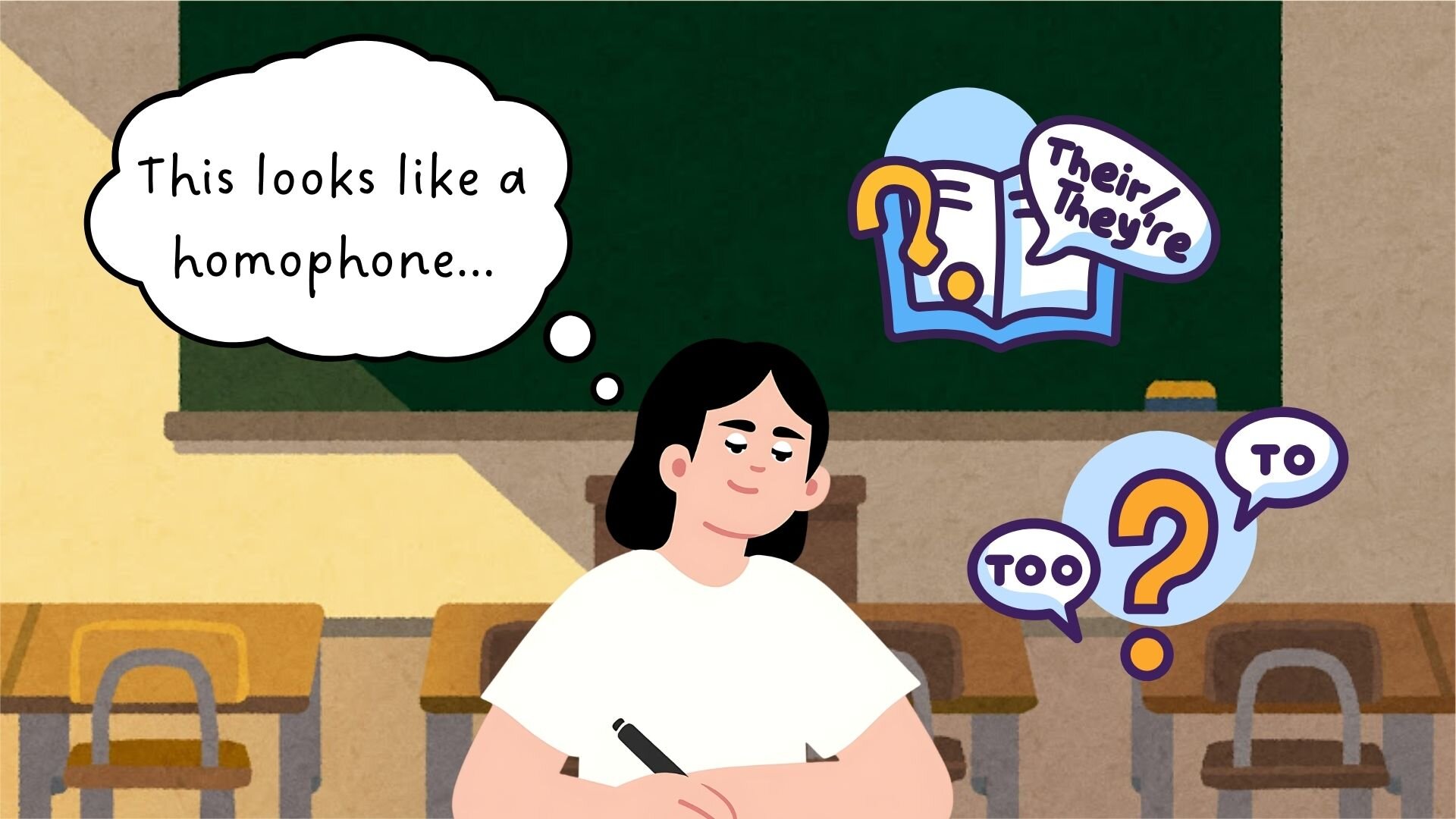
Incorrect: There dog ran happily across the park.
Correct: Their dog ran happily across the park.
“There” is used to indicate a location, “their” shows possession.
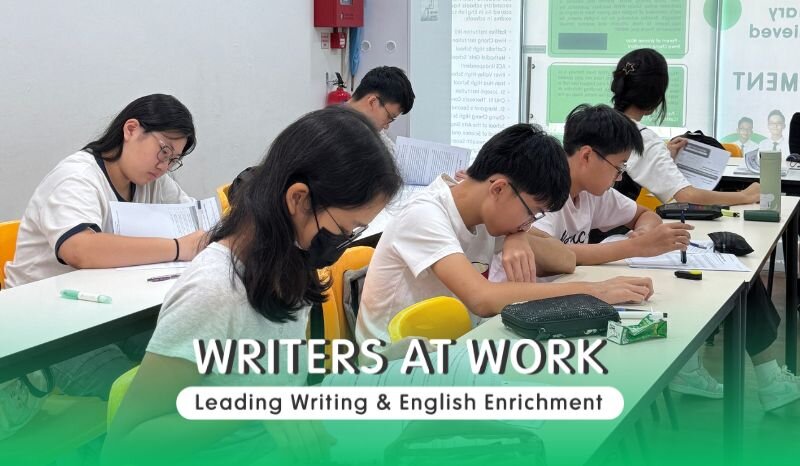
If you found this guide helpful, imagine what you could do with personalised guidance and consistent practice. At WRITERS AT WORK, we help secondary students tackle every section of O-Level English with confidence, from editing and comprehension to composition writing. We break down exactly what examiners are looking for and give you the tools to deliver it. Come and be part of a community of students who are serious about improving!
Most students find that ten minutes is sufficient. Remember, you still have Situational and Continuous Writing to do. If you are stuck on a particular line, move on and come back to it. Do not let one tricky line eat into your time for the rest of the paper.

Jemmies Siew, Managing Director and Co-Founder of WRITERS AT WORK Enrichment Centre. With over 15 years of experience in education, entrepreneurship, and marketing, Jemmies has helped shape Singapore’s English enrichment landscape through her vision for transformative learning.
She is passionate about connecting real-world issues with language learning, helping students think critically and express themselves clearly. Connect with her on LinkedIn to follow her insights on education, content marketing, and thought leadership.



Start practising and learning

