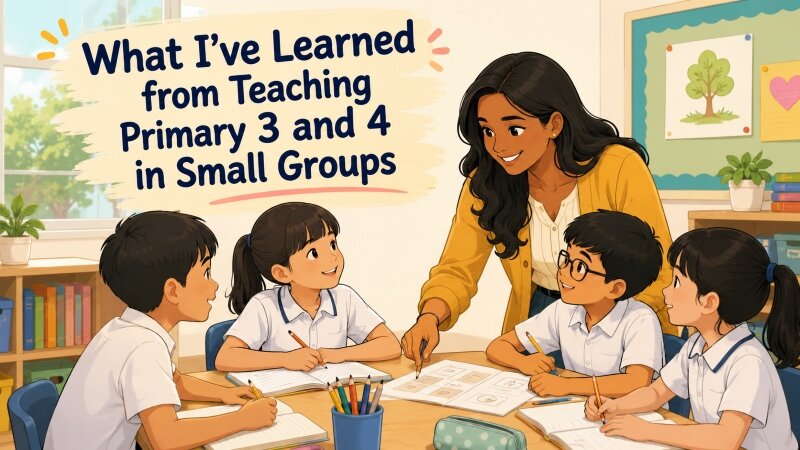
Primary 3 and Primary 4 are important years in a child’s English learning journey. By Primary 3, students are no longer just learning how to form simple sentences or answer basic questions. They are beginning to handle longer passages, more structured writing tasks, richer vocabulary, and more detailed comprehension questions. By Primary 4, many are expected to express ideas with greater clarity, accuracy, and confidence.
As a teacher, I have seen how much children can grow during these years when they are given the right kind of support. In small-group lessons, I get to observe not only what students are learning, but also how they feel while learning. Sometimes, the most meaningful progress is not just in a better sentence or a stronger paragraph, but in the moment a child finally dares to raise a hand, share an idea, or try a new word. Over time, teaching Primary 3 and 4 students in small groups has taught me a few important things.
Some children need a little more time before they are ready to speak up. In a small-group setting, I often notice that quieter students begin to open up gradually. At first, they may only nod, smile, or give short answers. Then, after a few lessons, they start offering story ideas, asking questions, or volunteering to read their sentences aloud.
What I love about small groups is that every child has more room to be noticed. There is time to listen to their thoughts, encourage their attempts, and gently guide them when they are unsure. For Primary 3 and 4 students, this matters greatly. When children feel that their voices are heard, they become more willing to share. When they share more, they learn to express their ideas more clearly. This confidence often carries into their writing too. A child who is comfortable talking about an idea is usually more ready to put that idea into words on the page.
At nine and ten years old, children learn a lot from watching one another. In small groups, I often see positive peer influence happen naturally. When one student uses a stronger adjective, a more interesting phrase, or what we sometimes call a “sparkle word”, the others become curious. Soon, another student wants to try using a better word too.
This kind of learning is powerful because it does not feel forced. Students are not just listening to the teacher; they are learning from their peers as well. They also pick up good classroom habits from one another. When one child checks his punctuation carefully, another may remember to do the same. When one student sits up, listens actively, or explains an answer clearly, others begin to follow. In a small-group class, these habits are easier to notice, praise, and strengthen. Over time, the group becomes a place where students encourage one another to try harder and do better.
English learning requires effort. There is no shortcut around reading carefully, building vocabulary, writing clearly, and checking grammar accurately. However, effort does not always have to feel heavy. For Primary 3 and 4 students, I find that learning works best when lessons are focused but still lively. A short vocabulary challenge, a grammar quiz, or a friendly writing activity can turn a difficult skill into something students are more willing to attempt.
In small groups, every child has a fair chance to participate. They are not lost in the crowd, and they are not simply waiting for others to answer. They know they may be called upon, but they also know they will be supported. As a teacher, I love seeing students lean forward during a challenge, eager to try. The aim is not to create pressure, but to help children feel that learning can be active, engaging, and rewarding.
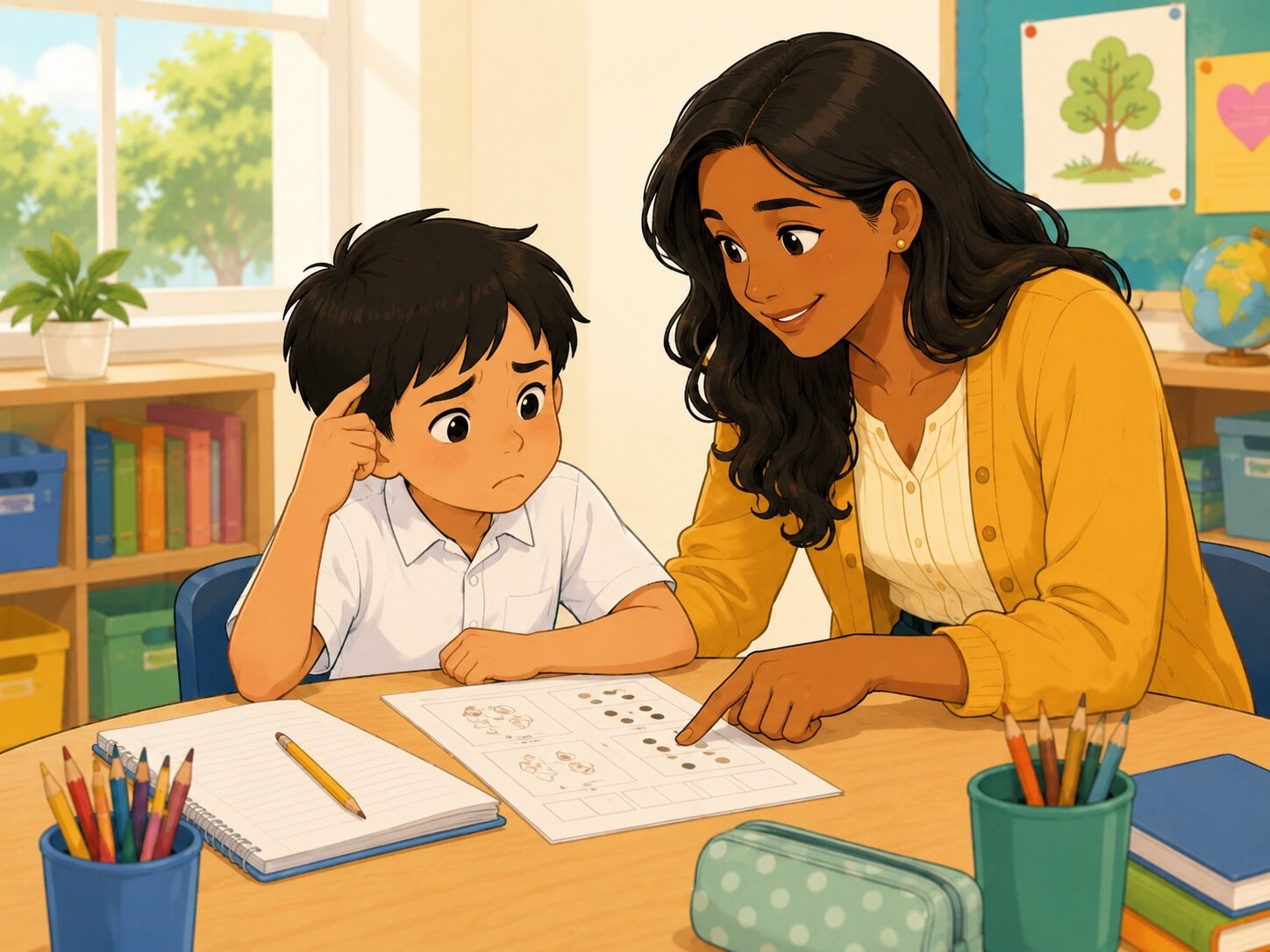
One of the most important things I have learned is that small mistakes matter. A missing full stop, a repeated tense error, a weak verb, or an unclear sentence may seem minor at first. However, when these mistakes are repeated often, they can become habits that are harder to correct later.
In a small-group setting, I can notice these errors more quickly. I can sit beside a student, point out a misplaced comma, suggest a stronger adjective, or explain why a sentence does not sound quite right. This kind of immediate correction helps students understand their mistakes while the writing is still fresh in their minds. For Primary 3 and 4 students, this is especially important because they are still building their foundation. They are learning how to plan, write, read, listen, answer, and express themselves with more control. When we take the time to correct small errors early, students become more aware of how English works. They begin to self-check, revise, and take pride in producing clearer work.
Primary 3 and 4 students are at a stage where they need both guidance and patience. They are old enough to handle more complex ideas, but they still need help breaking those ideas down. They may have wonderful imagination, but they need structure to turn those ideas into a story. They may know the answer, but they need practice expressing it in a complete sentence.
Small-group teaching allows me to slow down when a concept needs more explanation and move forward when the students are ready. There is space to revisit a grammar point, discuss a story idea, practise a sentence again, or help a child understand why an answer works. This steady pace helps students build a stronger foundation in reading, listening, speaking, and writing. More importantly, it helps them feel that improvement is possible.
After teaching Primary 3 and 4 students in small groups, I have come to believe this strongly: every child has ideas worth sharing. Some children need help finding the right words. Some need help organising their thoughts. Some need encouragement before they dare to try. However, when they are given a supportive space, clear guidance, and enough opportunities to practise, their confidence can grow beautifully.
At WRITERS AT WORK, we believe that every Primary 3 and 4 student has a story to tell. Our role is to help them find the words, build the skills, and gain the confidence to express those stories clearly. If you would like your child to experience learning in a focused and supportive small-group environment, you may join us for a trial lesson and see how small-group learning can help your child grow as a writer and communicator.
Beyond the classroom, students and parents can also tap into our wider learning resources through W@W eSeries, and stay updated with tips, insights, and student support on TikTok and Facebook.
PSLE Situational Writing is a writing task where students respond to a given situation. They may need to write an email, letter, note, report, or speech while including the required details from the task and stimulus.
Before writing, check your role, audience, purpose, required information, tone, and format. These help you decide what to write, how formal your language should be, and which details must be included.
Students often lose marks because they miss task points, copy stimulus details wrongly, use an unsuitable tone, forget the correct format, or do not answer the purpose of the task clearly.

Agnes Ng, Co-Founder and Teaching & Curriculum Director of WRITERS AT WORK. An NUS Honours graduate and published author with over 30 years of experience, Agnes has been the architect of the organization’s student-centric curricula since 2012.
Dedicated to teacher mentorship and academic excellence, she has guided hundreds of students to achieve outstanding results. Her expertise and commitment to high-quality education remain the cornerstone of WRITERS AT WORK’s success in empowering every learner.




Start practising and learning

