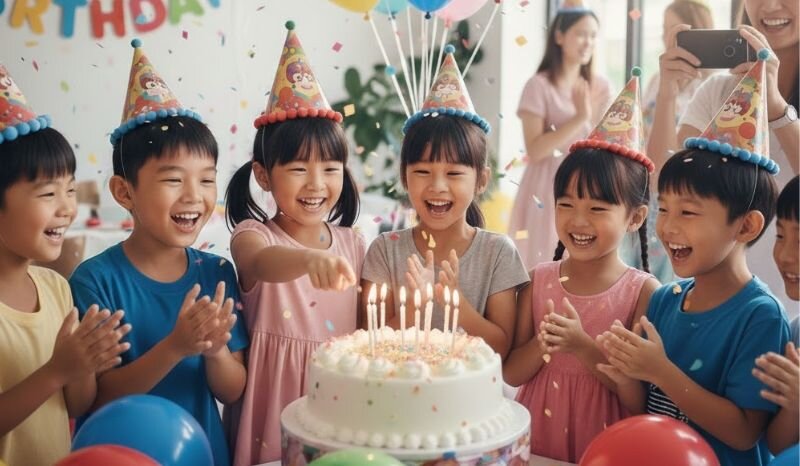
A strong celebration composition does more than list activities. It captures the atmosphere before the event begins, builds anticipation, shows emotions through actions rather than labels, and often includes a small problem that gets resolved. Each of these elements requires precise vocabulary that fits the festive context.
This vocabulary bank is organised by the elements that make celebration stories work. Each word comes with a usage example set in a realistic party or event context. The goal is not to memorise impressive-sounding phrases, but to build a toolkit of accurate words that bring celebration scenes to life.
The best celebration compositions establish atmosphere before the main action begins. Readers should feel the energy of the room, see the decorations, and sense that something special is about to happen.
Glittering — “Glittering fairy lights draped across the ceiling cast a warm glow over the hall.”
Dazzling — “A dazzling display of red and gold decorations transformed the classroom into a Chinese New Year wonderland.”
Resplendent — “The banquet hall looked resplendent with its towering floral centrepieces and shimmering tablecloths.”
Flickering — “Flickering candles on the birthday cake threw dancing shadows across the eager faces around the table.”
Cascading — “Cascading streamers in every colour hung from the doorway, swaying gently in the breeze from the fans.”
Buzzing — “The school hall was buzzing with chatter as students filed in for the National Day concert.”
Electrifying — “An electrifying energy crackled through the crowd as the emcee took the stage.”
Cacophony — “A cacophony of laughter and music spilled out from the function room.”
Thunderous — “Thunderous applause erupted as the birthday boy made his entrance.”
Din — “Above the din of excited voices, the opening bars of the school anthem began to play.”
Examiners reward compositions that show emotions through physical details and actions rather than naming feelings directly. “My heart swelled with joy” creates a stronger impression than “I felt very happy.”
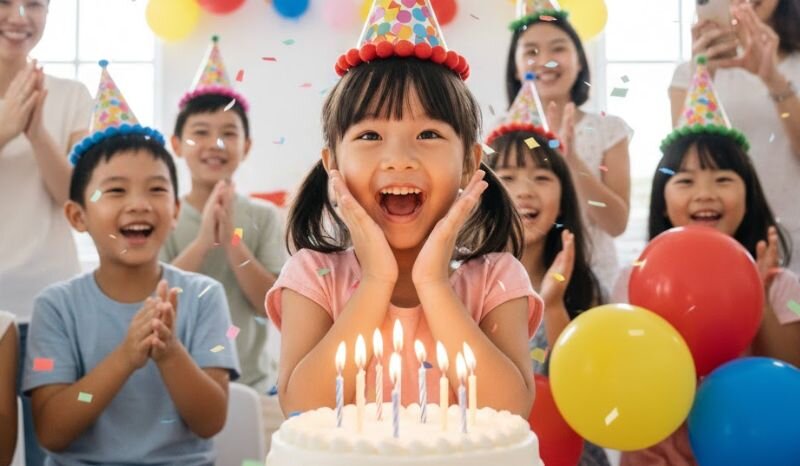
Euphoria — “A wave of euphoria washed over me as the crowd erupted in cheers.”
Exuberant — “My exuberant classmates rushed to congratulate the winning team.”
Jubilant — “Jubilant shouts filled the air when the final score was announced.”
Elated — “I was so elated that I could barely stand still during the prize presentation.”
Contented — “A contented smile spread across Grandmother’s face as she watched us perform.”
Heartfelt — “The heartfelt applause from the audience made all our rehearsals worthwhile.”
Gratitude — “Gratitude swelled in my chest as I looked at the faces of everyone who had come to celebrate.”
Wistful — “A wistful happiness filled me as I realised this would be our last class party together.”
Grinned from ear to ear — “My little brother grinned from ear to ear when he saw the mountain of presents.”
Eyes crinkled with delight — “My father’s eyes crinkled with delight as we sang the birthday song.”
A spring in my step — “I walked into school with a spring in my step, knowing what surprise awaited me.”
Heart fluttered — “My heart fluttered with anticipation as the lights dimmed and the curtains parted.”
Strong verbs eliminate the need for adverbs and make celebration scenes dynamic. Instead of “walked happily to the stage,” use “bounded onto the stage.”
Bustled — “Parents bustled around the venue, arranging chairs and hanging decorations.”
Rehearsed — “We had rehearsed the surprise entrance at least ten times, yet my hands still trembled.”
Inflated — “My classmates inflated dozens of balloons until the room looked like a rainbow had exploded.”
Draped — “Volunteers draped red cloth over the tables, transforming the canteen into a festive banquet hall.”
Mingled — “Guests mingled near the buffet table, catching up over plates of curry puffs and satay.”
Applauded — “The audience applauded as the performers took their final bow.”
Clinked — “We clinked our glasses of sparkling juice in a toast to the guest of honour.”
Devoured — “Hungry after the games, we devoured the spread of fried rice and chicken wings.”
Posed — “Everyone posed for photographs in front of the elaborate backdrop.”
Belted out — “The whole class belted out the birthday song with gusto.”
Erupted — “The room erupted in cheers when the surprise guest walked through the door.”
Gasped — “Everyone gasped as the lights went out and a glowing cake appeared.”
Surged — “The crowd surged forward to get a better view of the fireworks.”
Thundered — “Applause thundered through the hall as the winner’s name was announced.”
High-scoring compositions use sensory vocabulary to make the celebration feel real. Readers should smell the food, hear the music, and feel the energy.
A sea of smiling faces — “I looked out at a sea of smiling faces, all waiting for the concert to begin.”
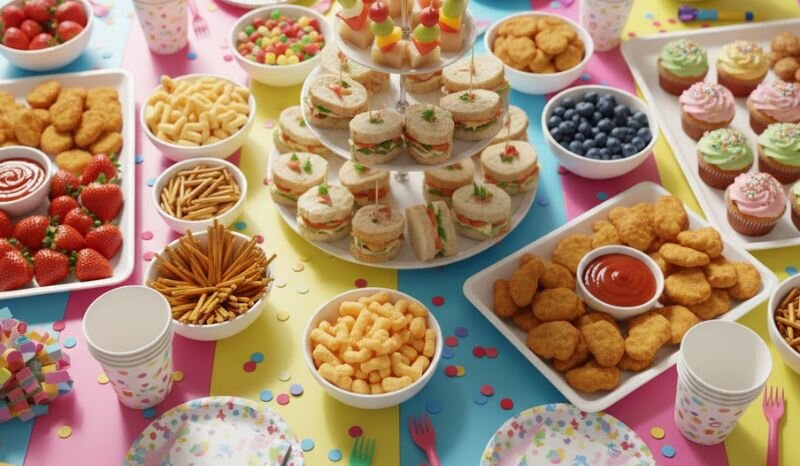
Tables laden with food — “Tables laden with food stretched the length of the community centre.”
A mountain of presents — “A mountain of presents wrapped in shiny paper towered beside the birthday cake.”
Confetti raining down — “Confetti rained down from above as the countdown reached zero.”
Lively music blasted — “Lively music blasted from the speakers, setting the tone for the evening.”
Bursts of laughter — “Bursts of laughter echoed across the void deck as the games grew more competitive.”
The emcee’s voice boomed — “The emcee’s voice boomed through the microphone, calling the next group to the stage.”
A chorus of voices — “A chorus of voices joined in for the final verse of the school song.”
Mouth-watering aroma — “The mouth-watering aroma of fried chicken and pizza wafted through the hall.”
Fragrant curry — “The fragrant curry and steaming biryani reminded everyone that the feast was about to begin.”
Sweet, creamy icing — “I savoured the sweet, creamy icing of the chocolate cake.”
Fizzy tang — “The fizzy tang of the orange soda tickled my throat.”
Compositions that include a small problem followed by a satisfying resolution score higher than stories where everything goes perfectly. The problem adds tension; the resolution shows character.
To our horror — “To our horror, we realised the birthday cake had been left in the car.”
Plunged into darkness — “The hall plunged into darkness when the power suddenly cut out.”
A heavy silence fell — “A heavy silence fell over the room when the microphone stopped working.”
My heart sank — “My heart sank when I saw the spilled drink spreading across the tablecloth.”
Panicked — “We panicked as the minutes ticked by and the guest of honour still had not arrived.”
Thinking on our feet — “Thinking on our feet, we gathered everyone for an impromptu sing-along.”
Improvised — “My father improvised by using his phone’s torch to light the candles.”
Rallied together — “The volunteers rallied together to clean up the mess before anyone noticed.”
Calmed everyone down — “The teacher calmed everyone down and suggested we move the party outdoors.”
Waves of relief — “Waves of relief washed over me when the backup generator kicked in.”
In the end — “In the end, the blackout became the most memorable part of the celebration.”
Even more unforgettable — “The small disaster made the party even more unforgettable.”
A collective sigh of relief — “A collective sigh of relief swept through the crowd when the cake arrived intact.”
Strong endings link the celebration back to what it meant, not just what happened. These phrases work for the final paragraph.
Etched in my memory — “The image of everyone singing together remains etched in my memory.”
More than just a party — “It was more than just a party; it was a reminder of how much my friends cared.”
The best gift — “The best gift was not the presents, but the warmth of having everyone together.”
I realised then — “I realised then that celebrations are not about perfection, but about the people who show up.”
Reading vocabulary lists is a starting point. Retaining words for exam use requires active practice: writing sentences, testing recall, and receiving feedback on whether phrases land naturally or sound forced.
For parents considering structured guidance, a creative writing programme built around STORYBANKING® teaches students to develop a personalised library of vocabulary, phrases, and scene templates organised by theme. Celebration stories benefit particularly from this approach because they require vocabulary for atmosphere, emotion, and problem-resolution all in one composition.
WRITERS AT WORK offers creative writing classes for primary school students that integrate vocabulary development into weekly composition practice. Our curriculum ensures students learn words in context, practise using them under timed conditions, and receive feedback on whether their choices strengthen the story.
Aim for one to three well-placed advanced words per paragraph. Overloading a composition with impressive vocabulary makes it feel unnatural and slows the reader down. Focus on key moments: the atmosphere at the start, the emotional peak, and the resolution. These are where precise word choices earn the most marks.
Not always, but it usually helps. A celebration story without any tension tends to feel flat because nothing changes. A small, realistic problem (a missing cake, a power cut, a late guest) followed by a satisfying resolution gives the story shape and shows the examiner that you understand narrative structure. Keep the problem proportionate; a birthday party does not need a fire or a robbery.
You can introduce your own minor complication as long as it fits the scene. A school concert might have a forgotten costume. A birthday party might have a brief misunderstanding between friends. The key is to resolve it positively so the story ends on a celebratory note, matching the theme.
Generic phrases like “the party was a blast” and “I had a whale of a time” appear in thousands of compositions. Stand out by using specific sensory details from the scene: the particular smell of the food, the sound of a specific song, the texture of the decorations. Specificity beats borrowed idioms every time.

Jemmies Siew, Managing Director and Co-Founder of WRITERS AT WORK Enrichment Centre. With over 15 years of experience in education, entrepreneurship, and marketing, Jemmies has helped shape Singapore’s English enrichment landscape through her vision for transformative learning.
She is passionate about connecting real-world issues with language learning, helping students think critically and express themselves clearly. Connect with her on LinkedIn to follow her insights on education, content marketing, and thought leadership.



Start practising and learning

