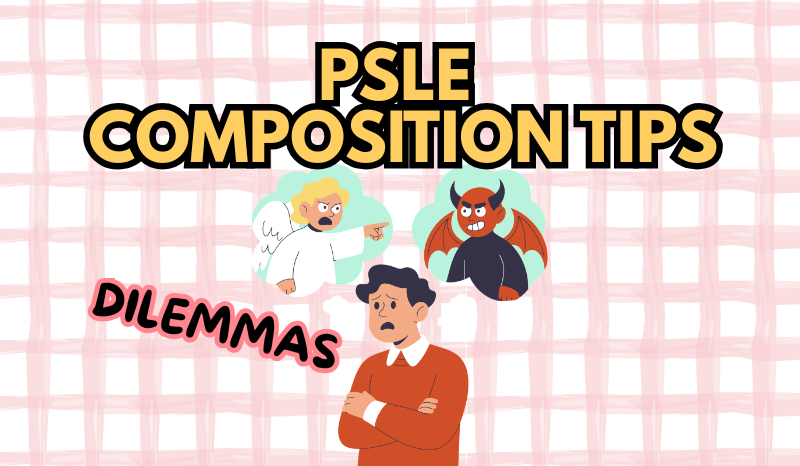
In the world of Composition Writing, many students fall into the “linear plot” trap. They write stories where everything goes exactly as planned, or a problem arises and is solved instantly. However, if you want to know how to write a good composition in English, you must learn the secret of the Dilemma.
A dilemma is a “moral crossroads”: a moment where your character is pulled in two different directions. It is the engine that drives a great story. At WRITERS AT WORK, we teach our students that the most memorable stories aren’t about what happened, but about the difficult choice the character had to make.
If you are aiming for that AL1 in English, mastering the dilemma is the first step toward that distinction grade.
A dilemma only works if both choices have strong reasons behind them.
If the choice is between a chocolate bar and a lollipop, no one cares. For an impressive story, the stakes must be high. For example, choosing between reporting your best friend for cheating to uphold your own moral integrity, or staying silent to preserve a lifelong bond while an innocent classmate is wrongly punished for the act.
Nothing creates tension like a deadline.
Don’t just tell us the character is “confused.” Use their inner voice to show the struggle.
The most important part of the dilemma is the decision.
A common error we see is the “Magic Solution.” This is when a character is facing a hard choice, but then a teacher or parent steps in and solves the problem for them before they can decide.
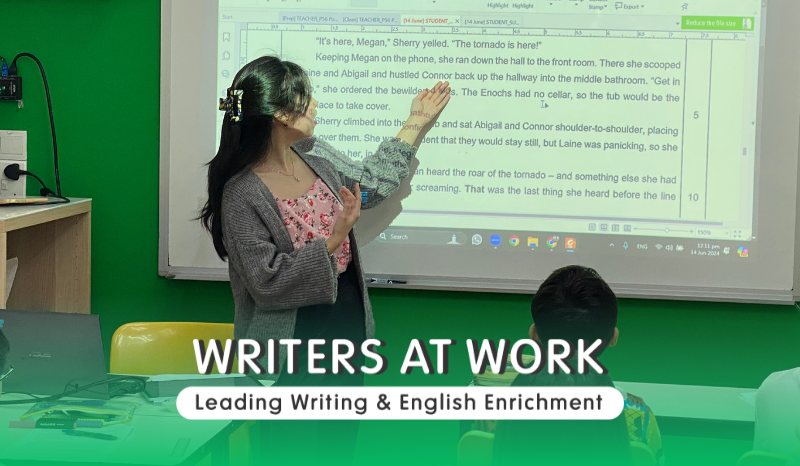
Great writing is a muscle that needs training. At WRITERS AT WORK, our curriculum goes beyond grammar. We teach the “Thinking Frameworks” that allow students to create complex characters and gripping plots.
Ready to take your writing to the AL1 level? Check out our resources on PSLE Past Years Composition Questions to practise your dilemmas. You can also learn about Understanding the New PSLE Scoring System or get a head start with our guide on How to Write Good Introductions.
Join our classes today and see the difference a great dilemma can make!
Not at all! A dilemma can be between two “good” things, like choosing between a once-in-a-lifetime holiday and a major competition. The conflict comes from the fact that you can’t have both.
The dilemma usually happens during the “Rising Action” and leads directly into the “Climax.” It should take up about 1-2 paragraphs to show the character’s internal struggle.
Yes! Sometimes a “wrong” choice makes for a more interesting story about consequences and learning a lesson. As long as the character learns and grows, it is a valid plot.
In our English Writing Class for Primary School, we use “What would you do?” prompts. Take any situation and add a conflict. For example: You found a leaked exam paper. You need the marks, but your friend worked so hard for theirs. What happens next?

Jemmies Siew, Managing Director and Co-Founder of WRITERS AT WORK Enrichment Centre. With over 15 years of experience in education, entrepreneurship, and marketing, Jemmies has helped shape Singapore’s English enrichment landscape through her vision for transformative learning.
She is passionate about connecting real-world issues with language learning, helping students think critically and express themselves clearly. Connect with her on LinkedIn to follow her insights on education, content marketing, and thought leadership.



Start practising and learning

