Here is something most students do not think about until they are already sitting in front of the examiner: Where do I look?
Some students stare at the passage the entire time. Some look at the table. Some glance around the room nervously. Very few actually look at the examiner naturally and comfortably.
Eye contact is one of the simplest ways to instantly come across as more confident and engaged, even if you are nervous inside. Like every other skill in PSLE Oral, it can be practised and improved. This guide will show you exactly how.
Before we get into the three ways to improve, it helps to understand why eye contact feels so difficult in the first place.
When you are nervous, your instinct is to look away. Looking down or to the side feels safer because it reduces the sense of being watched and judged. It is a completely natural response to pressure and it happens to almost every student.
The problem is that looking away actually makes nervousness worse. When you avoid eye contact, your brain interprets the situation as more threatening than it actually is, which increases anxiety rather than reducing it.
The three skills below will help you with getting used to eye contact.
This technique works particularly well for Reading Aloud, where many students keep their eyes glued to the page from start to finish.
Every time you reach a full stop or a comma, that is your cue to briefly glance up at the examiner before continuing. You are already pausing at punctuation marks to control your pace, so use that same pause to lift your eyes for just a moment.
You do not need to hold eye contact for long. Even a quick, one-second look upward at a natural pause is enough to create the impression of engaged reading.
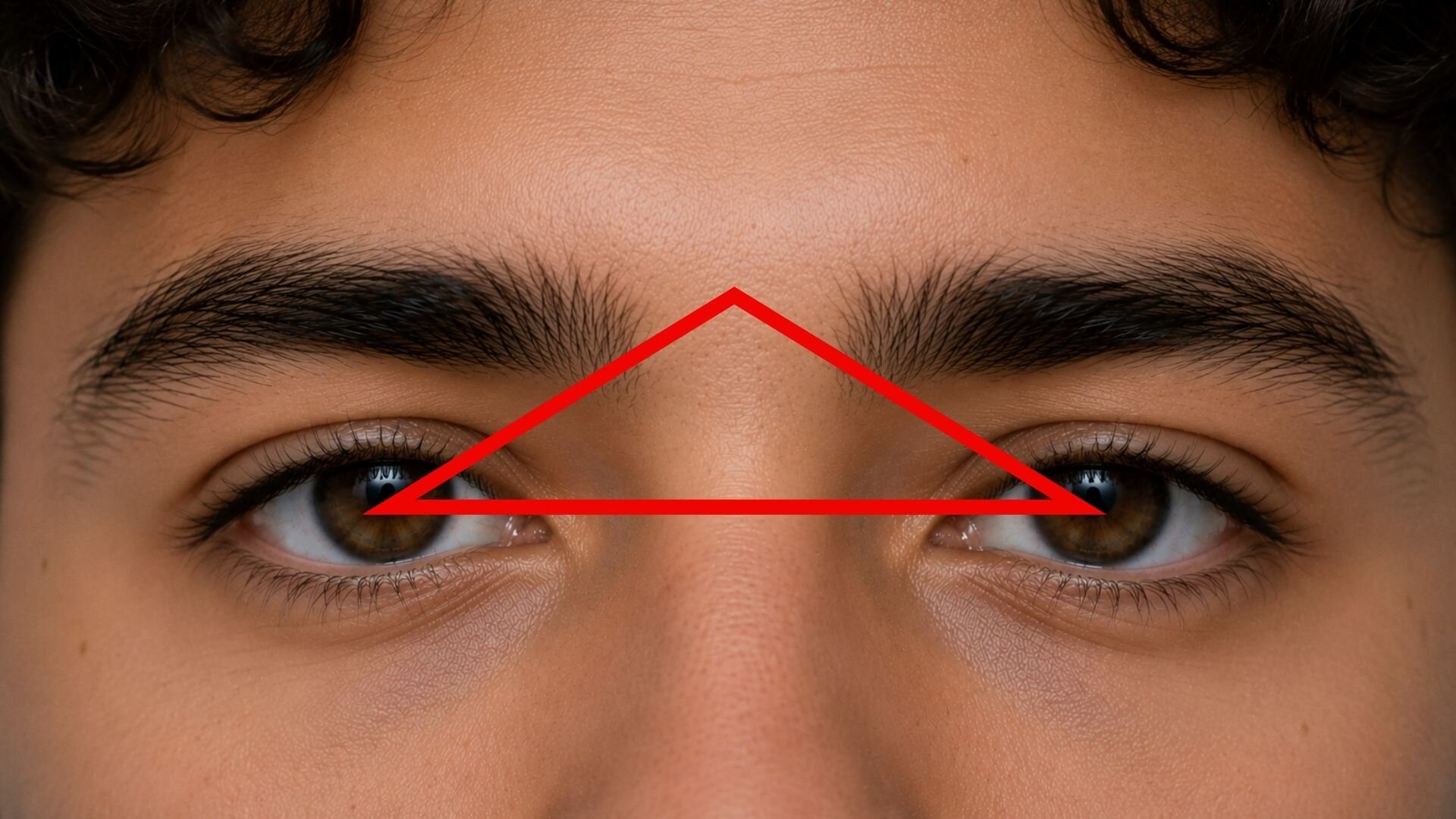
This is one of the most practical and effective techniques for students who find direct eye contact uncomfortable or intense.
Imagine a small triangle drawn on the examiner’s face. The three points of the triangle are their left eye, their right eye, and the space right between their eyebrows. As you speak, slowly move your eyes from one point to another every few seconds.
To the examiner, this looks exactly like perfect, confident eye contact. But for you, it feels much less intense than staring directly into someone’s eyes.
Try this at home during your next conversation with a parent. Practice shifting your gaze between their eyes and middle of their eyebrows as you talk. They won’t even notice you are doing it!
Here is the simplest practice tip of all. Start making eye contact during normal conversations at home. The best place to build this habit is with people you already trust.
Every meal, every chat with a parent or sibling, or every time someone asks you how your day was, use that moment to practise looking at the person while you speak. It sounds almost too simple but it works because it builds the habit gradually without any pressure attached.
When you feel ready, ask a parent to sit across from you at a desk for a quick 20-minute mock run. Having a real person sitting opposite you copies the exact feeling of the exam room. Working through that nervous feeling in a safe place is the best preparation you can do, and by exam day, looking up will feel completely natural!
Eye contact is one of those small things that makes a surprisingly big difference in PSLE Oral. It does not require extra knowledge or difficult vocabulary, but it can instantly make your delivery sound more confident, engaged, and convincing.
The best part is that it is a skill you can build anywhere, not just in front of a teacher or tutor. With a little daily practice, it becomes something you do naturally without thinking.
If your child struggles with nerves, speaks too softly, or avoids eye contact during practice, structured guidance can make a big difference. At WRITERS AT WORK, our Upper Primary English programme helps students bridge the gap between home practice and real exam conditions through guided Oral training, targeted feedback, and exam-focused strategies.
To find out how we can support your child’s PSLE Oral preparation, contact us today to learn more about our upcoming classes. You can also follow us on TikTok and Facebook for regular tips and resources.
Yes, it is completely okay! You need to look at the paper to read the words correctly, so your eyes will naturally be on the passage about 80% of the time. The examiner does not expect you to memorise the text. The goal is simply to avoid keeping your head glued to the paper from start to finish. Glancing up briefly at full stops or commas is more than enough.
Yes, it can be if it feels forced. You should never stare at the examiner non-stop without blinking or looking away, as that can make the conversation feel unnatural and stiff. Eye contact should feel like a normal chat with a friend. It is completely natural to look away slightly into the distance when you are trying to remember a point or example.
While there is no specific “eye contact section” on the grading rubric, it directly affects the overall impression you make on the examiner, which does influence your score.
It depends on the student, but with daily practice in normal conversations, most students feel more natural within a few weeks.

Jemmies Siew, Managing Director and Co-Founder of WRITERS AT WORK Enrichment Centre. With over 15 years of experience in education, entrepreneurship, and marketing, Jemmies has helped shape Singapore’s English enrichment landscape through her vision for transformative learning.
She is passionate about connecting real-world issues with language learning, helping students think critically and express themselves clearly. Connect with her on LinkedIn to follow her insights on education, content marketing, and thought leadership.



Start practising and learning

