After weeks of intense revision, it is incredibly tempting for students to stuff their marked English papers into the bottom of their school bags, slide them into a desk drawer, and completely forget about them until the new school term begins next year.
Unfortunately, that is also one of the biggest missed opportunities for improvement.
Your End-of-Year Examination is more than just a final grade. It is a detailed report card that reveals exactly where marks were gained, where marks were lost, and what skills need attention before the next academic year begins. Students who take the time to analyse their papers often enter the new term with a much clearer sense of direction and confidence.
Here is how you can turn your EOY papers into a roadmap for improvement.
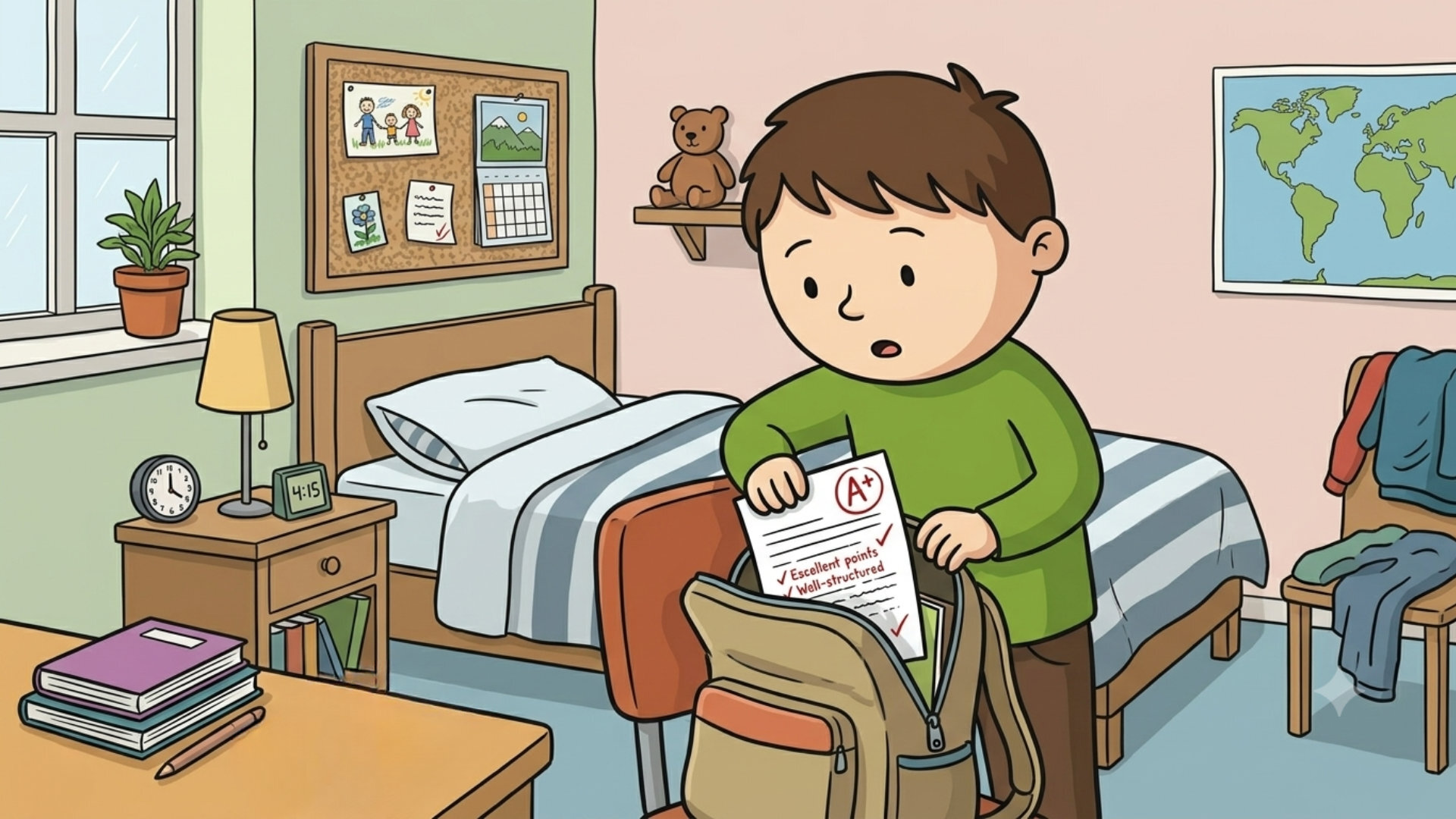
Your first step is to retrieve your marked Paper 1 and Paper 2 scripts.
When you look at your results, try to look past the raw score. Instead, focus heavily on the teacher’s red ink throughout the script. Pay close attention to:
Your teacher has already highlighted many of your strengths and weaknesses. The key is learning how to interpret that feedback.
Not all mistakes are created equal. To fix your weaknesses effectively, you need to sort your errors into two distinct categories:
These are mistakes you made simply because you were rushing, tired, or lost focus during the exam.
Examples: Spelling errors, missing out on a minor bullet point in Situational Writing, or writing 85 words for your summary instead of sticking strictly to the 80-word boundary.
This is a time-management and tracking issue, not a skill issue.
These happen when you genuinely do not understand how to execute a specific task required by the examiner.
Examples: Consistently losing marks on Paper 2 inference questions, struggling to rewrite summary points in your own words, or repeatedly writing explanations that are too underdeveloped in your essays.
This requires targeted instruction and deliberate practice.
When students look at an underperforming English script, they often feel overwhelmed and think, “I am just bad at English.” This is never true. You are usually just struggling with a few specific, recurring habits.
Instead of trying to rewrite your entire academic approach overnight, pick just three specific areas that caused the biggest mark leakages in your EOY paper.
For example, your “Big Three” goals might look like this:
By narrowing your focus down to three precise targets, the path to improvement feels manageable and achievable.
Once you have identified your Big Three fixes, break them down into specific actions.
For example:
Small, consistent improvements often produce far better results than short bursts of intense revision before an exam.
Remember, progress in English is rarely about making dramatic changes overnight. It is about steadily strengthening the skills that matter most.
The students who improve the most are not always the ones who scored the highest in their EOY examinations. They are the ones who take the time to learn from their mistakes and work on them systematically.
If you are unsure where to begin, guidance from an experienced teacher can make the process much clearer. At WRITERS AT WORK, we help students identify their key weaknesses, develop effective examination strategies, and build the skills needed to perform confidently in both Paper 1 and Paper 2.
The EOY papers have already shown you where the gaps are. The next step is deciding what to do about them.

The students who improve the most are not always the ones who scored the highest in their EOY examinations. They are the ones who take the time to learn from their mistakes and work on them systematically.
If you are unsure where to begin, guidance from an experienced teacher can make the process much clearer. At WRITERS AT WORK, we help students identify their key weaknesses, develop effective examination strategies, and build the skills needed to perform confidently in both Paper 1 and Paper 2.
The EOY papers have already shown you where the gaps are. The next step is deciding what to do about them.
Join WRITERS AT WORK and start turning this year’s feedback into next year’s success. Don’t forget to follow us on TikTok and Facebook for regular exam tips, useful resources, and a closer look at what goes on inside our classrooms.
Careless mistakes should not be ignored. While they may seem minor individually, they can add up to a significant number of lost marks. Improving time management, proofreading habits, and examination discipline can often lead to quick improvements in overall performance.
The best solution is to simply ask your teacher for clarification. Alternatively, seek help from a tutor who can explain exactly what those comments mean and how to address them.
Yes. Many students make substantial improvements when they focus on specific weaknesses and practise consistently. The key is having a clear plan rather than relying solely on last-minute revision before examinations.

Jemmies Siew, Managing Director and Co-Founder of WRITERS AT WORK Enrichment Centre. With over 15 years of experience in education, entrepreneurship, and marketing, Jemmies has helped shape Singapore’s English enrichment landscape through her vision for transformative learning.
She is passionate about connecting real-world issues with language learning, helping students think critically and express themselves clearly. Connect with her on LinkedIn to follow her insights on education, content marketing, and thought leadership.




Start practising and learning

