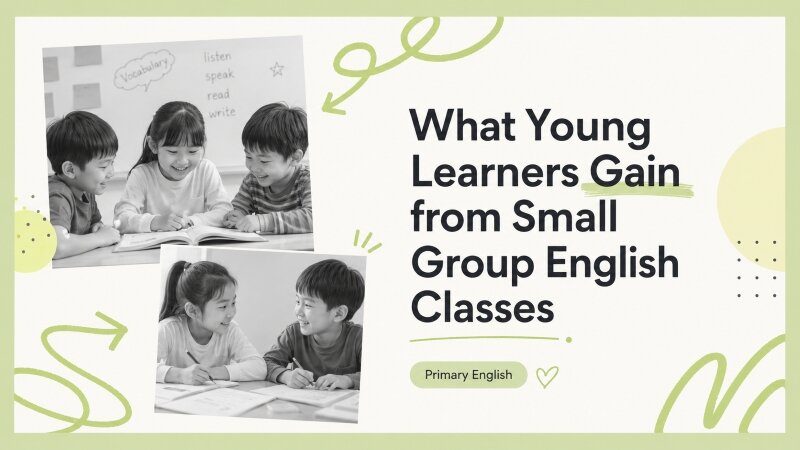
For many parents, the primary school years are when English begins to feel more serious. Children are no longer just learning simple words and sentences. They are building grammar, vocabulary, reading comprehension, writing skills, and the confidence to express their ideas clearly. A small group English class can give young learners a supportive space to practise these skills while learning how to participate, listen, respond, and grow alongside others.
The middle primary years are an important stage for building strong English foundations. This is when children begin to handle longer passages, more demanding vocabulary, and writing tasks that require clearer organisation of ideas. The habits they build at this stage often shape how they approach English in the years ahead. When children receive steady support early, they are more likely to grow in both skill and confidence.
In a smaller learning setting, children usually have more chances to speak up, ask questions, and share their answers. This is especially helpful for quieter learners who may not participate much in a large classroom. When a child knows that their teacher will notice their effort and guide their response, they are more likely to stay engaged instead of simply sitting through the lesson.
Young children often learn by watching the people around them. In a small group English class, they can observe how their classmates listen, answer questions, attempt new vocabulary, and try again after making mistakes. These moments help children pick up positive learning habits naturally. In the right environment, peer learning can encourage students to become more attentive, confident, and willing to participate.
English learning is not only about completing worksheets. Young learners also need opportunities to think aloud, explain their ideas, and respond in real time. A small group setting allows for more discussion and interaction, which helps children become more comfortable using English actively. Over time, this can make them less hesitant when answering questions, reading aloud, or sharing ideas.
Many children feel motivated when they are learning in a group where others are also trying and improving. This does not have to mean pressure or unhealthy comparison. In a well-guided class, it becomes a positive form of encouragement. When children see their peers making progress, they often feel inspired to raise their own standard and keep trying.
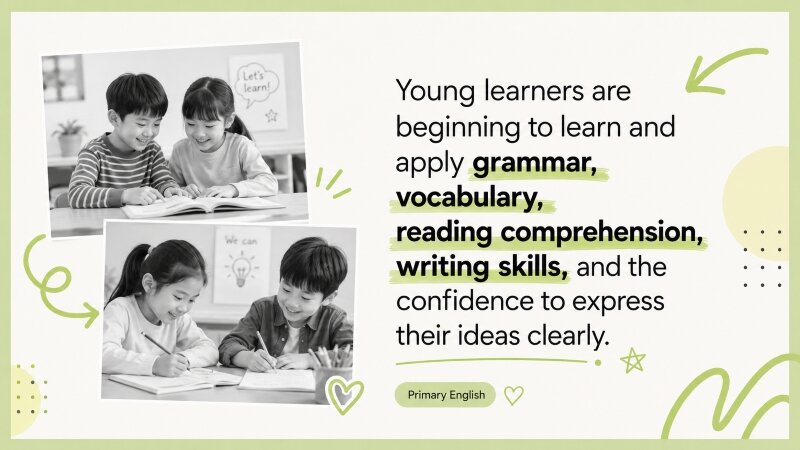
Grammar, vocabulary, comprehension, and writing skills develop over time. Young learners need regular practice, clear guidance, and repeated exposure to important skills. A small group English class can provide this consistency in a focused way. With steady support, children can revisit key skills, correct mistakes, and strengthen their understanding step by step.
English progress is not only about academic ability. It also depends on habits such as paying attention, listening carefully, attempting difficult tasks, and learning from feedback. In a small group class, children are gently encouraged to practise these habits every lesson. Over time, this helps them become more independent, resilient, and confident learners.
Progress in English may not always appear immediately as a big jump in marks. For young learners, it may begin with small but important changes. A child may start speaking up more often, using better vocabulary, giving fuller answers, or approaching writing with less fear. These small signs of growth matter because they show that the child is becoming more comfortable and capable in English.
At WRITERS AT WORK, our small group English classes help young learners build strong foundations in grammar, vocabulary, comprehension, and writing while growing in confidence through participation and peer learning. Our classes are designed to give children the space to practise, ask questions, learn from others, and develop good learning habits over time. Give your child the space to be heard, guided, and supported. Speak to us today to find out more about our Primary English programmes.
For primary students, our PURE Composition Writing Programmes help children build creativity, develop stronger ideas, and learn how to write vivid, well-structured compositions. Our Comprehensive English Programmes support students in key areas such as grammar, comprehension, oral communication, and writing, giving them a strong all-round foundation for school and national exam success.
Beyond the classroom, students and parents can also tap into our wider learning resources through W@W eSeries, and stay updated with tips, insights, and student support on TikTok and Facebook
Young learners need more than worksheets and corrections alone. They benefit from an environment where they can participate, observe, practise, and grow with guidance. For many children, small group English classes offer a valuable balance of structure, interaction, and support during an important stage of development. With the right setting, children can build not only stronger English skills, but also the confidence and habits they need for long-term learning.
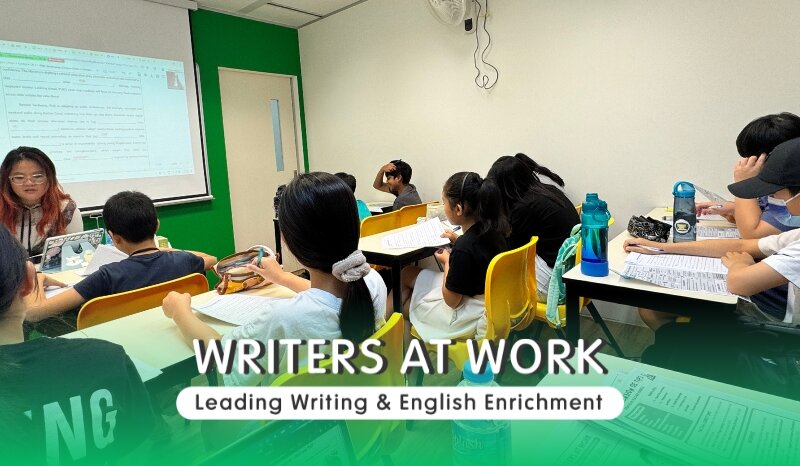
Yes. Primary 3 and 4 students are at an important stage where they are building stronger foundations in grammar, vocabulary, comprehension, and writing. A small group setting gives them more chances to participate, ask questions, and practise using English with guidance.
In a well-managed small group class, every child has more opportunities to be seen and heard. The teacher can observe how each student responds, correct mistakes more closely, and encourage quieter learners to participate instead of letting them drift through the lesson.
Young learners often learn by watching their peers. When they see classmates listening carefully, answering questions, trying new vocabulary, or attempting difficult writing tasks, they pick up positive learning habits more naturally. This can help build both confidence and motivation in English.

Jemmies Siew, Managing Director and Co-Founder of WRITERS AT WORK Enrichment Centre. With over 15 years of experience in education, entrepreneurship, and marketing, Jemmies has helped shape Singapore’s English enrichment landscape through her vision for transformative learning.
She is passionate about connecting real-world issues with language learning, helping students think critically and express themselves clearly. Connect with her on LinkedIn to follow her insights on education, content marketing, and thought leadership.



Start practising and learning

