Many students struggle with Composition Writing because they must manage planning, vocabulary, grammar and story development all at once. Under exam pressure, they may find it hard to think of a strong plot quickly. As a result, they often fall back on predictable, confusing or loosely connected storylines.
That is where STORYBANKING® comes in.
At WRITERS AT WORK, STORYBANKING® is a writing strategy that helps students build a personal “bank” of story ideas, character types, conflicts, emotions, settings and vocabulary phrases before they enter the exam hall. Instead of starting from zero each time, students learn how to draw from familiar ideas and adapt them to different composition topics.
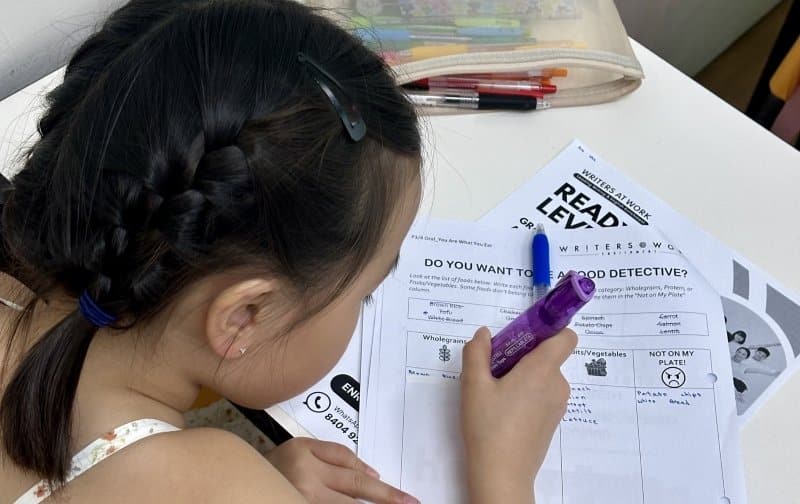
You might be wondering: why is this “bank” essential? Students are expected to generate, organise and express relevant ideas clearly and coherently, all within a limited amount of time. In the PSLE English Paper 1 and O Level English writing components, strong planning, accuracy and effective expression can make a significant difference.
In school, many students are told to “be creative”. However, creativity is difficult when a child is anxious, under time pressure or unsure how to begin.
A student may see a topic such as “A Disappointment”, “An Unexpected Discovery” or “A Difficult Decision” and freeze. The issue is rarely a complete lack of imagination. More often, the student has not been trained to retrieve, refine and reshape ideas quickly. Many students also treat every composition as a completely new task. They do not revisit earlier pieces to improve their plots, language and structure. As a result, progress can become inconsistent, and writing may feel more like a guessing game than a skill that is steadily developed.
STORYBANKING® gives students a structured way to prepare without locking them into fixed, memorised compositions. They collect flexible story materials that can be adapted to different topics, themes and picture prompts.
A strong Storybank is not a pile of memorised essays. At WRITERS AT WORK, STORYBANKING® is a structured system that helps students build and refine a personalised library of story ideas while strengthening key writing skills.
Students build a bank of well-crafted story plots that they can revisit, refine and adapt. These plots help students understand how strong stories are constructed, from the opening situation to the conflict, climax and resolution.
A Storybank also includes clear frameworks for organising ideas. Students learn where tension rises, how conflict develops and how the resolution should land effectively. This turns planning from guesswork into a repeatable process.
Strong compositions need believable characters. Through STORYBANKING®, students build character profiles that can be adapted to different plots and themes. They also learn to use a character’s thoughts, feelings and dialogue to echo the composition’s theme. For example, a story about regret should show guilt, while a story about courage should show hesitation turning into determination.
Students collect vocabulary, sentence structures, literary devices and writing techniques to make their stories more vivid. They also learn how to build suspense by delaying the reveal, using short sentences for tension and describing small but important details before the climax.
A Storybank also helps students manage time under exam conditions. Through repeated practice, students learn how to plan, write and check within a limited time. This builds exam stamina, so writing becomes a familiar process rather than a rushed last-minute struggle.
This is the difference between copying and crafting.
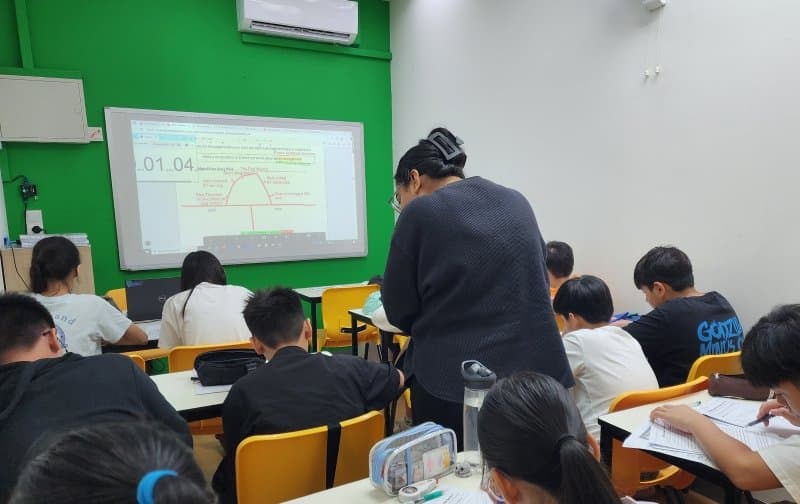
In an exam, planning time is limited. Students who have never practised idea generation may spend too long deciding what to write. Some begin writing without a clear direction, only to realise halfway that the story does not work.
STORYBANKING® gives students a head start.
When students have a bank of possible conflicts, characters and turning points, they can choose and adapt ideas more quickly. This helps them spend less time panicking and more time writing.
A student trained in STORYBANKING® may think:
“This topic is about courage. I can use my ‘stage fright’ idea, but change the setting from a school concert to an oral presentation.”
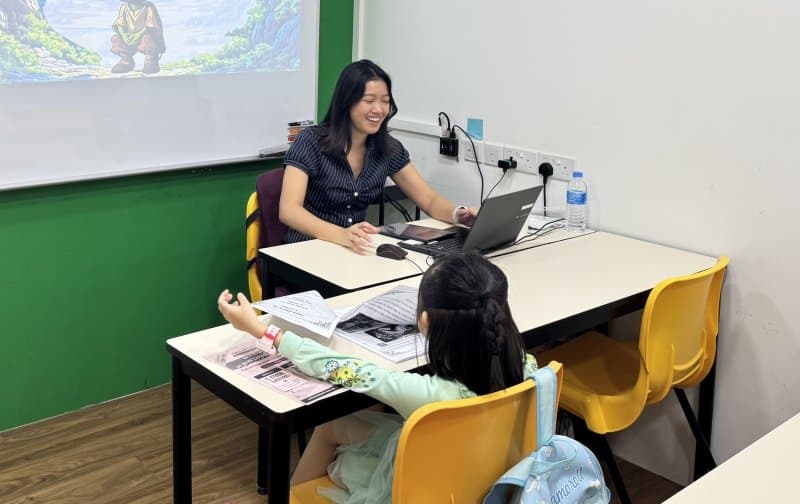
Confidence in writing does not come from luck. It comes from preparation.
When students repeatedly practise building, storing and adapting stories, certain plot structures become etched in their minds. This reduces the number of decisions they have to make during brainstorming because they are not inventing every part of the composition from scratch.
Instead of thinking, “I have no idea what to write,” students learn to ask:
These questions turn writing from a guessing game into an intentional process.
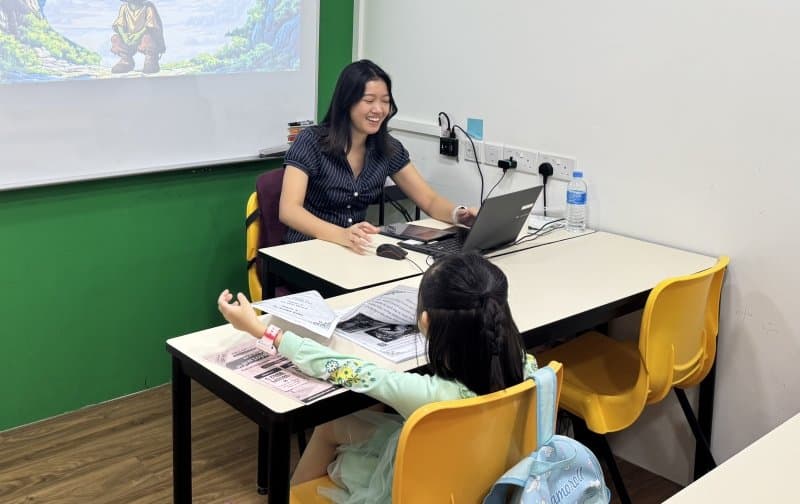
At WRITERS AT WORK, STORYBANKING® supports our broader approach to Composition Writing. Students are not left to “just write”. They are taught how to plan, structure, develop and refine their compositions through guided practice.
Our teachers help students understand what makes a story work: a clear beginning, a meaningful conflict, rising tension, believable emotions and a satisfying resolution. Students also learn how to improve language, avoid common plot mistakes and write with greater clarity.
STORYBANKING® is powerful because it prepares students before the pressure begins.
Rather than hoping inspiration appears during the exam, students learn to build a reliable Storybank of plots, characters, vocabulary and writing techniques. With STORYBANKING®, they become more confident, more flexible and more purposeful in their writing.
At WRITERS AT WORK, we believe good writing can be taught. With the right strategies, students can move beyond memorising phrases or fearing blank pages. They can learn how to think like writers, plan like writers and write with confidence.
STORYBANKING® is one way we help them do exactly that.
Parents who want to understand the WRITERS AT WORK approach more deeply can explore our W@W Method and STORYBANKING® explanation, where we share how our pedagogy helps students internalise story plots, vocabulary, character development and writing techniques. They can also follow our WRITERS AT WORK social channels to hear directly from our W@W teachers, including our teacher features and short-form educational content on TikTok and Instagram.
Building a strong foundation takes time because students need repeated practice in planning, structuring, writing and refining their compositions. With consistent guidance, students gradually learn how to generate ideas faster, organise plots more clearly and apply vocabulary more effectively.
STORYBANKING® is not difficult when students are taught how to use it step by step. At WRITERS AT WORK, students are guided to choose, tweak and adapt familiar story plots, characters and vocabulary phrases to suit different questions, themes and picture prompts. This helps them apply their Storybank with confidence instead of memorising blindly.
At WRITERS AT WORK, students are guided to build, refine and adapt their Storybank through structured Composition Writing lessons. They learn how to develop plots, shape characters, use vocabulary effectively and write under exam conditions with greater confidence.

Jemmies Siew, Managing Director and Co-Founder of WRITERS AT WORK Enrichment Centre. With over 15 years of experience in education, entrepreneurship, and marketing, Jemmies has helped shape Singapore’s English enrichment landscape through her vision for transformative learning.
She is passionate about connecting real-world issues with language learning, helping students think critically and express themselves clearly. Connect with her on LinkedIn to follow her insights on education, content marketing, and thought leadership.



Start practising and learning

