

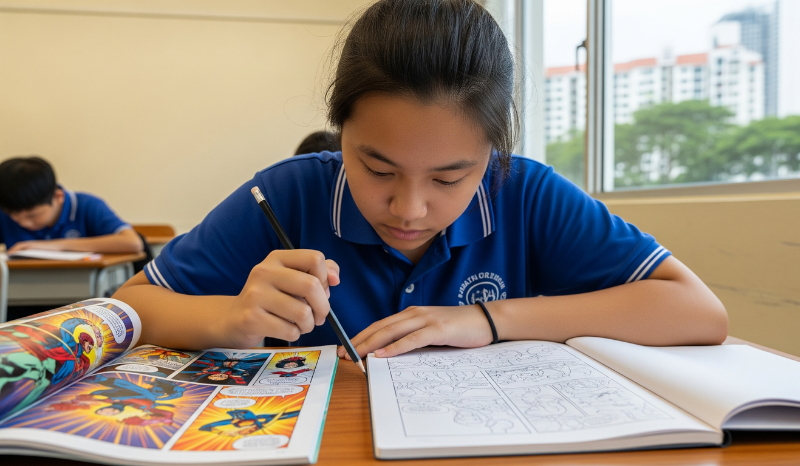
That’s what happened in a story shared on Innotate’s Blog. The author’s 8-year-old son proudly showed him a cartoon he had drawn. At first, the father was thrilled, until he found out it was copied from a book. A wave of disappointment followed, because like many adults, he expected “original” work. But then he remembered something profound from Stephen King’s memoir On Writing that imitation precedes creation.
Imitation Is the First Step to Mastery
Why Parents Often Resist Imitation
From Imitation to Innovation: The STORYBANKING® Way
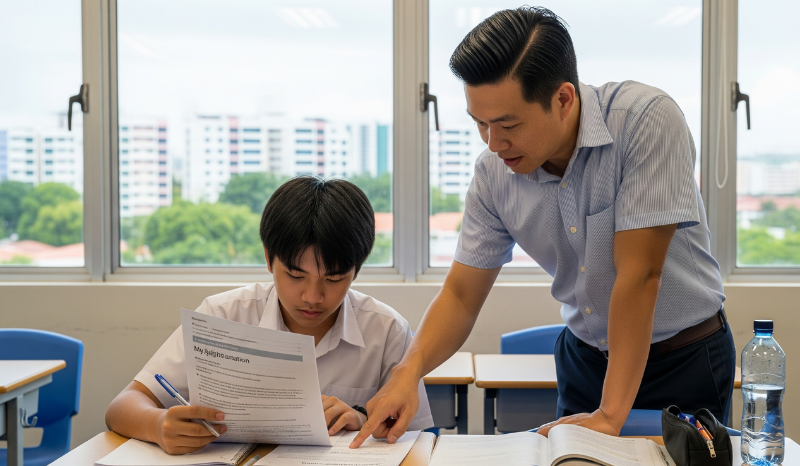
Here’s how it works:
1. We start with strong models
2. They analyse and imitate purposefully
3. They “bank” narrative elements
Just as a storyteller collects ideas and scenes in a notebook, our students build a mental library, or a “story bank”, of story structures, plot ideas, vivid settings, and character behaviours.
4. They learn to remix and personalise
Why It Works for Singapore’s Writing Exams
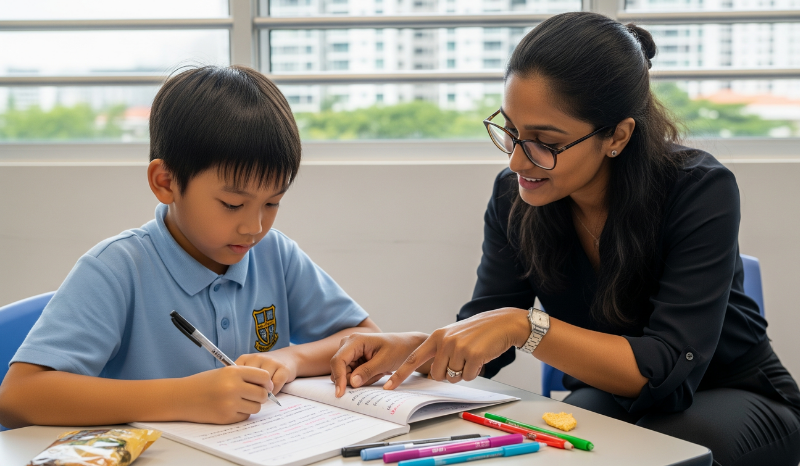
Whether for the PSLE or O-LEVELs, students are expected to:
• Generate and select relevant ideas
• Organise thoughts coherently
• Use accurate, appropriate vocabulary and grammar
Our STORYBANKING® method addresses all of these by giving students:
✔ A toolkit of story ideas to avoid writer’s block
✔ Exposure to ambitious vocabulary and sentence structures
✔ Familiarity with exam-appropriate genres and tones
Instead of starting from scratch, students enter their writing task with confidence and creative ammunition.
And more importantly, they start to think:
“I can do better than this.”
That shift, from copying to challenging, is when imitation transforms into true creativity.
WRITERS AT WORK: Helping Writers Begin Boldly
We don’t expect our students to write like published authors from day one. We expect them to start somewhere, and that “somewhere” often begins with imitation. Our job as educators is to guide them from mimicry to mastery.
So next time your child imitates a story they’ve read, celebrate it. It means they’re observing. Learning. Practising.
And soon, they’ll be ready to create.
FAQs – Creative Writing Classes for Primary School
Q1: Is learning from model compositions helpful or harmful?
It’s helpful when guided. At WRITERS AT WORK, we teach students to analyse and imitate purposefully – using models as springboards for their own writing.
Q2: What is STORYBANKING®, and how does it help my child?
STORYBANKING® is our proprietary method of helping students collect and internalise narrative elements (e.g., plots, settings, vocabulary). It builds writing fluency, idea generation, and exam-readiness.
Q3: How can I support my child’s writing journey at home?
Encourage reading widely and purposefully, discussing stories, and reviewing model compositions together. Celebrate small wins especially when they draw inspiration from others.
Want to learn more? Visit our Creative Writing Classes for Primary School or explore our free model compositions to get started.
From mimicry to mastery, every writer begins somewhere. At WRITERS AT WORK, we help them begin boldly.


