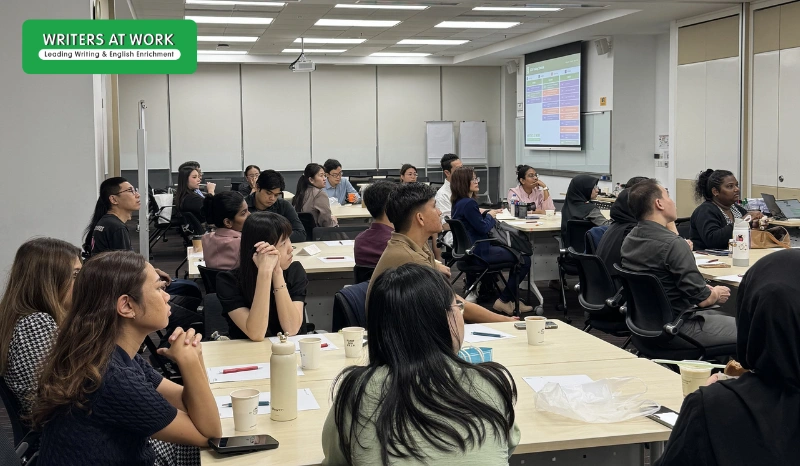
On Labour Day, we celebrate hard work. In education, some of the most important work happens quietly, behind the scenes.
Parents usually see the final result. They see the lesson, the worksheet, the feedback, and sometimes the progress that follows. What they may not always see is the preparation behind it all. At WRITERS AT WORK, our teachers do not simply step into class and teach from habit. They continue learning throughout the year, and they are also held to internal standards that help us maintain teaching quality across the team.
So far in 2026, our teachers have taken part in a wide range of professional development efforts. These included training sessions, sharing sessions, webinars, internal discussions, and also teacher assessments that were designed to check their own understanding, readiness, and teaching standards.
This matters because good teaching is never only about knowing English well. It is also about knowing how to explain clearly, how to make lessons more engaging, how to guide students through difficulty, and how to make even exam-focused lessons more purposeful and helpful. This Labour Day, we wanted to shine a light on the work behind the work, and on the effort our teachers continue to put into growing professionally.
A strong lesson does not happen by chance.
It takes planning, reflection, discussion, and continuous improvement. In a subject like English, students do not only need correct answers. They need teachers who know how to break down complex skills, explain clearly, respond to mistakes constructively, and guide them step by step.
That is why teaching quality cannot depend on routine alone. It needs to be supported by ongoing development and regular checks.
At WRITERS AT WORK, we believe good teaching should continue to grow. This is why our teachers do not only attend professional development sessions. They are also part of an internal culture that values alignment, reflection, and standards.
For many families, especially those preparing for PSLE, this matters. Parents are not simply looking for classroom time. They are looking for meaningful teaching that helps students understand better, stay engaged, and improve with purpose.
In 2026, our teachers participated in different forms of professional development across the year.
Some sessions were training-focused. These included lesson delivery discussions, classroom strategy sharing, interactive whiteboard training, teaching support, and internal sharing on how to make lessons more useful and engaging for students. Teachers also learnt how to apply WRITERS AT WORK’s exclusive teaching techniques, helping them conduct lessons with greater clarity, consistency, and purpose.
Other sessions were assessment-focused. These were not student assessments, but internal assessments for teachers themselves. In other words, our teachers were also evaluated on their own ability and understanding.
This distinction is important.
Training helps teachers keep learning. Internal assessments help us check standards, identify areas for strengthening, and ensure that teaching quality is not taken for granted. Together, these two parts support a more thoughtful and accountable teaching culture.
At WRITERS AT WORK, we see both as valuable. Good teaching is not only developed. It should also be reviewed and maintained.
When parents hear the word “assessment”, they may naturally think of student tests. In this case, however, some of the assessments in 2026 were for our teachers.
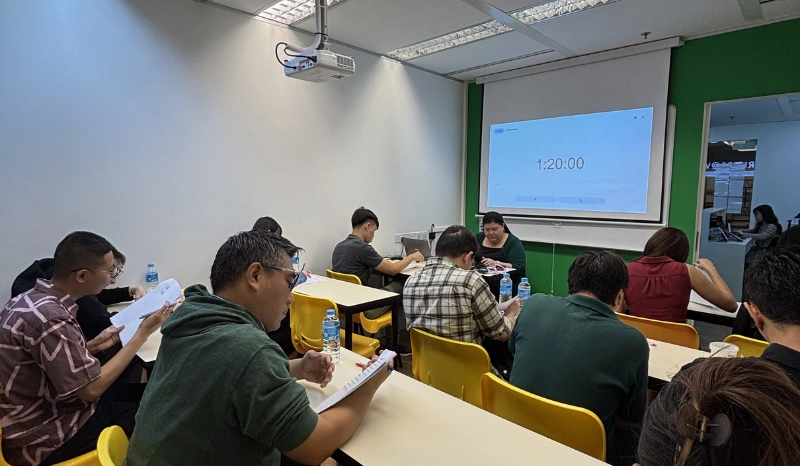
These internal assessments matter because they help us evaluate teachers’ own subject understanding, readiness, and consistency. They also show that teaching standards are taken seriously behind the scenes.
Rather than assuming that every teacher is already fully aligned, internal assessments create opportunities to check understanding, reinforce expectations, and identify where further support may be useful. This is part of maintaining quality across a teaching team.
In simple terms, it means that teacher development at WRITERS AT WORK is not based on assumption alone. It is supported by both learning and accountability.
One important part of professional growth is clarity.
Students often struggle not because they are unwilling to learn, but because they are unsure what a question is asking, what a teacher means, or how to improve after making a mistake. Strong teaching depends not only on knowing the answer, but on knowing how to explain the answer in a way students can understand and remember.
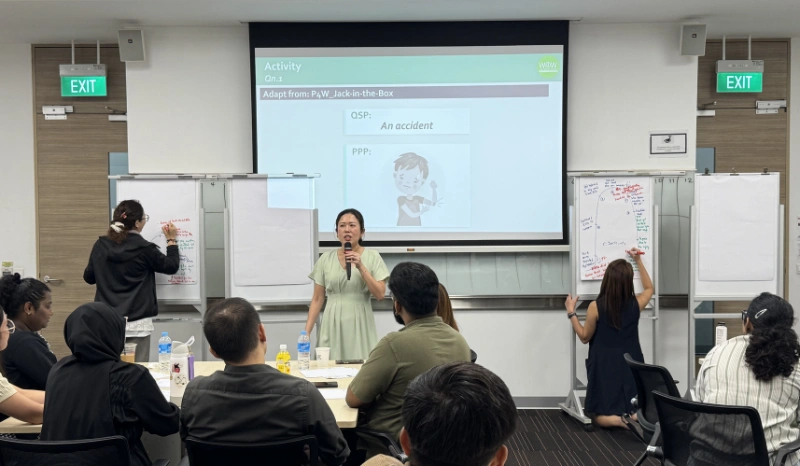
That is why alignment in explanation matters. At WRITERS AT WORK, teachers also learn how to use important teaching language and lesson frameworks such as QSP and PPP more clearly and consistently. These help teachers guide students through ideas in a more structured way and make explanations more purposeful in class.
When teachers are aligned in how they explain, students benefit. They are less likely to feel confused, and more likely to understand what they need to do next.
Good teaching is not only about content. It is also about lesson conduct.
At WRITERS AT WORK, our teachers continue learning how to run lessons more effectively, how to maintain attention, how to structure activities more meaningfully, and how to create a classroom experience that keeps students willing to learn.
This is especially important in English lessons, where students are often expected to think, respond, explain, organise, and express themselves. If a lesson feels too passive, students may switch off. If a lesson is conducted well, students are more likely to stay mentally involved and participate with purpose.
A better lesson does not always mean a louder lesson or a more entertaining lesson. It means a lesson that is better guided, better paced, and more engaging in a meaningful way.
That is one reason teacher training matters so much. It helps teachers improve not only what they teach, but how they teach.
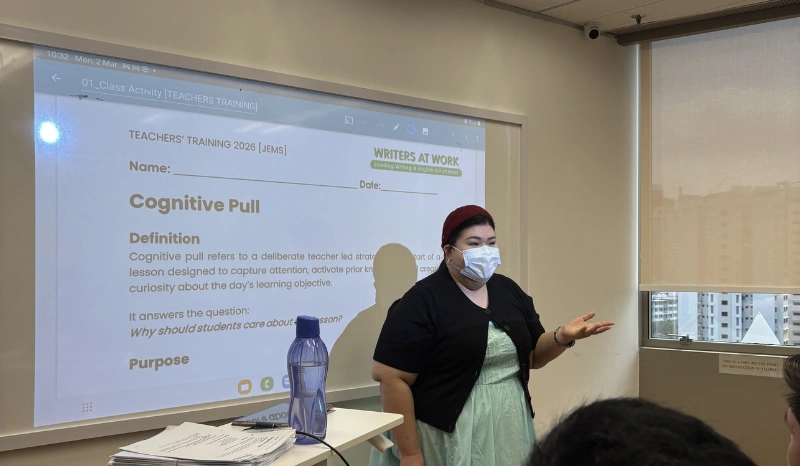
Another key part of teacher development is learning how to make classrooms more interactive.
Students usually learn better when they are actively thinking and responding, not just listening quietly from start to finish. That is why teacher development at WRITERS AT WORK also includes ways to make lessons more interactive and student-responsive.
This may involve better questioning, stronger classroom flow, more intentional student participation, and more effective ways of drawing students into the learning process.
For students, this matters because engagement often affects retention. When a lesson feels purposeful and interactive, students are generally more likely to stay focused, process what they have learnt, and feel more willing to participate.
Exam lessons are important, but they should not become lessons that only increase stress.
At WRITERS AT WORK, teacher development also includes thinking carefully about how to conduct exam-focused lessons in a way that truly helps students. This means not only going through question types, but also helping students understand what they are doing, why it matters, and how to approach it more confidently.
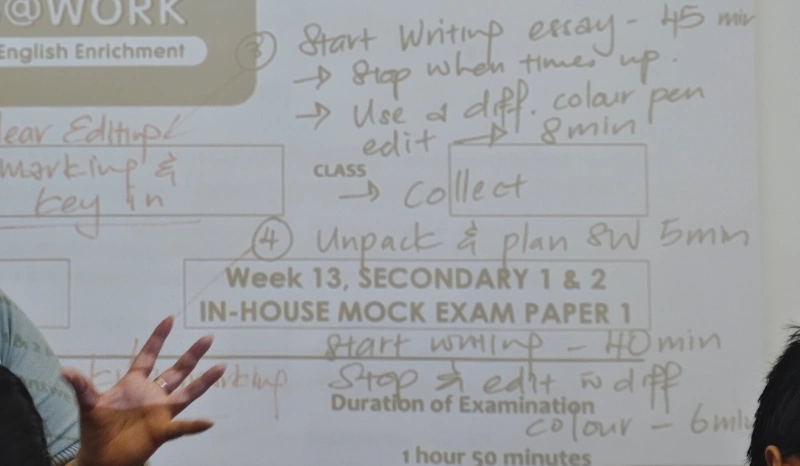
Teachers continue learning how to make these lessons more purposeful, so that students are not simply exposed to exam pressure, but are guided through the demands of exam work more meaningfully.
This is especially important when it comes to building exam stamina. Students need more than practice. They also need structured support that helps them stay focused, manage longer or more demanding tasks, and gradually become more prepared for assessment conditions.
A useful exam lesson should help students build readiness, not just anxiety.
When teachers are regularly trained and also assessed internally, the end result is often better support for students.
Teachers become more aware of how they explain, how they structure learning, and how they respond to student difficulties. They are also more likely to notice where a student is stuck and to give feedback that is clearer and more focused.
This matters because better support is usually not about saying more. It is about saying the right thing at the right time, in a way the student can use.
Ongoing teacher development helps strengthen that ability.
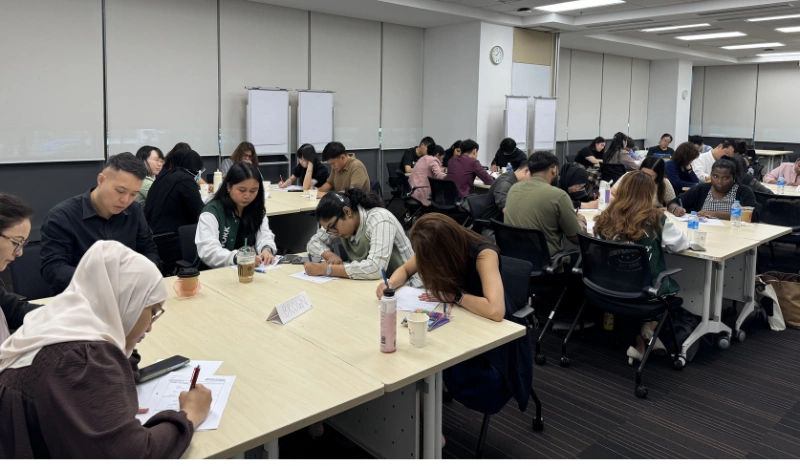
Another important benefit of regular training and internal review is consistency across the team.
Parents naturally want reassurance that their child is learning in an environment where teaching quality is taken seriously. Ongoing development helps create shared standards, shared expectations, and a stronger teaching culture across the centre.
This does not mean every teacher teaches in exactly the same way. Each teacher still brings their own strengths into the classroom. However, regular training and internal evaluation help ensure that students are supported by a team that is continually learning, improving, and staying aligned.
That kind of consistency matters.
At the end of the day, teacher development is not just about teachers. It is about students.
When teachers continue learning, and when their standards are also reviewed internally, students benefit from clearer explanations, better lesson conduct, more interactive classrooms, more purposeful exam preparation, and more thoughtful support.
For parents, this offers reassurance that teaching quality is not left to chance. It shows that WRITERS AT WORK values not only teacher development, but also teacher accountability and professional growth.
That work may not always be visible from the outside, but it plays an important role in the classroom experience students receive.
This Labour Day, we celebrate our teachers not only for the lessons they teach, but also for the learning, preparation, and professional effort that happen behind the scenes.
At WRITERS AT WORK, we believe that strong teaching grows through training, reflection, evaluation, and a willingness to keep improving. The time spent in professional development, internal assessments, discussion, and preparation is part of what allows teachers to step into the classroom with greater clarity and greater purpose.
Behind every well-conducted lesson, every clearer explanation, every more interactive classroom, and every more purposeful exam lesson, there is work that often goes unseen.
On Labour Day, we think that work deserves to be recognised too.
If you are looking for an English programme where teaching quality is continually strengthened behind the scenes, explore the programmes at WRITERS AT WORK.
For primary students who need focused support in composition, our Pure Composition Writing Programmes are designed for Primary 4 to Primary 6 students who want to build stronger ideas, better structure, and more confidence in composition.
For students who need broader support across writing, oral, and other key English skills, our Comprehensive English Programmes offer a more all-rounded learning experience across levels.
At WRITERS AT WORK, we believe that growth should never stop, for students or for teachers. Just as we work to help students learn more effectively, we also invest in the professional growth of our teachers through training, shared teaching strategies, and ongoing development. We want our classrooms to be places where students feel supported, and where educators continue to learn, sharpen their craft, and grow with purpose.
That is what strong teaching means to us, and why we believe it should keep getting better.
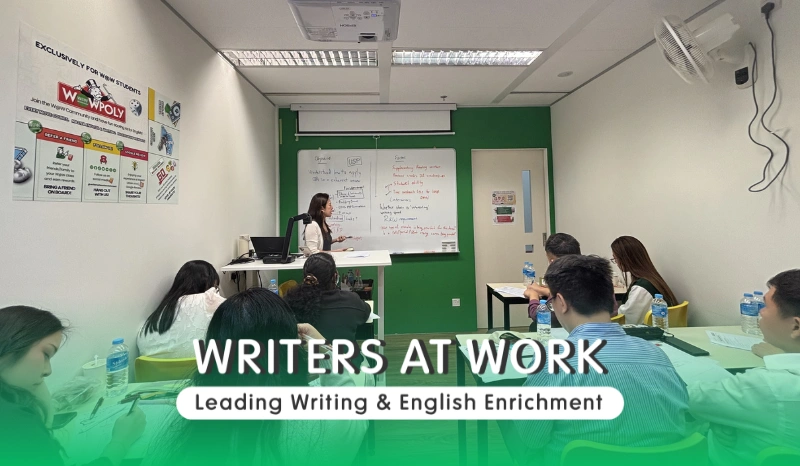
At WRITERS AT WORK, we believe strong teaching should keep improving. Teacher training helps our educators sharpen lesson delivery, strengthen classroom engagement, and guide students more clearly and purposefully.
When teachers continue learning, students benefit from clearer explanations, more interactive lessons, more purposeful exam support, and better-guided feedback. This helps make learning more structured, engaging, and meaningful.
Yes. WRITERS AT WORK values continuous learning for educators. Through training, internal sharing, assessments, and exposure to exclusive teaching strategies, teachers have opportunities to keep refining their skills and growing in their profession.

Jemmies Siew, Managing Director and Co-Founder of WRITERS AT WORK Enrichment Centre. With over 15 years of experience in education, entrepreneurship, and marketing, Jemmies has helped shape Singapore’s English enrichment landscape through her vision for transformative learning.
She is passionate about connecting real-world issues with language learning, helping students think critically and express themselves clearly. Connect with her on LinkedIn to follow her insights on education, content marketing, and thought leadership.



Start practising and learning

