
Many parents expect a good English lesson to begin with clear explanation. The teacher teaches the technique, shows examples, and only then lets students practise. That seems logical. After all, why should a child struggle when the teacher already knows the answer?
In reality, students often learn more deeply when they attempt a task before receiving full instruction. This does not mean leaving them confused or unsupported. It means designing the lesson so that students first encounter a meaningful challenge, become aware of what they do and do not understand, and are then taught at the exact moment when the lesson matters most.
This is known as productive struggle. In Composition Writing, it can make the difference between a student who copies techniques mechanically and a student who understands how and why to use them.
Struggle is not always a sign of poor teaching. In a well-designed classroom, struggle can be evidence that students are thinking. When students attempt a writing task first, they activate what they already know. They recall past storylines, vocabulary, sentence structures, introductions, climaxes, and endings. They make choices. They test ideas. They discover whether their plan is strong enough. Just as importantly, they begin to notice what they do not yet understand.
A student may realise, “I know what happens in my story, but I do not know how to make the problem exciting.” Another may discover, “My introduction is too ordinary.” A third may struggle to connect the picture prompt to a meaningful plot. These moments are valuable. They prepare the student to listen more carefully when the teacher teaches. Instead of receiving advice in the abstract, the student now has a real problem that needs solving.
When a student attempts a task before instruction, the brain does not sit passively. It begins searching for possible answers. The student compares the new task with past experiences. Have I seen a similar prompt before? What kind of conflict can I use? What emotion should the main character feel? How should I begin? This mental search is important because it creates readiness. When students notice gaps in their thinking, later teaching becomes easier to absorb.
For example, if a child has already struggled to write a convincing climax, a lesson on building tension suddenly feels useful. If a student has already written a weak ending, teacher feedback on resolution becomes more meaningful. This is why good Composition Writing instruction is not only about giving techniques. It is about helping students understand the need for those techniques.
Not all difficulty is useful. A child who is given a task that is too vague, too advanced, or completely unsupported may feel lost. That is not productive struggle. That is frustration. Productive struggle is different because it is guided, purposeful, and manageable. The task is challenging enough to make students think, but not so difficult that they give up. The teacher is still present. The lesson is still structured. The struggle has a clear learning goal.
In a strong English writing class, students are not simply told to “write better”. They may be asked to attempt a scene, plan a plot, improve a conflict, or create a more expressive character reaction. The teacher observes how they think, identifies what is missing, and teaches from there. This is difficulty with direction.
Writing is not like copying a formula from the board. In writing, students need to think, choose, organise, and express. If students are told everything too early, they may follow instructions without truly understanding them. They may insert a phrase because the teacher said it was good. They may use a flashback because it was taught. They may memorise an opening without knowing when it fits. That kind of writing often looks polished on the surface but weak in thinking.
When students attempt first, they see why a writing technique matters. A child who struggles to make a scene exciting will better appreciate sensory details, pacing, and emotional reactions. A child whose story feels flat will better understand why conflict and stakes are important. Good writing lessons do not simply tell students what to do. They help students feel the problem first, then teach the solution.
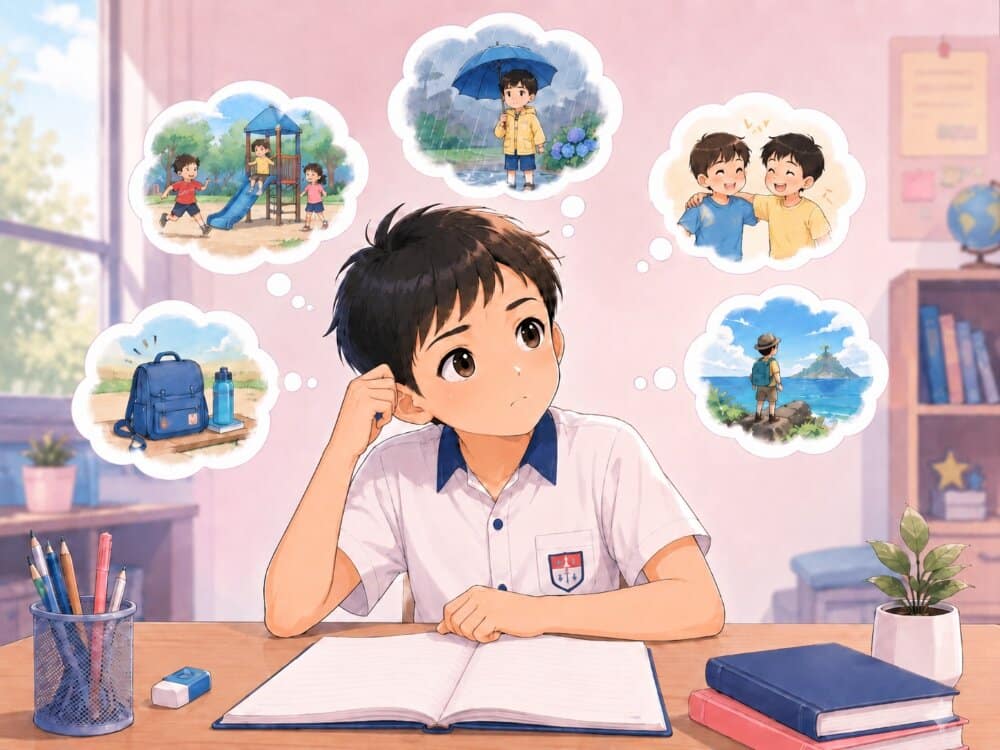
In a Composition Writing lesson, productive struggle may begin with a prompt, a picture stimulus, or a short writing task. Students may first be asked to brainstorm possible storylines. Some will generate predictable plots. Some will struggle to connect the pictures. Others may have an exciting idea but no clear structure.
This first attempt reveals their thinking. The teacher can then teach into the exact gaps. If students are producing flat plots, the lesson may focus on conflict. If their openings are too slow, the teacher may teach stronger ways to begin in the middle of action. If their character reactions are shallow, the teacher may model how to show fear, guilt, relief, or regret through behaviour and internal thought.
After that, students practise again. This second attempt is usually stronger because students now understand what went wrong and how to improve it. That is the power of struggle followed by precise teaching.
At WRITERS AT WORK, STORYBANKING® supports this learning process by helping students build a bank of adaptable story ideas, structures, and techniques. It is not about memorising full compositions. Instead, STORYBANKING® helps students recognise story patterns, understand how plots are built, and apply techniques with purpose. Students learn how a conflict can be adapted, how a character’s mistake can lead to a meaningful lesson, and how a familiar story idea can be reshaped for different composition topics.
This works especially well when students have first experienced the need for the technique. When a student realises that their story lacks direction, a strong story structure becomes useful. When a student sees that their climax is weak, techniques for tension and emotional impact become relevant.
Because students experience the problem first, they use the solution more meaningfully.
A good writing lesson may not always look like constant explanation. Parents may see students thinking quietly, struggling with a prompt, discussing possible storylines, or revising their first attempt. This does not mean the teacher is doing less. In fact, it often means the lesson has been carefully designed to make students think before they are guided.
Students may be challenged before they receive the full model answer. They may be asked to try, make mistakes, and reflect. They may not get the “perfect” sentence immediately. This can feel uncomfortable, especially for parents who want their child to receive direct instruction from the start. However, the goal is not short-term ease. The goal is long-term growth.
Students are not struggling alone. They are being led through a process that helps them become more aware, more independent, and more intentional as writers.
More writing does not automatically lead to better writing.
A student can write many compositions and still repeat the same mistakes. Better writing comes from targeted practice, reflection, and clear instruction. Productive struggle supports all three. When students first attempt a task, they become more aware of their weaknesses. When teachers teach into those weaknesses, feedback becomes more relevant. When students practise again, they are not merely producing more words. They are applying a clearer strategy.
Over time, this helps students remember techniques better. They become less dependent on memorised phrases and more able to make choices independently. Their writing becomes more intentional, organised, and confident. This is especially important in Composition Writing, where students must respond to different topics, picture prompts, and story situations. The strongest students are not those who memorise the most. They are those who can adapt what they know.
Good teaching is not just about giving answers quickly. It is about creating the right conditions for real understanding. In writing, students need space to think, attempt, struggle, receive guidance, and try again. When this process is designed well, struggle becomes productive. It helps students understand why techniques matter, not just how to copy them.
At WRITERS AT WORK, our lessons are built around this cycle of struggle, teaching, and precise practice. Through structured Composition Writing lessons and STORYBANKING®, students learn to develop ideas, organise stories, and apply writing techniques with purpose.
Good Composition Writing lessons let students struggle first because it helps them become aware of their own thinking. When students attempt a task before instruction, they notice what they know, where they are stuck, and what they need help with. This makes teacher guidance more meaningful and easier to apply.
Yes, as long as the struggle is guided and manageable. Primary school students should not be left confused without support. At WRITERS AT WORK, writing challenges are carefully designed so students think deeply, receive timely guidance, and practise with clearer direction.
WRITERS AT WORK helps students improve Composition Writing through structured lessons, teacher feedback, precise practice, and STORYBANKING®. Students learn how to build adaptable story ideas, organise plots, strengthen expression, and apply writing techniques purposefully instead of memorising full compositions.

Agnes Ng, Co-Founder and Teaching & Curriculum Director of WRITERS AT WORK. An NUS Honours graduate and published author with over 30 years of experience, Agnes has been the architect of the organization’s student-centric curricula since 2012.
Dedicated to teacher mentorship and academic excellence, she has guided hundreds of students to achieve outstanding results. Her expertise and commitment to high-quality education remain the cornerstone of WRITERS AT WORK’s success in empowering every learner.



Start practising and learning

