Many students know how to write, “She was happy,” “He was sad,” or “I felt scared.” These sentences are clear, but they do not always make a composition interesting. Good writing helps the reader feel what the character feels. To do that, students need a strong vocabulary bank and phrase bank for different emotions.
In this blog post, you will learn useful words, collocations, short phrases, and example sentences to describe happiness, sadness, anger, fear and anxiety, surprise and shock, and embarrassment. These are useful for students who want to improve their Good Phrases for Composition Writing and make their stories sound more vivid.
Feelings are important in stories because they show how a character reacts to events. A character who wins a prize may feel proud or overjoyed. A character who loses something precious may feel miserable or devastated. A character who is caught doing something wrong may feel embarrassed, ashamed, or mortified.
When students use more precise words, their writing becomes clearer and more expressive. Instead of using the same basic words again and again, students can choose vocabulary that matches the situation more accurately.
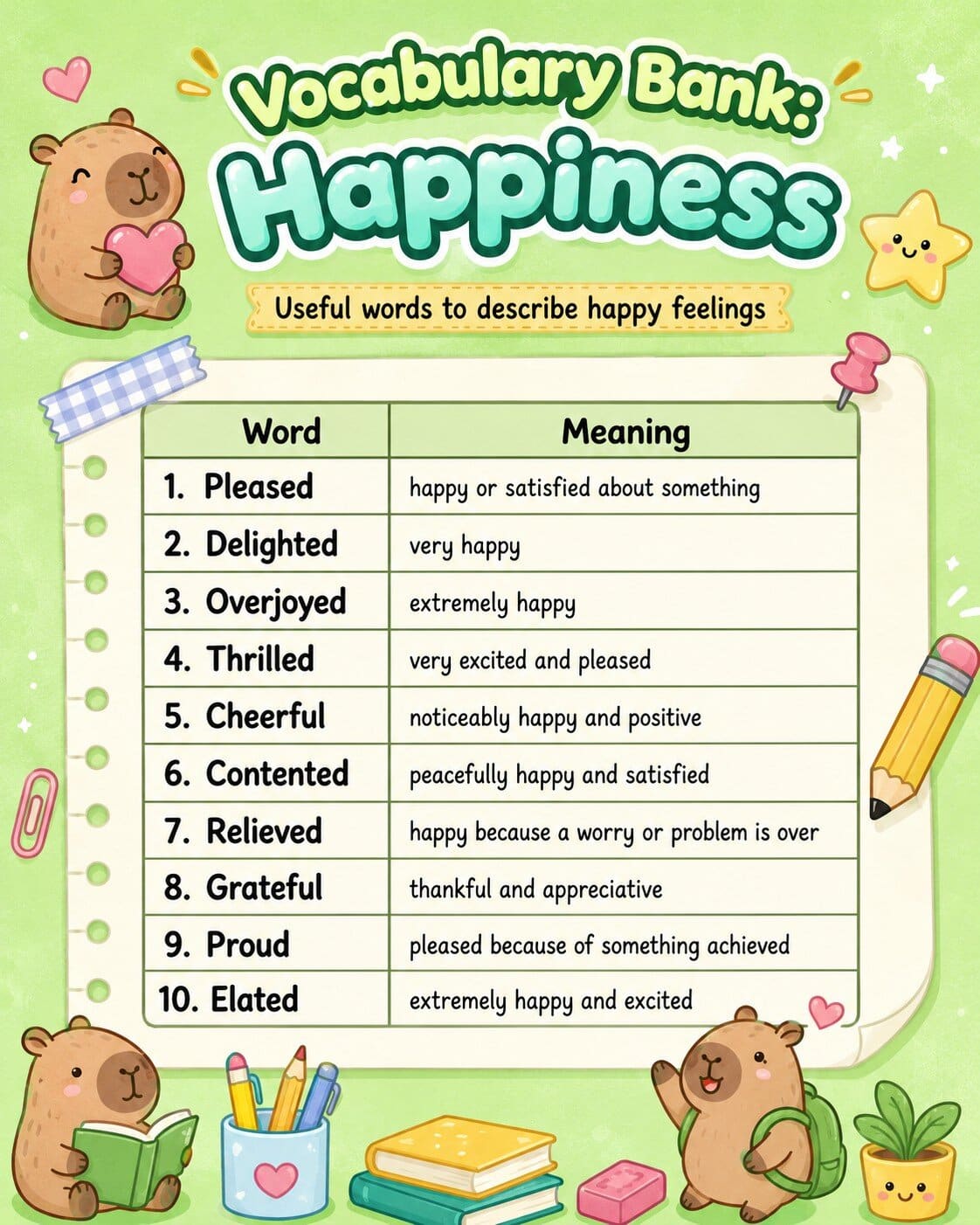
Useful words to describe happy feelings include pleased, delighted, overjoyed, thrilled, cheerful, contented, relieved, grateful, proud, and elated.
These words do not all mean the same thing. For example, “pleased” is suitable for a small happy moment, while “overjoyed” or “elated” is better for a very exciting event.
Students can use these natural word pairings:
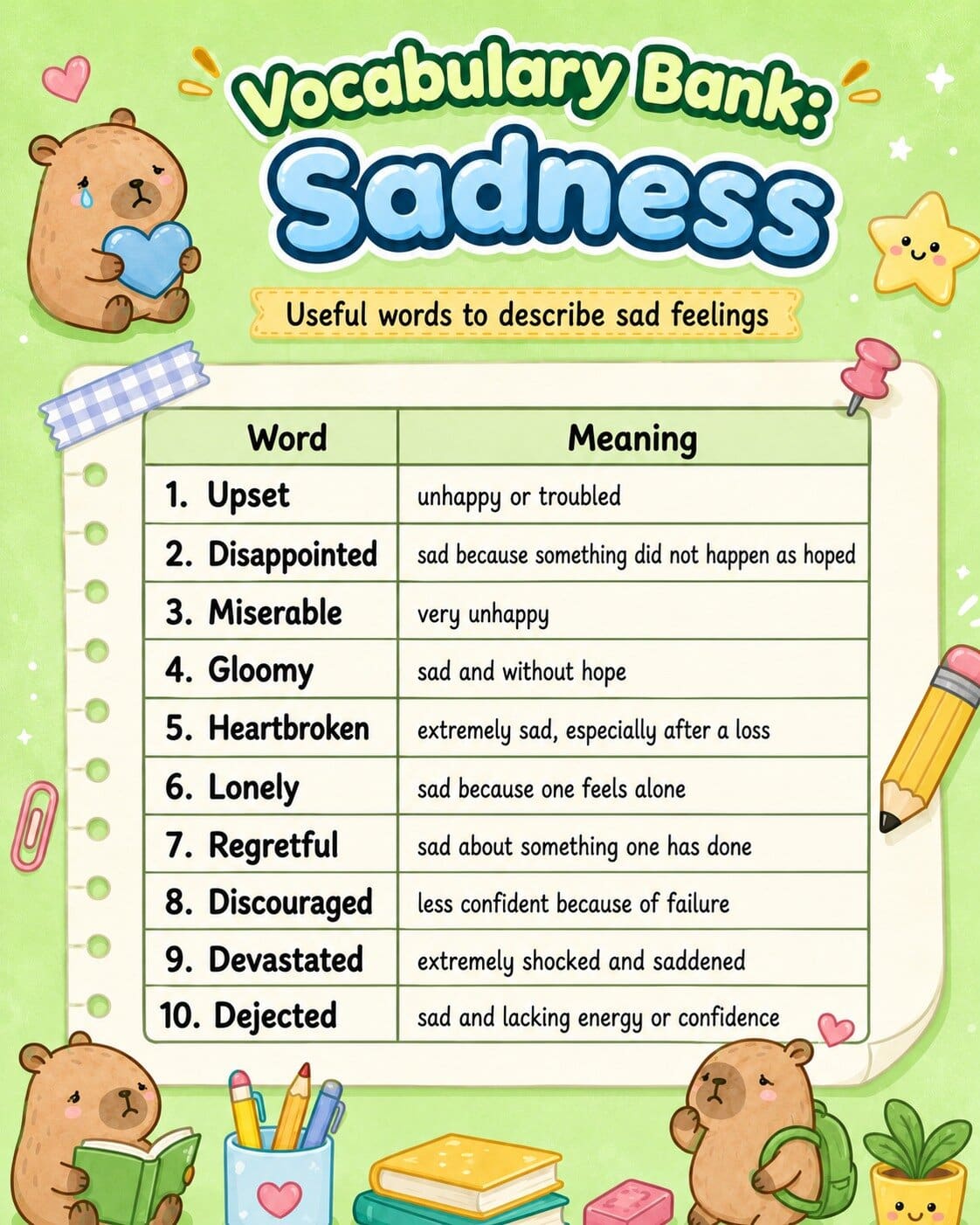
Useful words to describe sad feelings include upset, disappointed, miserable, gloomy, heartbroken, lonely, regretful, discouraged, devastated, and dejected.
Students should choose the word based on how serious the situation is. “Disappointed” may describe a failed plan, while “devastated” describes a much stronger emotional reaction.
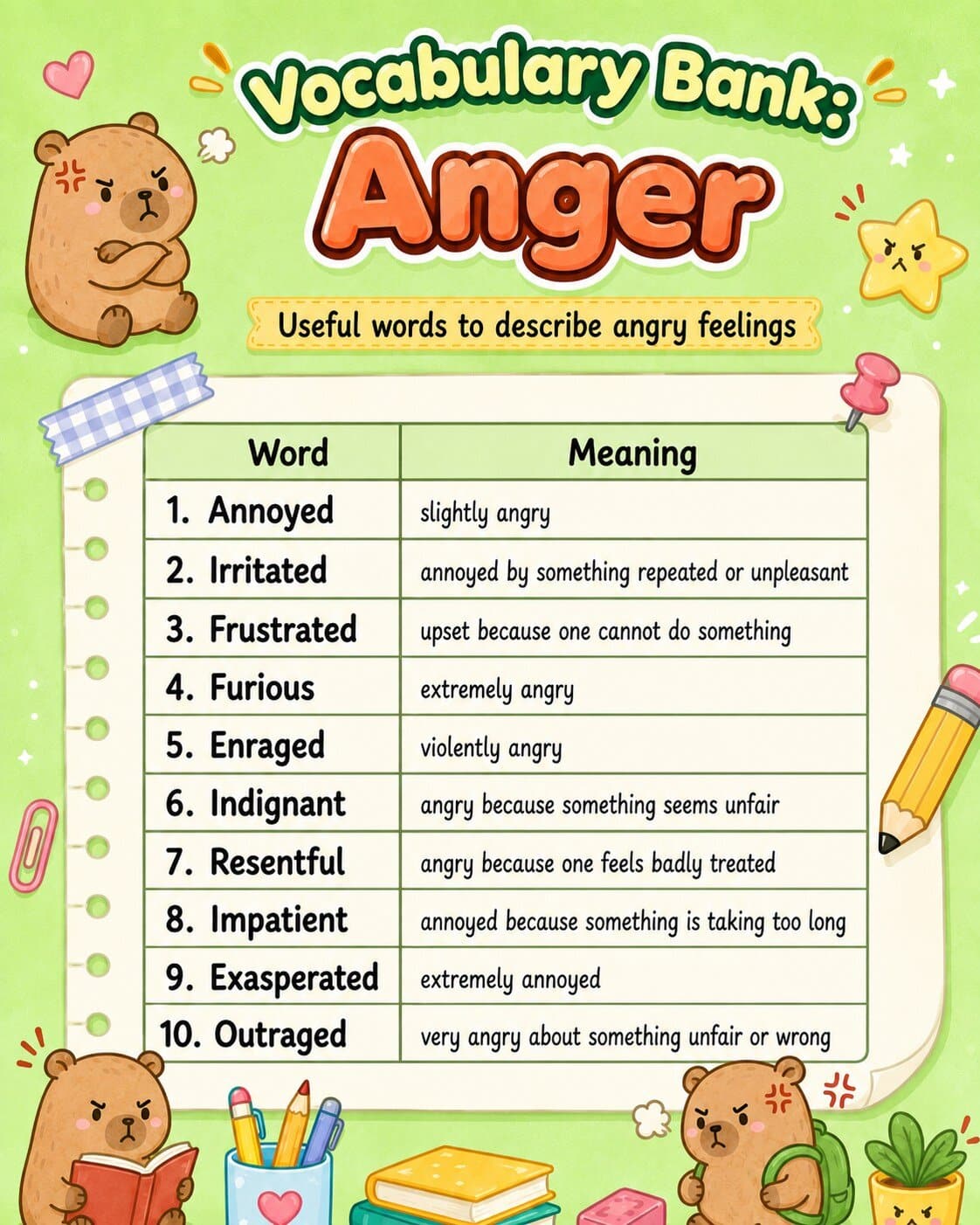
Useful words to describe angry feelings include annoyed, irritated, frustrated, furious, enraged, indignant, resentful, impatient, exasperated, and outraged.
“Annoyed” and “irritated” are suitable for mild anger. “Furious,” “enraged,” and “outraged” describe stronger emotions.
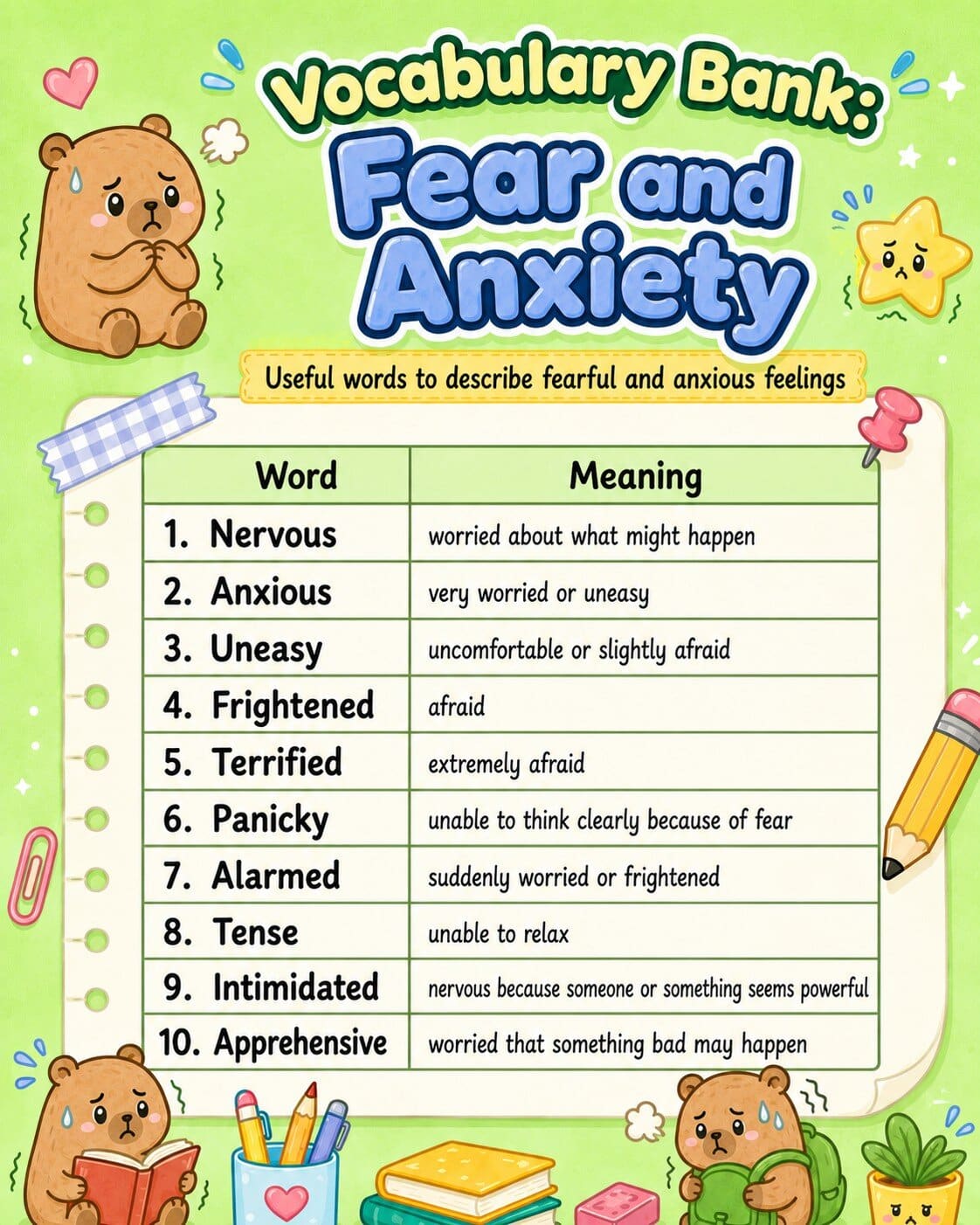
Useful words to describe fearful or anxious feelings include nervous, anxious, uneasy, frightened, terrified, panicky, alarmed, tense, intimidated, and apprehensive.
“Uneasy” and “apprehensive” are useful when a character senses that something may go wrong. “Terrified” is stronger and should be used for frightening situations.
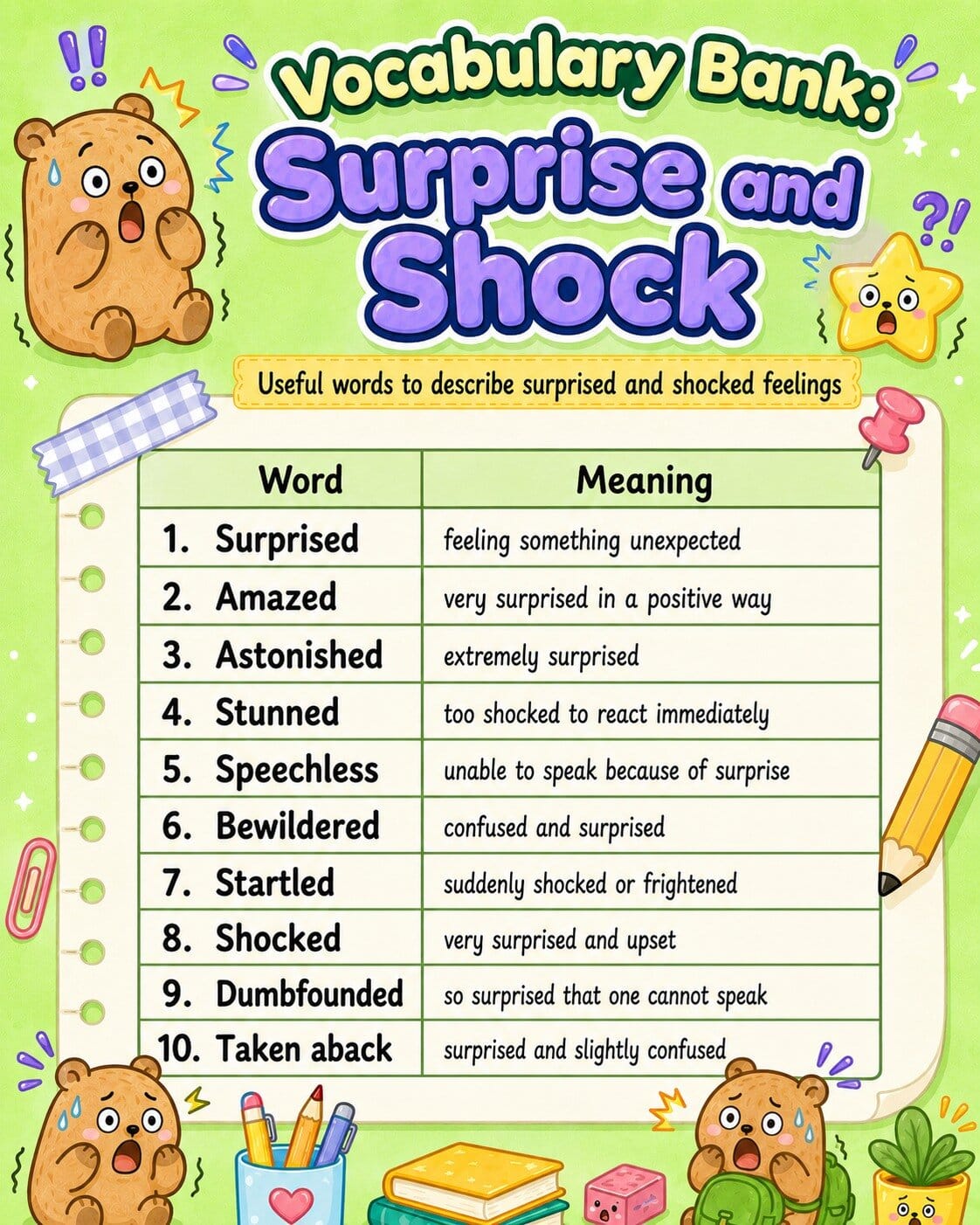
Useful words to describe surprise and shock include surprised, amazed, astonished, stunned, speechless, bewildered, startled, shocked, dumbfounded, and taken aback.
“Amazed” is often positive, while “shocked” may be negative. “Speechless” and “dumbfounded” are useful when a character is too surprised to respond.
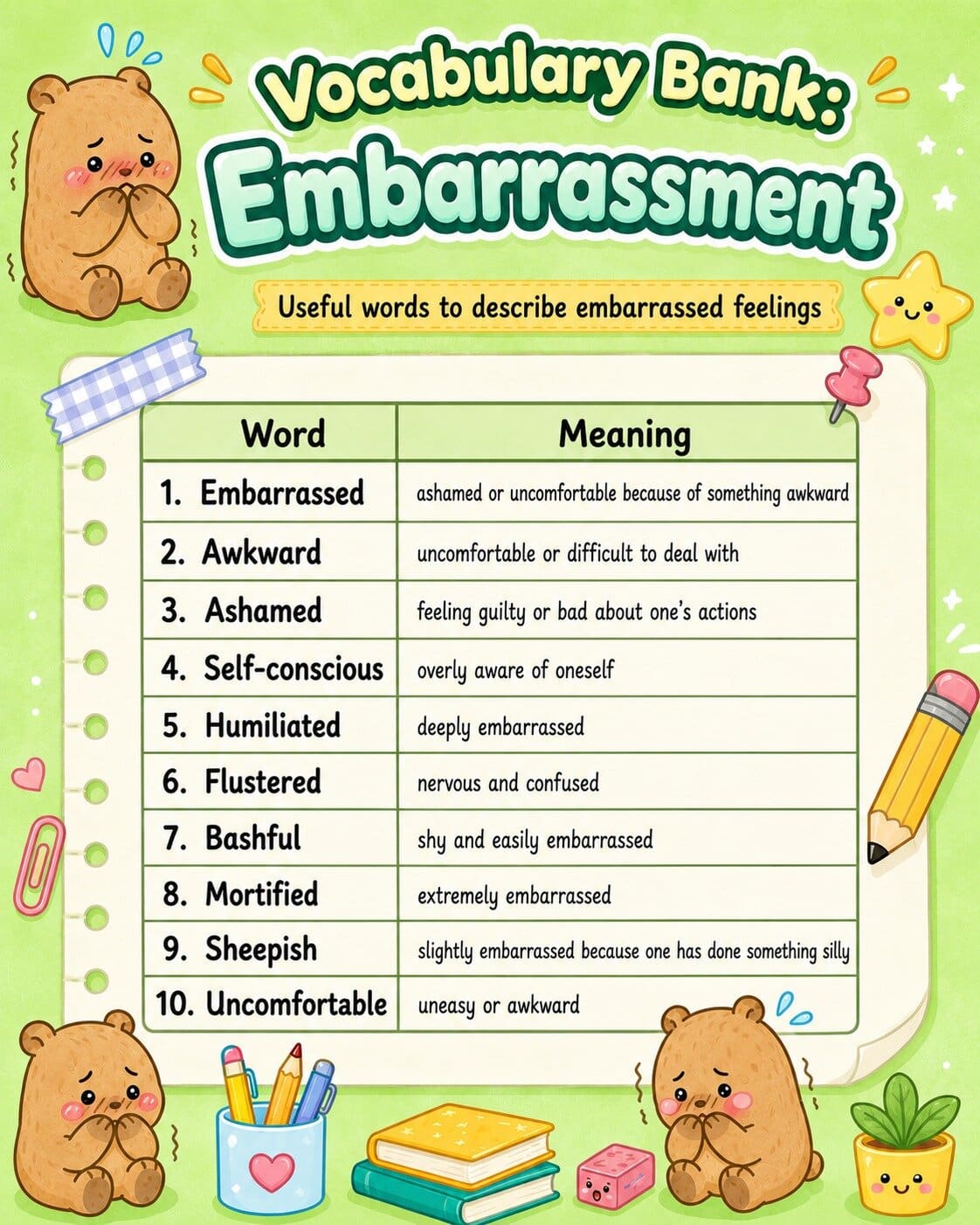
Useful words to describe embarrassed feelings include embarrassed, awkward, ashamed, self-conscious, humiliated, flustered, bashful, mortified, sheepish, and uncomfortable.
“Mildly embarrassed” can be used for small mistakes, while “mortified” or “humiliated” describes a much stronger feeling.
Try replacing the simple feeling words with stronger vocabulary and phrases from the banks above.
Original Sentence 1
She was happy when she received the prize.
Improved Sentence
She was overjoyed when she received the prize, and her eyes sparkled with pride.
Original Sentence 2
He was angry because his brother broke his toy.
Improved Sentence
He was furious when he saw his broken toy and clenched his fists in anger.
Original Sentence 3
I was scared when I heard the noise.
Improved Sentence
I felt terrified when I heard the noise, and a chill ran down my spine.
Improve these sentences on your own:
Try to include one strong vocabulary word and one short useful phrase in each sentence.
Learning vocabulary is not just about memorising long lists of words. Students must know when and how to use each word. A strong writer chooses words carefully, matches them to the scene, and uses phrases that help the reader picture the moment clearly.
For example, instead of writing “Tom was scared,” a student could write, “Tom froze on the spot as his heart pounded wildly.” This shows the feeling through action and physical reaction, making the composition more engaging.
This is why Good Phrases for Composition Writing should include not only word lists, but also collocations, useful phrases, and example sentences.
For primary students, our PURE Composition Writing Programmes help children build creativity, develop stronger ideas, and learn how to write vivid, well-structured compositions. Our Comprehensive English Programmes support students in key areas such as grammar, comprehension, oral communication, and writing, giving them a strong all-round foundation for school and national exam success.
For secondary students, our Secondary Programmes are designed to sharpen critical reading, strengthen essay and situational writing skills, and build the exam strategies needed for lower secondary assessments, upper secondary demands, and the O-Level English papers.
Beyond the classroom, students and parents can also tap into our wider learning resources through W@W eSeries, and stay updated with tips, insights, and student support on TikTok and Facebook
Vocabulary helps students describe characters, actions, and emotions more clearly. Instead of repeating simple words like “happy”, “sad”, or “angry”, students can use more precise words such as “delighted”, “miserable”, or “furious” to make their writing more expressive and engaging.
Students should choose words that match the situation and the character’s reaction. For example, “pleased” may suit a small success, while “overjoyed” suits a much bigger moment. Good composition writing is not about using the most difficult word, but about using the most accurate word.
At WRITERS AT WORK, students learn vocabulary in context through word banks, phrase banks, sentence examples, and guided writing practice. This helps them apply stronger words naturally in their compositions instead of memorising lists without knowing how to use them.

Jemmies Siew, Managing Director and Co-Founder of WRITERS AT WORK Enrichment Centre. With over 15 years of experience in education, entrepreneurship, and marketing, Jemmies has helped shape Singapore’s English enrichment landscape through her vision for transformative learning.
She is passionate about connecting real-world issues with language learning, helping students think critically and express themselves clearly. Connect with her on LinkedIn to follow her insights on education, content marketing, and thought leadership.



Start practising and learning

