The second version never uses the word “scared”, yet the reader feels the fear through the physical reactions (stiffened shoulders, quickened pace) and the eerie detail (footsteps matching step for step). For a full guide on replacing emotional labels with vivid descriptions, see our tips on Writing More Interesting Compositions.
Both lines slip a warning into an otherwise ordinary moment. The reader registers the unease and carries it forward into the story, which is exactly what suspense requires. For a detailed breakdown of how to use this technique, read our guide on Foreshadowing in Writing.
The contrast between slow build and sudden jolt is what creates the suspense. Students who write every sentence at the same length and pace produce stories that feel flat, even when the events are dramatic. Practising this shift during the climax section of each composition is one of the fastest ways to improve Content marks. For more on using sentence structure to create emphasis and impact, visit our guide on How to Show Emphasis in a Sentence.
Both examples stop at the moment of discovery rather than revealing the outcome. The examiner’s natural curiosity pulls them into the next paragraph, which is exactly how suspense sustains itself across a full composition. For tips on writing openings that set up this kind of pull from the very first line, see our guide to Types of Hooks for Essay Introductions.
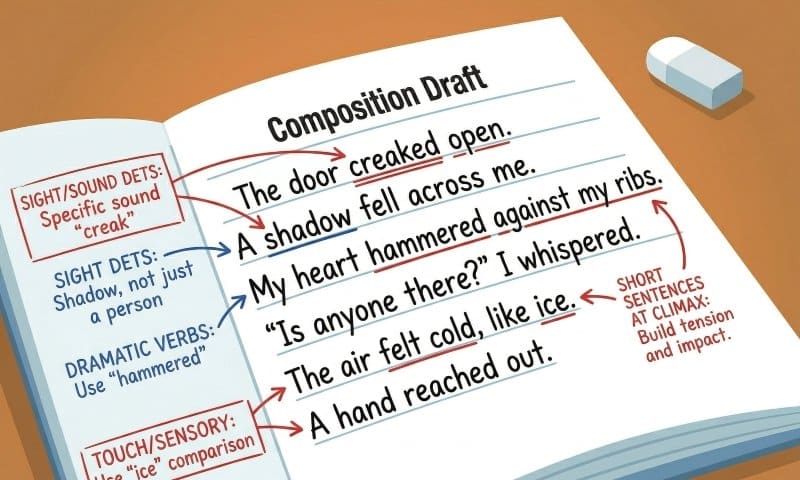
Notice that none of these details involve anything supernatural or unrealistic. They use ordinary school settings but describe them in a way that feels slightly wrong, which is all it takes to create unease. Students should aim to include one or two sensory details in the paragraph just before the climax, where the atmosphere matters most. For a curated bank of descriptive phrases organised by setting and emotion, see our guide to Good Phrases for Composition Writing.
Each step makes the situation harder and the character’s choices more difficult. The examiner can feel the story tightening, and by the time the climax arrives, the resolution carries real weight. This “rising action” structure is what separates mid-band compositions from top-band ones. For a deeper look at how to build towards a strong turning point, read our guide on Understanding the Climax in Writing.
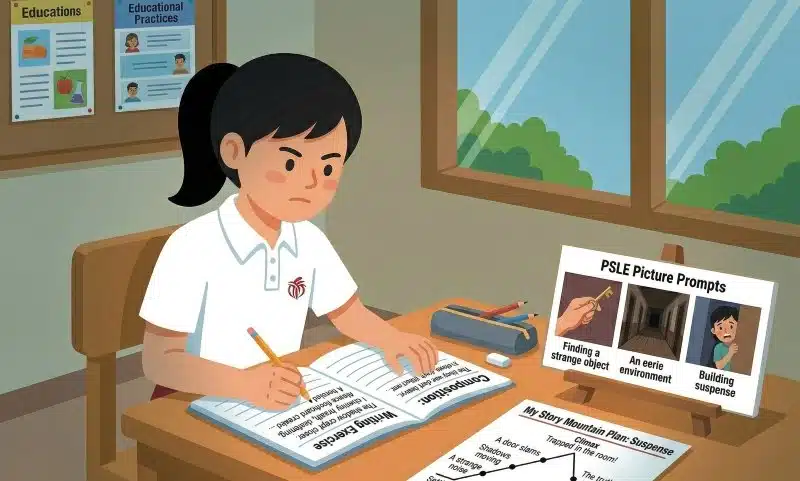
During the five-minute planning stage, your child should note which techniques they will use and where. Even a simple annotation on the story mountain (“foreshadow here”, “short sentences at climax”, “end paragraph 3 with cliffhanger”) is enough to turn a flat plot into a gripping one. For a collection of past exam questions to practise with, visit our PSLE Past Years Composition Questions page.
Regular practice makes these techniques automatic. Over time, your child will reach for them instinctively during the exam rather than defaulting to flat, tell-heavy writing. For why consistent weekly practice is the key to lasting improvement, read The Power of Writing Weekly Compositions.
Absolutely. Suspense and twists work beautifully together. Foreshadowing (Technique 2) sets up the clues that make a twist feel earned, and rising action (Technique 7) builds the tension that makes the twist feel shocking. Planning both the suspense beats and the twist during the plotting stage ensures they support each other rather than competing.

Agnes Ng, Co-Founder and Teaching & Curriculum Director of WRITERS AT WORK. An NUS Honours graduate and published author with over 30 years of experience, Agnes has been the architect of the organization’s student-centric curricula since 2012.
Dedicated to teacher mentorship and academic excellence, she has guided hundreds of students to achieve outstanding results. Her expertise and commitment to high-quality education remain the cornerstone of WRITERS AT WORK’s success in empowering every learner.



Start practising and learning

