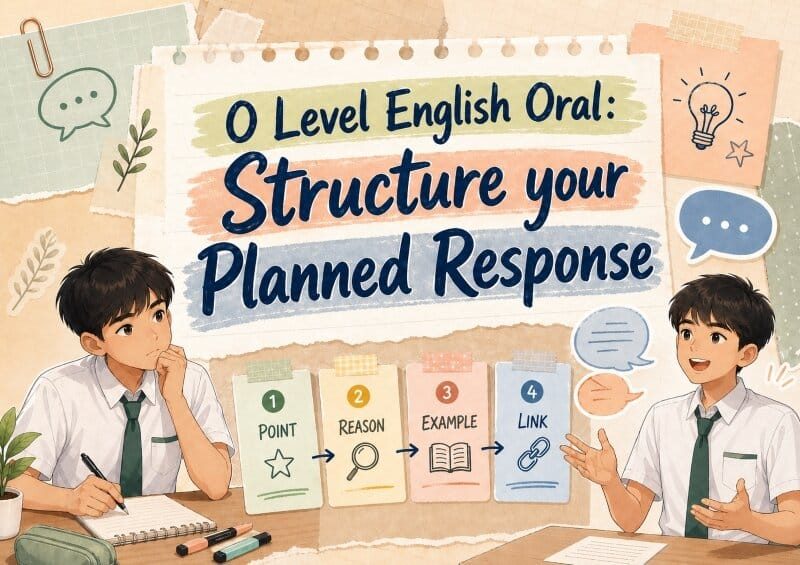
Many students freeze during the Planned Response segment of the O Level English Oral exam. This is not always because they lack ideas. More often, they do not know how to organise their ideas clearly. A strong Planned Response is not about saying as much as possible. It is about giving a clear opinion, supporting it with a relevant example, and ending with a confident conclusion.
According to the O Level English syllabus, the Planned Response requires students to plan and deliver a response of up to 2 minutes to a video clip and prompt. Students are assessed on how fluently and effectively they present their ideas and opinions.
Here is a simple 3-part structure students can use.
Begin by answering the question directly. This helps set the tone for the rest of your response.
For example:
This opening is simple, but effective. It tells the examiner exactly where you stand.
Avoid vague openings such as:
These phrases can make your response sound uncertain. A confident start shows the examiner that you are focused and ready to speak.
Yes/No + your opinion + the topic
For example:
After stating your opinion, give one strong example. This helps develop your response and makes your point more convincing.
Your example can come from:
For example:
“For example, I remember feeling very stressed before my exams. Playing basketball after school helped me relax and return to my revision with a clearer mind.”
This works because the example is relevant and easy to understand. However, do not spend too long telling a story. Your example should support your point, not take over your entire response.
Useful phrases include:
A strong response should not end abruptly. After your example, wrap up by repeating your stand in a fresh way.
For example:
This gives your response a clear ending. Avoid introducing a new point at the end. The conclusion should summarise your message, not start another idea.
Use linking words to guide the examiner through your response. Phrases like “Firstly”, “For example”, “This shows that”, and “That is why” help your answer sound organised. When practising, time yourself. Aim for about 1 to 1.5 minutes. While the syllabus allows up to 2 minutes, students should focus on clarity rather than length.
You can also record your own response and listen back. Ask yourself:
This simple reflection can help students improve quickly.
At WRITERS AT WORK, we help secondary students prepare for the O Level English Oral by teaching them how to organise ideas, develop examples, and speak with confidence. Check out our English Programme here.
Our lessons focus on clear thinking, structured responses, and regular oral practice. Students learn that doing well in oral is not about memorising perfect answers. It is about learning how to respond thoughtfully and fluently.
Beyond the classroom, students and parents can also tap into our wider learning resources through W@W eSeries, and stay updated with tips, insights, and student support on TikTok and Facebook.
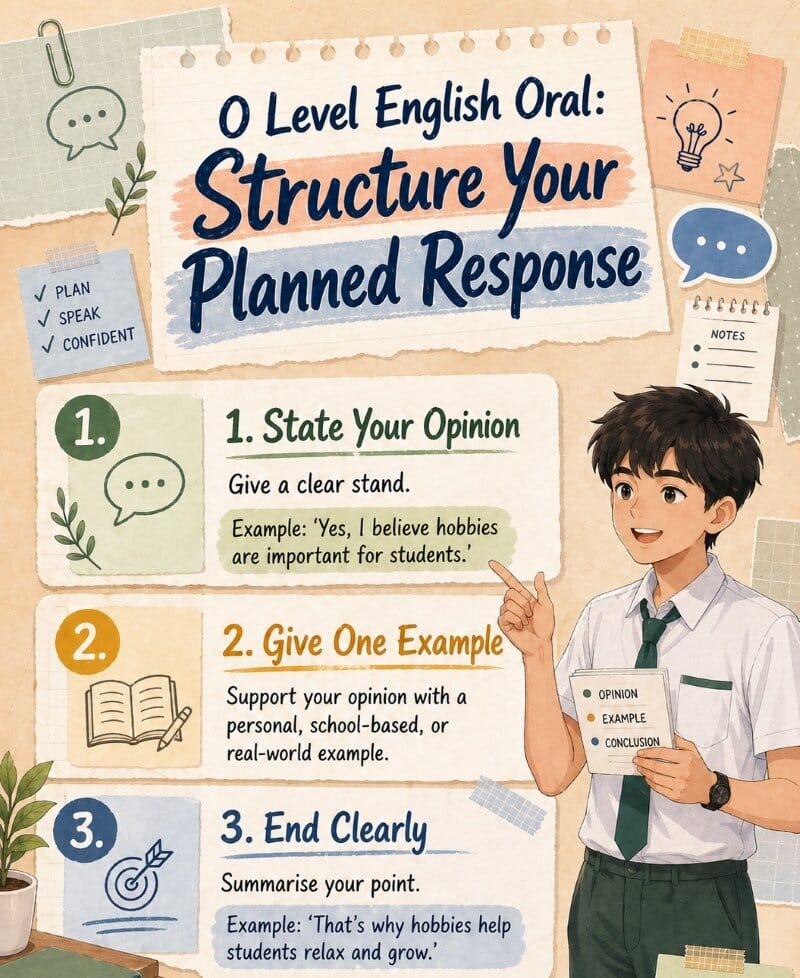
Include three parts: a clear opinion, one relevant example, and a short conclusion. This helps your response sound complete and organised.
WRITERS AT WORK trains students to analyse prompts, organise ideas, develop examples, and practise fluent delivery. This helps students approach the O Level English Oral with greater confidence.

Agnes Ng, Co-Founder and Teaching & Curriculum Director of WRITERS AT WORK. An NUS Honours graduate and published author with over 30 years of experience, Agnes has been the architect of the organization’s student-centric curricula since 2012.
Dedicated to teacher mentorship and academic excellence, she has guided hundreds of students to achieve outstanding results. Her expertise and commitment to high-quality education remain the cornerstone of WRITERS AT WORK’s success in empowering every learner.



Start practising and learning

