Exam Insight: Ensure you apply these techniques to your Personal Recount practices too! This genre is a foundational pillar of the O Level English paper, appearing more consistently than any other essay type.
To master Secondary English composition writing tips, you must move beyond simple “shock value.” Effective twists rely on two main pillars:
1) Subtle Foreshadowing: Casually drop “breadcrumbs” or hints early in the story that seem minor at first but gain importance later. If a character has a secret, mention a specific habit or observant trait that hints at their true nature.
2) Masterful Misdirection: Use “red herrings” to lead the reader toward a false conclusion. For example, you might make a neighbor appear suspicious while the real threat is a seemingly helpful friend.

When practising various O Level Essay Topics, consider these four reliable twist formats:
1) The Reversal: A character’s expected behaviour or a situation’s outcome flips to its exact opposite.
2) Identity Reveal: A character is eventually revealed to be someone entirely different from who they claimed to be.
3) The Unreliable Narrator: The storyteller intentionally misleads the reader about the reality of the events.
4) The Perspective Shift: A story that seems to be about one genre (like a mystery) is revealed to be something else entirely (like a misunderstanding).
– Beginning: Establish the “false reality” while planting your subtle breadcrumbs.
– Middle: Escalate the stakes and build tension while using misdirection to keep the reader off-trail.
– Climax: Deliver the revelation through organic character actions or realisations.
– Ending: Allow space for the character and reader to process the aftermath of the shift.
One of the most important O Level English essay writing tips is to maintain logical consistency. A twist that contradicts established facts or feels forced—such as the “it was all a dream” cliché—will likely result in lower marks. Avoid “Deus Ex Machina” moments where problems are solved by an unexplained, magical arrival without prior setup. One solid, logically sound twist is always superior to multiple confusing ones.
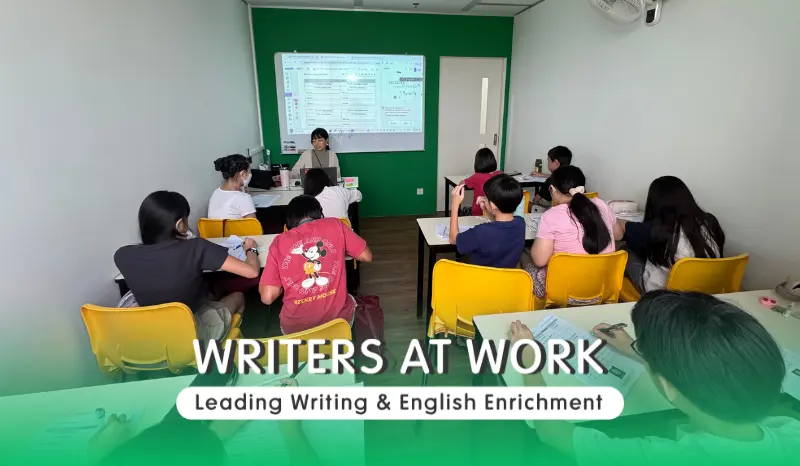
Mastering the O Level English paper requires a blend of creative strategy and technical precision. At WRITERS AT WORK, our Secondary English tuition in Singapore provides the focused environment students need to excel. Whether you are struggling with essay writing topics in English or looking for good hooks for essay introductions, our curriculum offers the frameworks for success. If you are still deciding between O-Level or Integrated Programme (IP), we can also help you navigate the best path for your child’s academic future.

Agnes Ng, Co-Founder and Teaching & Curriculum Director of WRITERS AT WORK. An NUS Honours graduate and published author with over 30 years of experience, Agnes has been the architect of the organization’s student-centric curricula since 2012.
Dedicated to teacher mentorship and academic excellence, she has guided hundreds of students to achieve outstanding results. Her expertise and commitment to high-quality education remain the cornerstone of WRITERS AT WORK’s success in empowering every learner.



Start practising and learning

