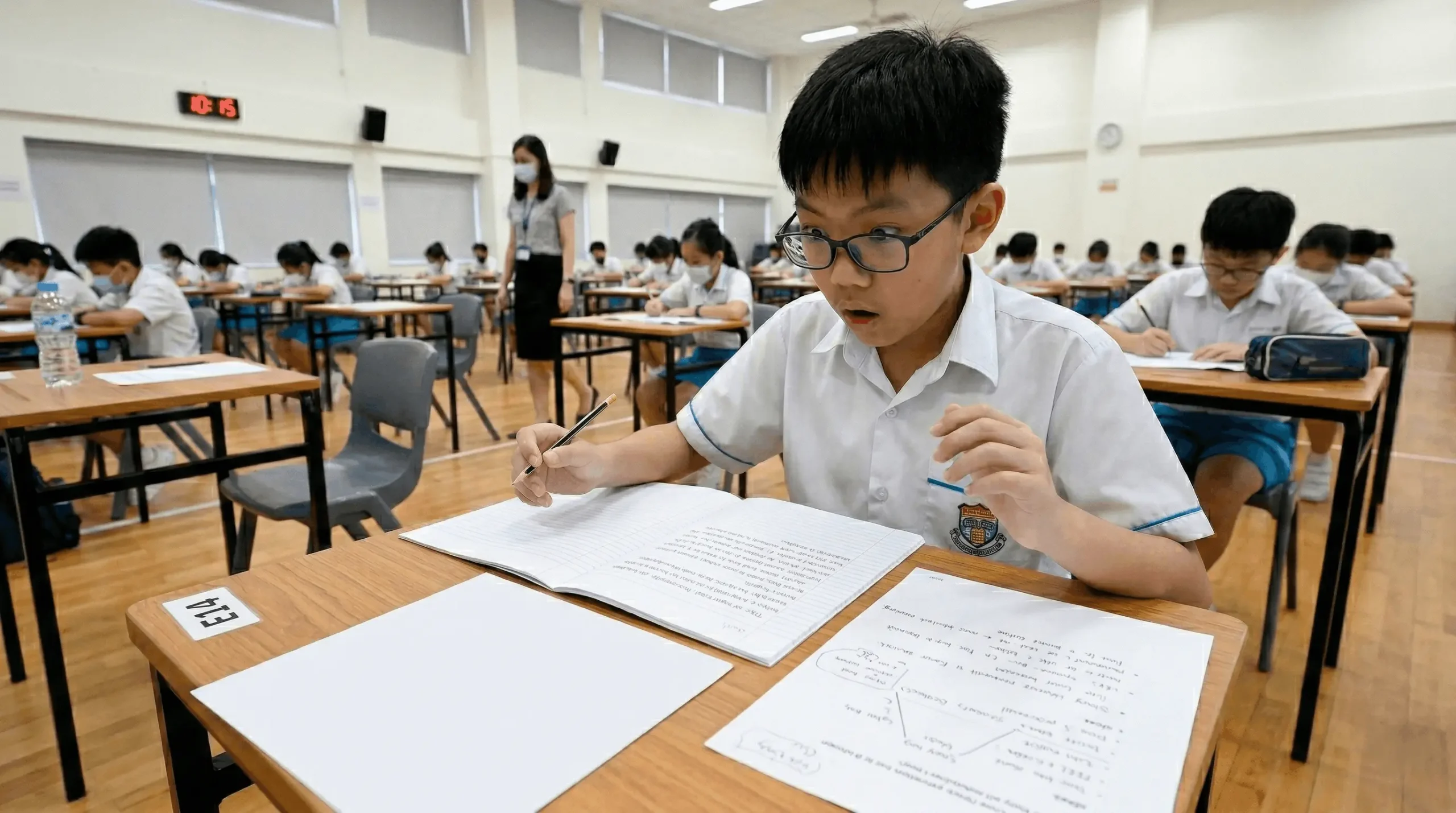
Twists also solve a common problem. Many students struggle to write a memorable climax. Their stories build up to a conflict, but the resolution feels flat or rushed. A twist gives the climax a sharp edge, making it the moment the examiner remembers most. For a deeper look at how content marks are awarded, see our guide to Understanding Composition Marks and Rubrics.
This twist reframes every earlier interaction. The grumpy neighbour’s harshness was actually protectiveness, and the reader’s first impression is overturned. For tips on building characters that support this kind of twist, see our guide on How to Craft Creative Composition Characters.
Topic: “Being Thankful.” The narrator is upset because their father keeps cancelling weekend plans to work overtime. The family hardly spends time together, and the narrator begins to resent him. The twist: the narrator discovers a savings account statement showing that the father has been saving every extra cent to pay for the narrator’s dream enrichment programme. The father never mentioned it because he wanted it to be a surprise.
This type of twist is powerful because it changes an emotion. The narrator’s resentment becomes guilt and then gratitude, all within a few sentences. The examiner can see that the student has controlled the reader’s feelings deliberately, which is a strong sign of mature writing. To explore how to write stories that build and shift emotions effectively, visit our tips on Writing More Interesting Compositions.
The photograph was planted early, and its payoff at the climax carries emotional weight precisely because the reader saw it before but did not understand its importance. This technique is sometimes called “Chekhov’s Gun” in literature. For more on how to plan details that pay off later, read our blog on Best Plot Twists to Use for PSLE Compositions.
Topic: “A Day I Will Never Forget.” The narrator trains for months to compete in the school’s cross-country race. On race day, everything goes perfectly: the weather is cool, the narrator feels strong, and they are leading the pack. Then, in the final stretch, the narrator trips on a tree root and sprains their ankle. Unable to finish, they sit by the side of the track and watch their classmates cross the line. The twist deepens when a rival runner turns back, helps the narrator to their feet, and walks them across the finish line together.
Here, the reversal happens twice. The first flip (from winning to injured) shocks the reader. The second flip (from despair to unexpected kindness) delivers the emotional payoff. Double reversals are extremely effective but should be planned carefully during the plotting stage so neither flip feels rushed. For guidance on time management during planning, see our guide on Writing a PSLE Composition Under Timed Conditions.
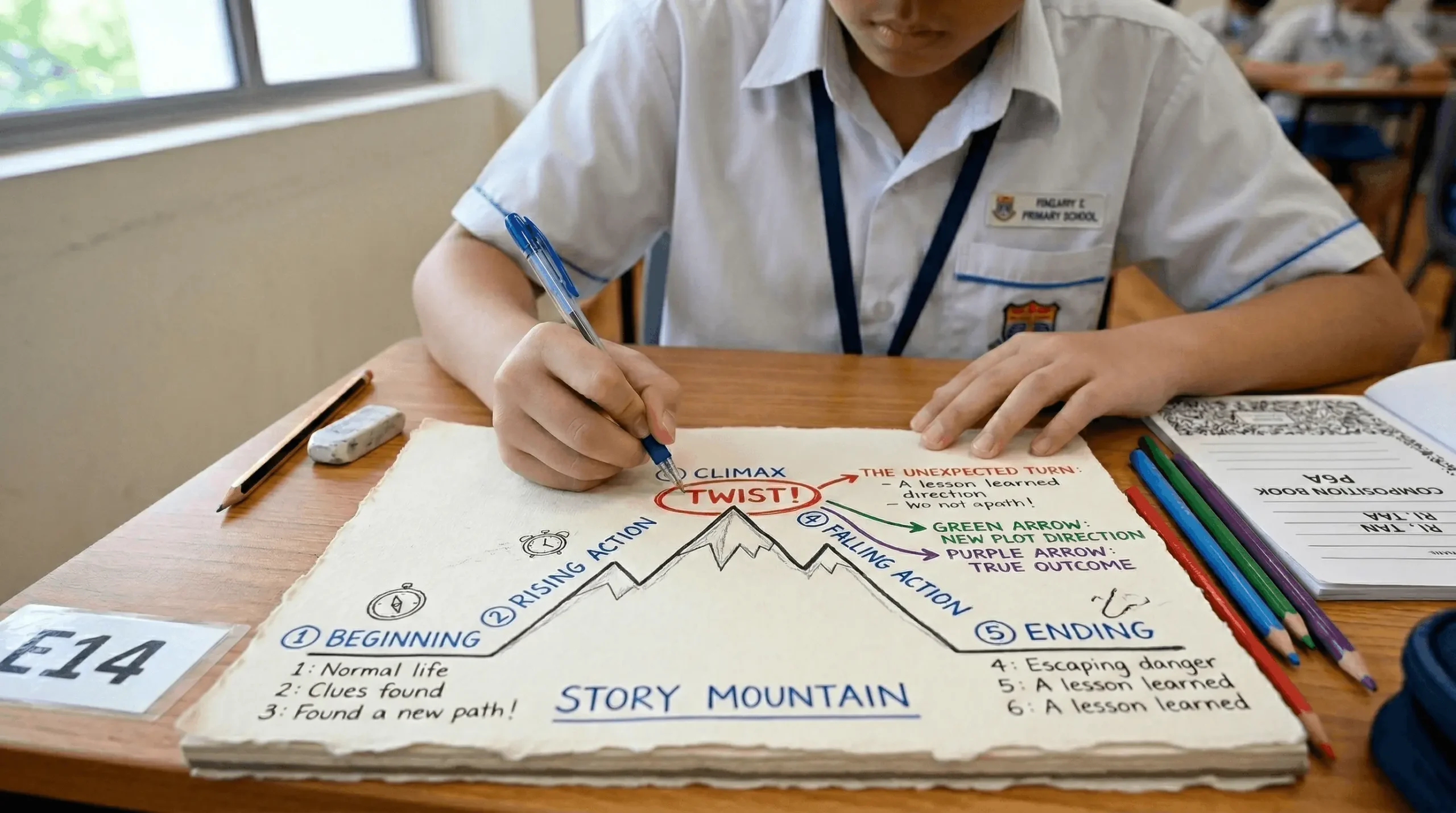
Fourth, check that the twist connects to the theme. A surprising ending means nothing if it does not reinforce the composition question. The twist should be the moment that best answers the topic, not a random surprise tacked on for its own sake. For tips on crafting the opening that sets up your twist, see our posts on How to Write Good Introductions and Types of Hooks for Essay Introductions.
The best way to build confidence with story twists is to practise them against real composition questions. Take a past PSLE topic, plan a straightforward version of the story, and then plan a second version with a twist. Compare the two and notice how the twist version creates a sharper climax and a more memorable ending. For a collection of past exam questions to practise with, visit our PSLE Past Years Composition Questions page.
Regular writing practice also builds the instinct for knowing when and where a twist fits naturally. The more stories your child writes, the faster they will recognise which topics lend themselves to twists and which are better served by a straightforward plot. For why weekly practice matters, read The Power of Writing Weekly Compositions.
Mastering story twists gives your child a genuine edge in PSLE composition writing. At WRITERS AT WORK, our STORYBANKING® method builds a library of adaptable stories, each with built-in twists, strong vocabulary, and proven plot structures. Students practise writing and adapting these stories under timed conditions, so when exam day arrives, they can plan and execute a twist with confidence. If your child is ready to take their composition writing to the next level, explore our Best Creative Writing Classes for Kids in Singapore.

Jemmies Siew, Managing Director and Co-Founder of WRITERS AT WORK Enrichment Centre. With over 15 years of experience in education, entrepreneurship, and marketing, Jemmies has helped shape Singapore’s English enrichment landscape through her vision for transformative learning.
She is passionate about connecting real-world issues with language learning, helping students think critically and express themselves clearly. Connect with her on LinkedIn to follow her insights on education, content marketing, and thought leadership.



Start practising and learning

